


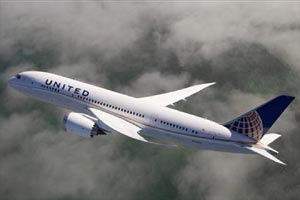

United Airlines CEO Oscar Munoz knows that his airline has alienated some of its most loyal fliers. His effort to win them back starts with a new business class product that he personally unveiled Thursday at his first major public appearance since becoming CEO.
”It is about the entire experience,” Munoz told the Associated Press. ”It’s not just a new seat. It’s not just new meals. It’s not just better wines.”
It’s been a decade since United updated its business class seat – some planes still have middle seats in the premium cabin. That will all be fixed with the new service called Polaris.
The revamp is centered on helping passengers who pay $5,000 or more for a trans-Atlantic flight to get better sleep. Each lie-flat seat will have direct access to the aisle, feature do not disturb signs and more storage space. There will be dedicated lounges in key airports just for business class fliers.
But Munoz knows that updating the physical product isn’t enough. That’s why flight attendants are getting a new level of training for international flights, which he says will filter down to the domestic trips some also take. Some of the more-senior flight attendants – the ones who often get international flights – aren’t as enthusiastic or friendly as passengers hope.
”It’s a never-ending battle,” Munoz says, acknowledging that U has a history of testy relations with its unions.
United involved flight attendants early on in the design of Polaris, a move Munoz hopes will encourage them to gladly take on the additional work such as offering three sets of wine instead of just one.
”You give them a product they can be proud of and a little momentum and a labor contract that they are happy with … and I think that’s what carries the day for us,” Munoz says.
The new meals and service standards will start Dec. 1, but it will take several years for the airline to replace all of its business class seats.
Munoz was named CEO of United Continental Holdings Inc. last fall but took medial leave in October after suffering a heart attack just six weeks into the job. In January he had a heart transplant and returned to work full-time in March.
Since then, Munoz has been flying around the country visiting employees and key clients. Under doctor’s orders, he’s only flown on private planes following the transplant, avoiding all commercial jets, including those of his own airline.
Munoz says he tours enough planes on the ground and sees employees in action and that the flight restriction will be lifted in a few weeks.