



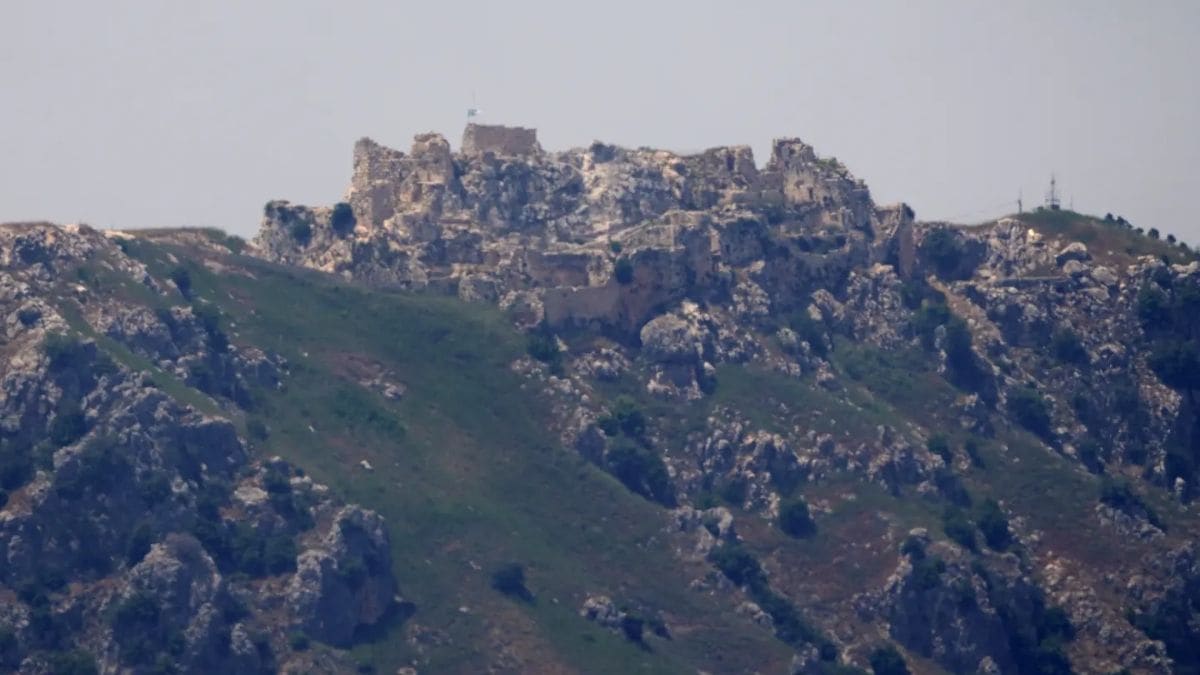
Israeli troops have seized Lebanon’s historic Beaufort Castle and the surrounding ridge in southern Lebanon, marking one of the most significant military advances against Hezbollah since the ceasefire announced over six weeks ago. The operation came after one of the heaviest days of Hezbollah rocket firing toward northern Israel since the April truce, according to the Israeli military.
Israeli officials described the capture as a major turning point in the country’s campaign against the Iran-backed Hezbollah movement. The military said the operation focused on securing the Beaufort Ridge and the Wadi al-Saluki area while destroying Hezbollah military infrastructure that had been established with Iranian support.
Why is Beaufort Castle important?
Beaufort Castle sits on a steep hill near the southern Lebanese city of Nabatieh. The fortress overlooks vast areas of southern Lebanon, northern Israel, and the Litani River valley. Its elevated position offers a clear view of military movements across the region, reported Reuters.
For centuries, armies have used the site because of its strategic location. Military experts often describe the castle as one of the most valuable observation points in southern Lebanon.
The Israeli military said Hezbollah used positions on the ridge to launch attacks against Israeli towns and military targets. According to the military, hundreds of rockets and projectiles were fired from the area toward Israeli civilians and soldiers.
The castle’s location allows whoever controls it to monitor roads, villages, and key routes across southern Lebanon. This makes it an important military asset during any conflict along the Israel-Lebanon border, as per Reuters report.
Why does the capture matter in conflict with Iran?
Although Beaufort Castle is located in Lebanon, Israeli officials say that its capture weakens Iran’s regional influence because Hezbollah serves as Tehran’s strongest armed ally in the Middle East, reported The Associated Press.
The Israeli military said Hezbollah established military infrastructure on the ridge under Iranian direction. By taking control of the site, Israel hopes to reduce Hezbollah’s ability to launch attacks and gather intelligence near the border.
The operation comes amid a wider regional conflict involving Iran and Israel. Hezbollah entered the conflict by launching rockets and drones into Israel shortly after fighting between Israel and Iran escalated earlier this year. Israeli leaders believe reducing Hezbollah’s military presence near the border will limit Iran’s ability to pressure Israel through its Lebanese ally.
What did Israel say about the operation?
Israeli Prime Minister Benjamin Netanyahu praised the capture of the fortress and described it as a major achievement. “We returned to Beaufort stronger than ever,” Netanyahu said.
“Our brave fighters captured the Beaufort outpost. They proudly raised the flag of the State of Israel and the flag of the Golani Brigade there,” he added.
Netanyahu also called the operation “a dramatic stage and a dramatic change in the policy we are leading.”
The Israeli military reported that one Israeli soldier died during the operation. Israeli military spokesperson Avichay Adraee shared photographs on X showing soldiers standing outside the fortress. Defence Minister Israel Katz also posted images and said troops had raised the Israeli flag over the site.
There was no immediate official response from Hezbollah following Israel’s announcement. Lebanese authorities also did not immediately say anything publicly on the capture.
The operation took place after several days of fighting in villages near Nabatieh, which is considered one of Hezbollah’s major strongholds in southern Lebanon.
Israeli forces also reported military activity near Nabatieh as part of efforts to dismantle Hezbollah positions in the region.
History of Beaufort Castle
Beaufort Castle is nearly 900 years old. The fortress was originally built by Crusaders during the 12th century on top of earlier fortifications. The Crusaders named it Beaufort, an Old French term meaning “beautiful fortress.”
In Arabic, the castle is known as Al-Shaqif Castle or Qalaat al-Shakif. The name comes from an ancient Syriac word describing the area’s steep and rocky terrain, reported AP.
Over nearly a millennium, many powers have occupied the fortress. These include the Crusaders, the forces of Saladin, the Mamluks, the Ottoman Empire, French Mandate authorities, the Palestine Liberation Organization (PLO), and Israel.
Because of its commanding location, each ruler viewed the site as a valuable military position.
Israeli forces first captured Beaufort Castle during the 1982 Lebanon War when then-Defence Minister Ariel Sharon oversaw Israel’s military campaign in Lebanon.
The fortress became one of Israel’s most important military bases during its occupation of southern Lebanon. Israeli troops remained there until Israel withdrew from southern Lebanon in 2000 after nearly two decades, reported Reuters.
The 1982 capture of the castle from the Palestine Liberation Organization was considered one of the most important military victories of that campaign. The latest operation marks Israel’s return to a position it abandoned 26 years ago.
What role has the castle played in recent years?
After restoration work, Beaufort Castle reopened as a tourist attraction and historical site. During the 2024 Israel-Hezbollah conflict, UNESCO granted protection status to 34 cultural sites across Lebanon, including Beaufort Castle. The move aimed to protect important heritage locations from damage during fighting.
Despite its cultural value, the fortress has remained closely linked to military history because of its strategic location overlooking southern Lebanon.
The capture of Beaufort Castle deepens Israel’s military footprint inside Lebanon despite the ceasefire. The move also strengthens Israeli control over a key observation point near the border.
Military analysts say the fortress could become a valuable position for monitoring Hezbollah activity and preventing future attacks from southern Lebanon, reported Reuters.