



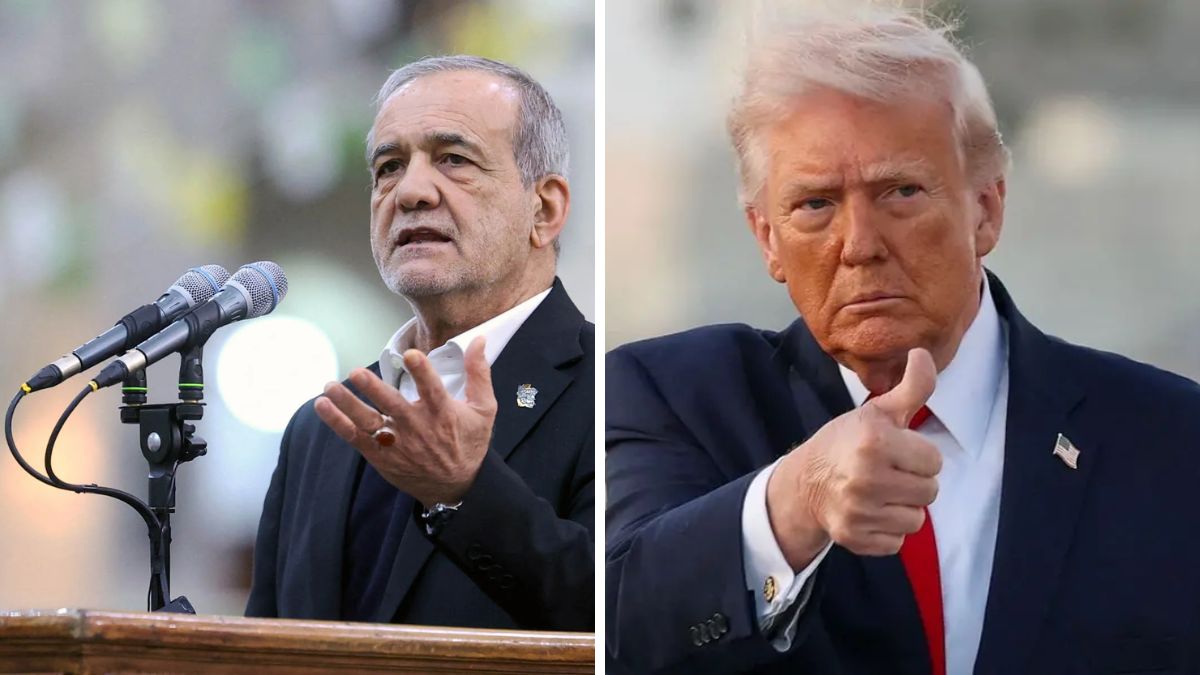
Iranian President Masoud Pezeshkian has strongly criticised the United States over its stance on Iran’s nuclear programme, questioning Washington’s authority to restrict Tehran’s access to nuclear technology. His remarks come amid escalating tensions between the two nations over atomic policy and regional security.
Speaking during a recent address, Pezeshkian challenged the legitimacy of US demands, arguing that Iran’s nuclear ambitions fall within its sovereign rights. The comments were reported by Al Jazeera, citing Iran’s state-linked media.
Iran questions US authority on nuclear rights
During his speech, the Iranian President directly criticised US President Donald Trump, accusing him of making unilateral claims without justification.
“Trump says Iran cannot make use of its nuclear rights, but doesn’t say for what crime. Who is he to deprive a nation of its rights?” the Iranian President stated.
Tehran has consistently maintained that its nuclear programme is a matter of national sovereignty and has resisted what it describes as external pressure. The latest remarks underline Iran’s refusal to concede ground, even as diplomatic engagement with Washington continues in parallel.
Talks continue amid regional tensions
Despite the sharp exchange of words, officials on both sides have indicated that negotiations are ongoing, with some progress reported in narrowing differences. However, key disagreements remain unresolved, particularly over the scope of nuclear activities and international monitoring mechanisms.
The situation is further complicated by rising tensions in the Strait of Hormuz, a critical global oil transit route. The waterway has become a focal point amid broader geopolitical friction, contributing to uncertainty in global energy markets.
While Trump described the ongoing engagement as “very good conversations,” he also warned against what he termed “blackmail” involving the vital maritime corridor.
The broader regional conflict, now stretching into its eighth week, has intensified instability, including spillover effects such as Israeli strikes in Lebanon. The uncertainty has had a direct impact on global oil prices, which have surged amid concerns over supply disruptions linked to the Strait of Hormuz.
As diplomatic efforts continue, both sides appear to be balancing dialogue with firm positions, leaving the path to a comprehensive agreement uncertain.