



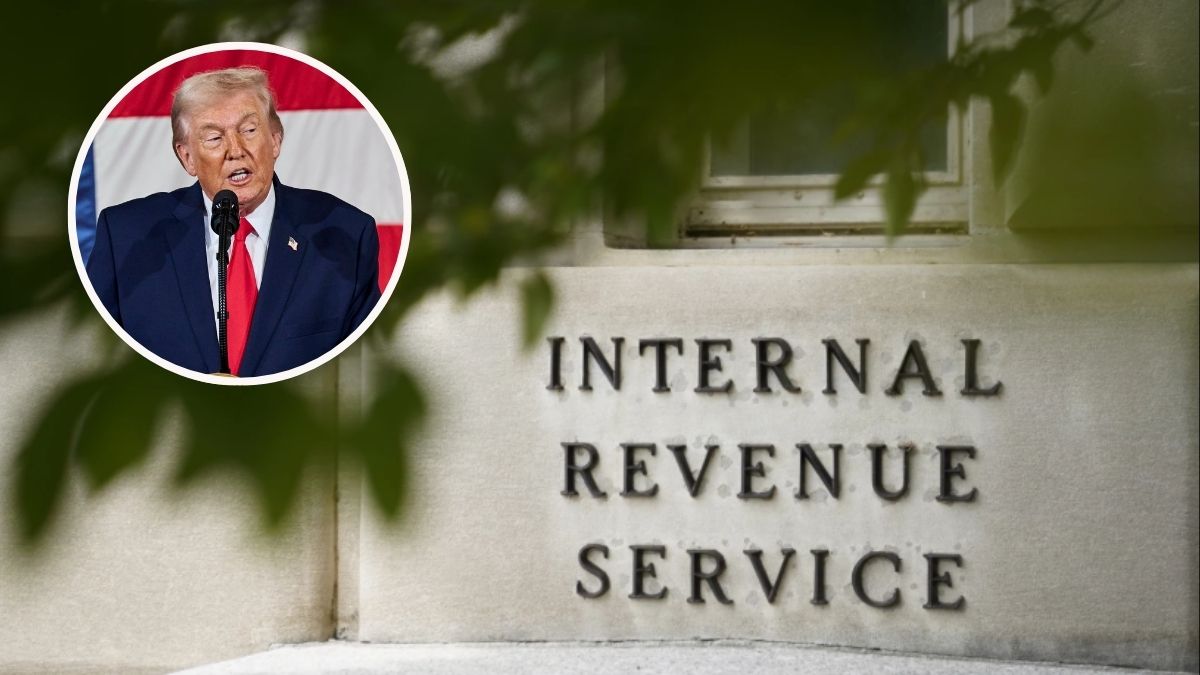
A federal court in Washington, DC, has dealt a major blow to an immigrant rights group by ruling in the Donald Trump administration’s favour. As per the new decision, the plea to temporarily block the Internal Revenue Service (IRS) from sharing taxpayer data with the Department of Homeland Security (DHS) for immigration enforcement has been rejected.
The Trump admin sought to share certain taxpayer data to facilitate the identification and subsequent deportation of people who are in the United States illegally.
Court rules in Trump admin’s favour
On Tuesday (US time), a three-judge panel for the US Court of Appeals for the DC Circuit rejected to issue a ruling in the favour of immigrants’ rights group, Centro de Trabajadores Unidos, and other nonprofits that are suing the federal government over a data-sharing agreement signed last April by US Treasury Secretary Scott Bessent and Homeland Security Kristi Noem.
While declining the preliminary injunction request, Judge Harry T Edwards that the nonprofits “are unlikely to succeed on the merits of their claim,” as the information shared by the agencies isn’t covered by the IRS privacy statute.
Attorney General Pam Bondi has since addressed the ruling being flipped in the Trump admin’s favour on social media. Calling it a “crucial victory” for the Trump government, she wrote in her post, “Deporting illegal aliens makes the American people safer.”
As reported by the Associated Press, a declaration filed by IRS Chief Risk and Control Officer Dottie Romo indicated that the IRS could only verify about 47,000 of the 1.28 million names US Immigration and Customs Enforcement (ICE) requested. The IRS ended up providing ICE additional address information for less than 5% of those people, potentially violating privacy rules meant to protect taxpayer data.
The yesteryear deal under scrutiny in the Centro de Trabajadores Unidos v Scott Bessent case allowed ICE to submit names and addresses of immigrants residing in the US illegally to the IRS so that they can be cross-checked against tax records.
The US Treasury Department had previously said that the agreement would be beneficial in carrying out Trump’s immigration crackdown and securing US borders. The agreement’s basis was founded in “longstanding authorities granted by Congress, which serve to protect the privacy of law-abiding Americans while streamlining the ability to pursue criminals,” the Associated Press quoted a Treasury official last year.
Meanwhile, Todd Lyons, the acting ICE director, told reporters at the Border Security Expo at the time that the deal would help ICE find people who may be collecting benefits that they shouldn’t be getting and are “kind of hiding in plain sight” using someone else’s identity.
Immigrants stopped filing taxes out of fear?
In light of the ICE-IRS data sharing agreement signed last year, many immigrants were reportedly scared out of filing taxes. According to a NewBedfordLight.Org report, Brian Pastori, deputy director of the Community Economic Development Center (CEDC), told the outlet that the nonprofit handled fewer tax filings a year ago than in previous tax filing seasons.
“There’s fear around filing,” he said, adding, “We’re obligated to tell people that this information is going to be shared with ICE. So sometimes this leads people to decide not to file.”
After 1976, Section 6102 of the Tax Reform Act made it a criminal offence for the IRS to share tax records with any other branch of government. However, it still allows information sharing for non-tax enforcement purposed under a judicial order or if a request meets certain parameters.
While the concept of immigrants, especially the undocumented, contributing to taxes may seem far-fetched, the actual picture is quite different. Despite some undocumented immigrants working “under the table,” others are, in fact, on a payroll.
lan Clayton-Matthews, a professor emeritus of economics and public policy at Northeastern University, said, “To the extent that they’re working and they have withholding [taxes], they’re paying taxes. If they buy something, they’re paying taxes. If they’re on a payroll, they’re paying taxes,” as per the NewBedfordLight.org report.
Even a 2024 study by the Institute on Taxation and Economic Policy found that the estimated 11 million undocumented immigrants in the US contributed almost $97 billion in federal, state and local taxes in 2022.