



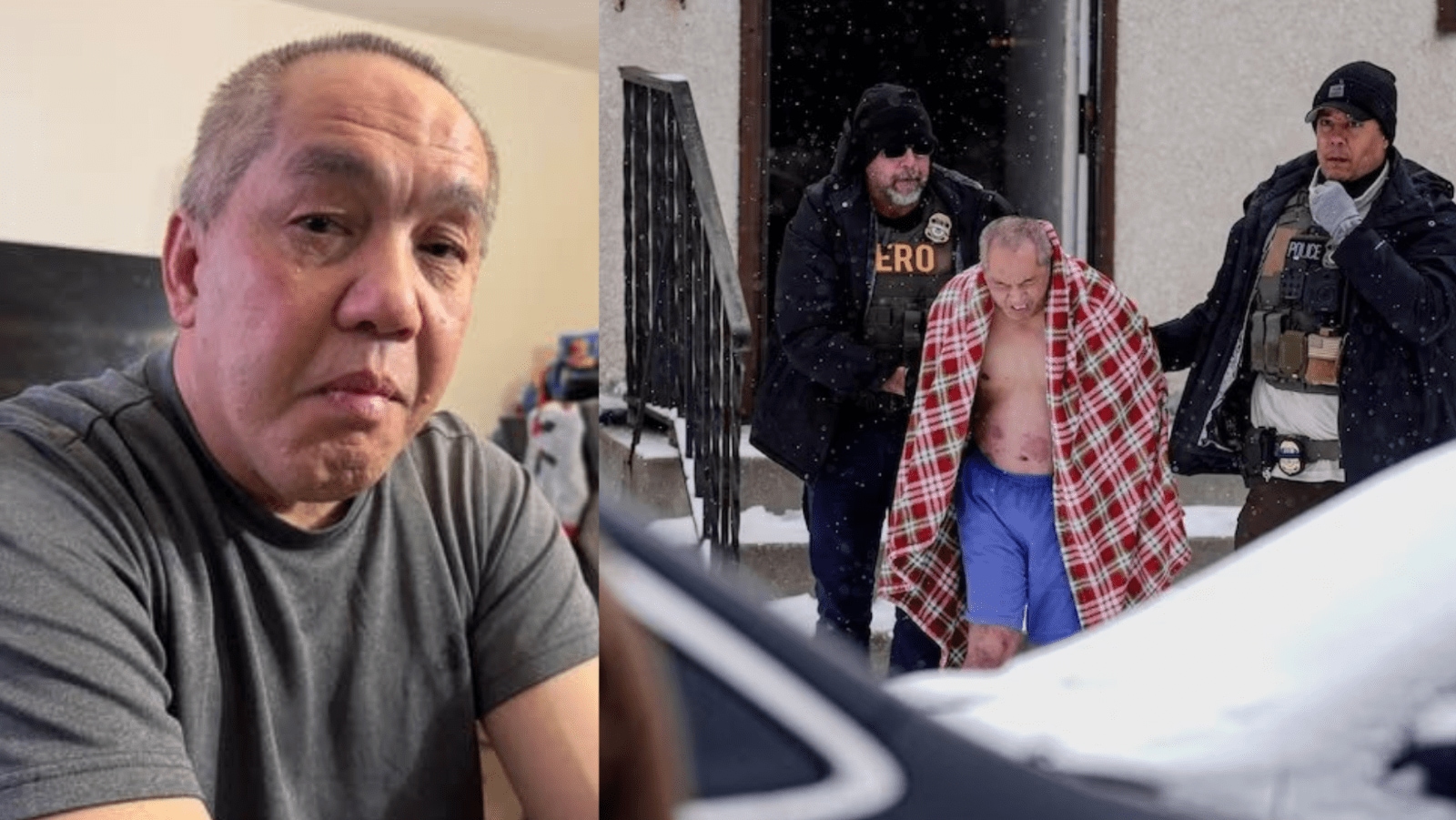
ChongLy Thao, a 56-year-old Minnesota resident and naturalised US citizen recently shared the horrible experience he had on an ICE raid with Reuters. A Sunday evening in Saint Paul turned into a nightmare for him after federal immigration officers broke down the door of his home and dragged him outside into freezing temperatures during an Immigration and Customs Enforcement (ICE) operation.
Thao, a Hmong man born in Laos, said the incident left him feeling humiliated, terrified, and deeply ashamed. Outside temperatures that day hovered around 14 degrees Fahrenheit, yet Thao was escorted out wearing only boxer shorts and Crocs.
He was denied the chance to put on more clothing and instead wrapped himself in a blanket his four-year-old grandson had been sleeping with. Images of Thao standing in the snow, barely clothed and surrounded by law enforcement, spread across social media, increasing major concerns over the conduct of federal officers during immigration raids.
What happened to Thao during the ICE raid?
According to Thao, he had been singing karaoke when he heard a loud crash at the door. Officers entered the house with guns drawn asking family members to hide in a bedroom. Thao was handcuffed and taken outside as neighbors looked on. During the ordeal, he feared he might be deported regardless of having lived in the United States since childhood and becoming a citizen in 1991.
He said the experience made him feel powerless and stripped of dignity. His family later described the raid as “unnecessary, degrading, and deeply traumatizing,” saying it caused lasting emotional harm not only to Thao but also to children in the home. “I was praying. I was like, God, please help me, I didn’t do anything wrong. Why do they do this to me? Without my clothes on,” he told Reuters.
DHS cites search for suspects
The Department of Homeland Security said the raid was part of an investigation targeting two convicted sex offenders subject to deportation orders. DHS stated that Thao matched the description of the suspects and was detained after refusing fingerprinting or facial identification. Officials added that it is standard procedure to detain all individuals inside a residence during an operation to ensure safety.
However, relatives familiar with the situation said one of the wanted individuals no longer lived at the address and had moved out earlier. They identified him as the former husband of a family member. After being fingerprinted and photographed inside a vehicle, Thao was returned home. He said he received no apology or clarification from officers. Back at his Saint Paul home, workers repaired the shattered door as Thao tried to make sense of what had happened.
For him, the raid raised painful questions about safety, belonging, and the promise of America, questions that remain unanswered. He said his parents brought him to the United States nearly five decades ago in search of security and opportunity. What he experienced instead, he said, was fear and public humiliation.
Minnesota on edge amid aggressive enforcement
The incident comes as Minnesota experiences increased tension over federal immigration enforcement. ICE actions in recent weeks, including confrontations at a Somali mall in St. Cloud and raids in Minneapolis, have led to major protests and increased sharp criticism from local leaders. St. Paul Mayor Melvin Carter has publicly condemned what he described as the wrongful targeting of innocent residents.
In another instance, Renee Nicole Good, a 37-year-old mother and poet, was recently shot and killed by a federal immigration agent in Minneapolis. Although city officials stated she was there as a legal observer to watch over immigration (ICE) activities, the Trump administration has labelled her a “domestic terrorist.” Her death has led to large protests across the country, with many people demanding justice for her.
A federal judge recently issued an injunction blocking certain aggressive ICE tactics, warning that such actions could intimidate ordinary citizens and suppress constitutionally protected behaviour.
The Trump administration has since appealed the ruling. At the same time, the state faces overlapping challenges, including winter weather emergencies, financial strain on public hospitals, and rising political unrest that has prompted authorities to keep military resources on standby.