



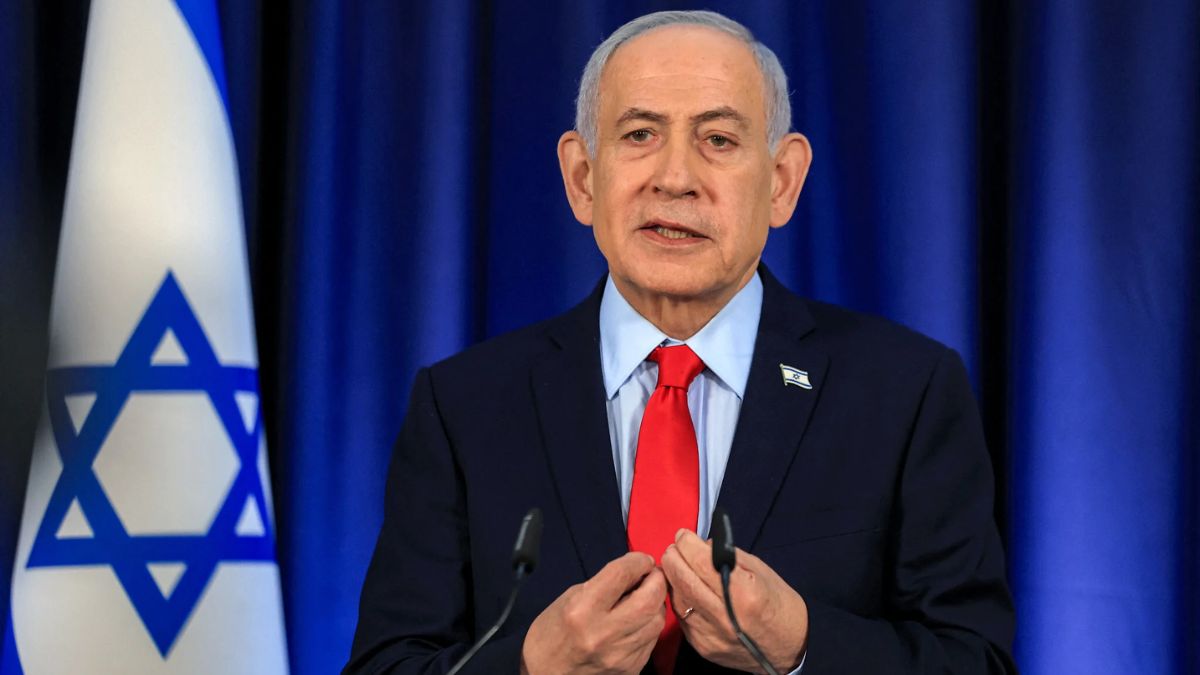
After staying quiet for hours while the United States and Iran announced a two‑week pause in fighting, Israel finally broke its silence. Prime Minister Benjamin Netanyahu’s office said that Israel supports the US decision to suspend attacks on Iran, but made it clear that the ceasefire does not cover Lebanon.
Israel also said it backs President Trump’s move on the condition that Tehran immediately reopens the Strait of Hormuz and stops attacks on the United States, Israel, and other countries in the region, Reuters reported.
Earlier, Pakistan’s Prime Minister Shehbaz Sharif had suggested that the ceasefire also covered Lebanon, creating some confusion over the deal.
Disagreement over Lebanon
While two White House officials confirmed that Israel agreed to the two-week ceasefire and would suspend its bombing campaign on Iran, Pakistan’s Prime Minister Shehbaz Sharif, who helped mediate the deal, suggested in a post on X that the agreement included a halt to Israel’s campaign in Lebanon.
Lebanon has been caught in the crossfire of the conflict. The Israeli offensive there has killed at least 1,500 people and forced 1.2 million to flee their homes. The escalation began after the Iranian-backed Hezbollah fired rockets into northern Israel in retaliation for joint US-Israeli airstrikes that killed former Iranian Supreme Leader Ali Khamenei. Israel responded with a ground and air offensive.
According to Reuters, Israel also said it supports the United States’ push to make sure Iran no longer poses a nuclear, missile or “terror” threat to the US, Israel and Iran’s Arab neighbours. According to the Israeli statement, Washington has told Israel it is committed to working toward those shared goals in the negotiations ahead.
Iran agrees to talks, but war continues
Iran confirmed the two-week temporary ceasefire and said negotiations with the US would start in Islamabad on Friday, April 10. Iran’s starting conditions include keeping control of the Strait of Hormuz and the complete withdrawal of US military forces from the region.
Despite the ceasefire announcement, attacks and missile strikes continue in parts of the region. It is not clear when the truce will officially begin or how long it will last.
Trump calls the ceasefire a victory
President Trump described the two-week ceasefire as a “total and complete victory.” He told reporters that the issue of Iran’s enriched uranium stockpile would be “perfectly taken care of” under the agreement.
“One hundred percent. No question about it,” Trump said. He added that the uranium issue could be monitored from satellites, a point he had previously dismissed as less important.
Trump celebrates ceasefire as a ‘Golden Age’ for the Middle East
On April 8, Trump took to X to call the ceasefire a “big day for World Peace.” In his post, he said, “Iran wants it to happen, they’ve had enough! Likewise, so has everyone else!” He added that the United States would assist with traffic management in the Strait of Hormuz and that significant economic opportunities could follow.
Trump also highlighted reconstruction efforts in Iran, saying, “Iran can start the reconstruction process. We’ll be loading up with supplies of all kinds, and just ‘hangin’ around’ in order to make sure that everything goes well. I feel confident that it will.” He concluded on an optimistic note, predicting, “Just like we are experiencing in the US, this could be the Golden Age of the Middle East!!!”