



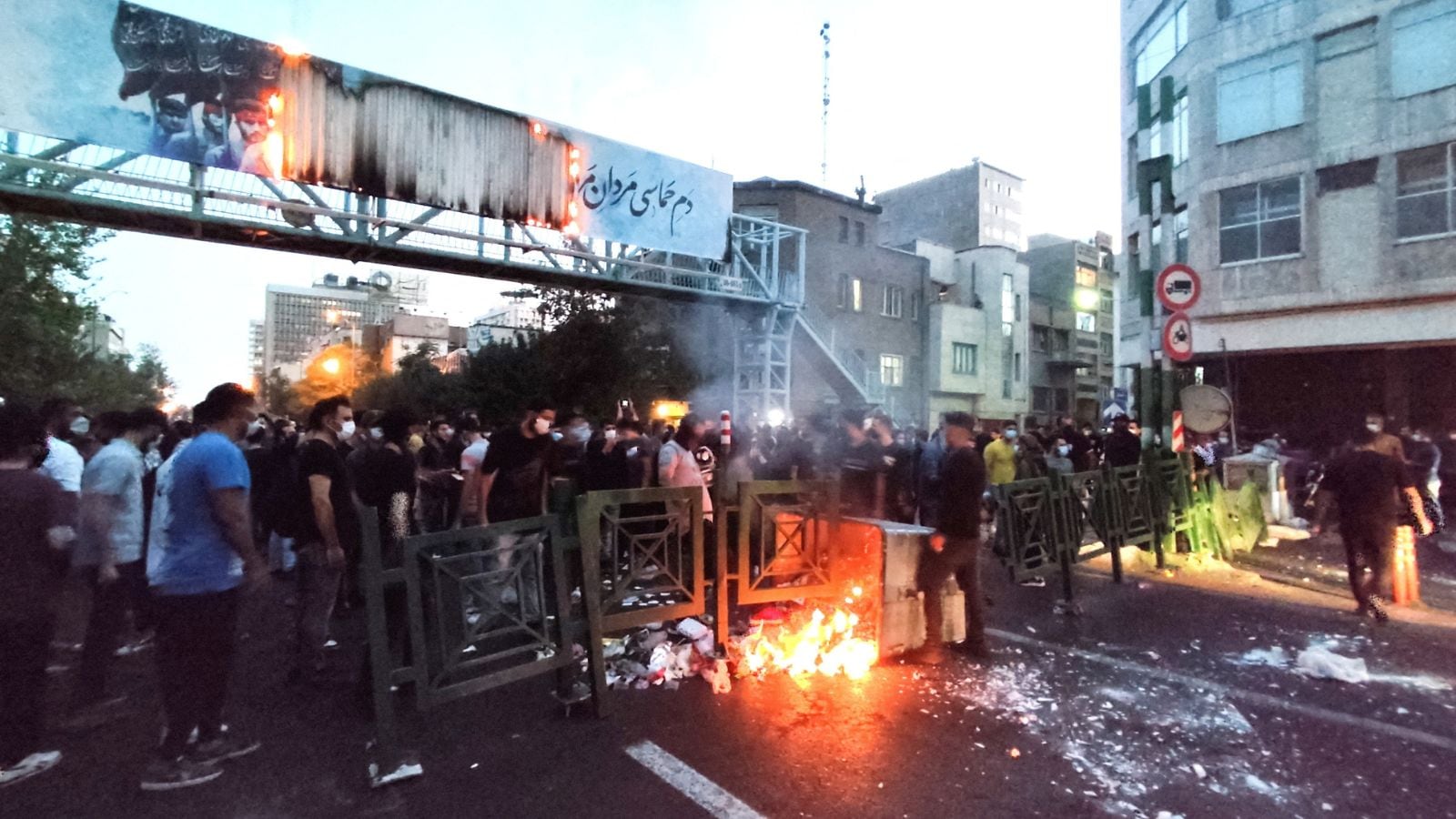
Iran is facing one of the worst unrest in three years, with protests spreading across the country and the government responding by cutting off the both mobile and landline internet services, effectively cutting off Iran from the rest of the world.
So far, the Iranian government has not launched a full military crackdown, which analysts suggest may be out of fear of US intervention. US President Donald Trump had last week said that if Iran “violently kills peaceful protesters,” the United States would step in. He warned that the US was “locked and loaded and ready to go.”
According to the US-based Human Rights Activists News Agency, at least 42 people have been killed so far. More than 2,270 others have been detained as security forces try to regain control.
Iran goes dark as protests spread nationwide
Internet watchdog NetBlocks said connectivity dropped sharply around 8 pm local time on January 8. Reuters and AFP reported that the blackout was nationwide and affected all major networks. Calls from outside Iran, including from Dubai, failed to connect. More than 85 million people were suddenly pushed into the dark.
The blackout came as thousands of Iranians took to the streets in all 31 provinces after a call for mass protests by Iran’s exiled Crown Prince, Reza Pahlavi. Many people shouted slogans from rooftops and windows when security forces tried to intervene. In several places, demonstrators set fire to government buildings.
Tehran tonight is witnessing its largest mobilization yet. pic.twitter.com/88CE8M9S8Y
— Open Source Intel (@Osint613) January 8, 2026
Iranian streets filled with violence and chants
Across cities, protesters chanted slogans like “Death to the Islamic Republic” and “This is the last battle, Pahlavi will return.” The protests turned intense in several areas. According to one AP report, a police colonel was stabbed to death near Tehran. Two security personnel were shot in Lordegan. In Chenaran, five people were killed during an attack on a police station. Fires were set on roads in Tehran, and large crowds were seen in Borujerd, Arsanjan and Gilan-e Gharb. Videos from Shiraz showed security vehicles smashing through barricades carrying messages that read, “We revolt due to hunger.”
Hardline newspaper Kayhan issued threats, saying drones could be used to identify and track protesters. Despite this, crowds continued to gather before communication lines were fully shut.
BREAKING:
— 𝐍𝐢𝐨𝐡 𝐁𝐞𝐫𝐠 ♛ ✡︎ (@NiohBerg) January 8, 2026
The people of Tehran are burning down regime buildings right now. The crowd is MASSIVE.
pic.twitter.com/V5j6nwbLb4
From inside prison, Nobel Peace Prize laureate Narges Mohammadi’s family has repeated the protesters’ core demand, an end to Iran’s clerical and patriarchal rule. Outside Iran, activist and journalist Masih Alinejad has urged world leaders to support the protests, now in their twelfth day. She said the message from the streets could not be clearer. “The people do not want this regime,” she wrote on X, adding that Iranians would never accept reformists taking power again.
Alinejad also slammed the internet shutdown as a familiar tactic. She appealed directly to Elon Musk to help restore access. She also urged Trump and the international community to support Iran’s path toward a secular democracy.
Iran’s collapsing economy
The protests began late last month after shopkeepers at Tehran’s Grand Bazaar shut down their businesses. The trigger was the collapse of Iran’s currency.
In December, the rial fell to 1.4 million to one US dollar. Before the 1979 Islamic Revolution, the exchange rate was around 70 rials to the dollar. Even during the 2015 nuclear deal, one dollar traded at about 32,000 rials.
Sanctions, economic mismanagement, and the fallout from a 12-day war with Israel in June have pushed Iran deeper into crisis. Inflation stands at around 40 percent. Prices of meat, rice and basic goods have surged. Fuel prices were raised in December, and the government plans to review them every three months.
As protests entered their second week, Iran’s Chief Justice Gholam-Hossein Mohseni-Ejei issued a warning. He said anyone who came to the streets or supported protests was acting in line with the “enemies of the Islamic Republic” and would face consequences.