



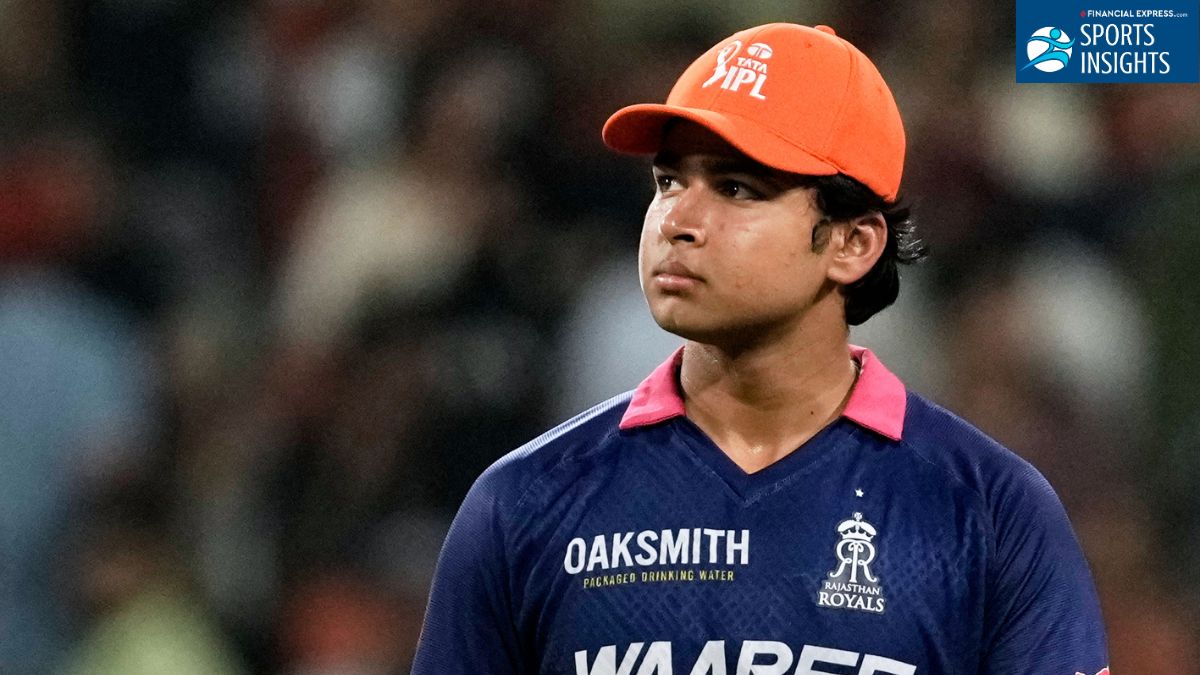
There is a boy from Samastipur who hit 101 off 38 balls in the Indian Premier League (IPL) before he had sat for his Class 10 exams. He was fourteen years old. The bowlers he faced were not club cricketers on a Sunday afternoon. They were Test players, international pace men, ranked among the most dangerous in the world.
He hit them straight, over mid-on, over long-off, with the calm of someone who simply could not imagine any other outcome. And we watched. And then immediately we started asking: but can he play Test cricket?
He was 14 years, 32 days old. The stadium in Jaipur made a noise it had never made before. A century. The youngest ever. In that moment, Vaibhav Sooryavanshi should have been the happiest boy in India.
But happiness is not what we allowed him. Before the innings ended, phones were already open. Social media. Living rooms. Will he play Test cricket? Is he better than Sachin? What if he fails?
It had the same anxious urgency of a parent asking a child who just topped the class whether he can do it again next year The boy had just done something no human being had done before in this sport. And we were already bored. We needed tomorrow.
This is about a child who has become a screen for our projections. And it is time to say it plainly.
The records nobody stops to read
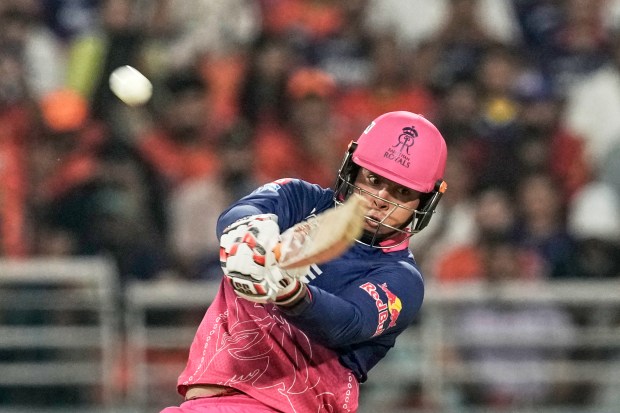
Let us go through them slowly, because they deserve that.
At twelve years and two hundred and eighty-four days, Vaibhav Sooryavanshi walked out to play first-class cricket for Bihar against Mumbai in the Ranji Trophy. Youngest in the modern era to do so. He was still a child whose voice had not fully broken.
101 off 38: Youngest IPL centurion ever
175 off 80: Highest score in U-19 World Cup final
190 off 84: Broke AB de Villiers List A record of fastest 150 at 14
242.85: Strike rate across IPL 2026 season
In the IPL 2026 Eliminator against Sunrisers Hyderabad, he made 97 off 29 balls. Twelve sixes.
Pat Cummins, who has won a World Cup and taken hundreds of Test wickets, said afterwards that if you miss your yorker even slightly, this boy does not miss the chance to hit you. That is a specific kind of dread. A fifteen-year-old had induced it in one of the finest fast bowlers alive.
A father who is not easily Impressed
Sanjeev Sooryavanshi, the boy’s father, has said plainly that until his son plays Test cricket, he will not consider him a big cricketer.
Say that again. His fourteen-year-old son breaks the records of AB de Villiers, scores a century in an IPL , wins the Player of the Tournament at U-19 World Cup, and the father watches all of this and feels the ledger is still not settled.
There is a video from late 2025. Vaibhav had just scored 144 off 42 balls for India A in Doha. On a video call with his father, expecting perhaps a brief moment of warmth, he instead received technical instruction.
The father told him that one shot, had he hit it higher over the covers, would have gone for six instead of four. The boy smiled. He said, even 200 would not have been enough.
It would be easy to reduce Sanjeev Sooryavanshi to a caricature, another South Asian parent moving the goalpost the moment it is reached. But that reading misses the love buried in the refusal. He knows this world is full of people who will tell his son he is the next Tendulkar.
He has decided to be the one who will not. In a system that builds boys up only to watch them fall, there is a cold wisdom in that choice. The problem is what it costs a fifteen-year-old to carry it.
The Tendulkar comparison is a category error
They keep comparing him to Sachin Tendulkar. It is an easy thing to do. Both were small. Both hit centuries young. Both carried the dreams of a nation before they could drive a car.
When Sachin Tendulkar played his first Test against Pakistan in 1989, he was sixteen. A fast bowler hit him on the mouth. He bled, he carried on and that image became the founding myth of everything that followed.
His genius was measured in hours at the crease, in patience, in the willingness to absorb pain. The era asked him to endure. He endured magnificently.
Sooryavanshi lives in a different world entirely. His genius is measured in the distance between the ball and the rope, in the number of balls he needs before the hundred arrives, in whether he can make a bowler feel useless inside the powerplay.
The era asks him to detonate. He detonates magnificently. These are not the same sport wearing different clothes. They are two different arguments about what batting should look like.
Comparing their statistics is like asking whether a sprinter has the temperament for a marathon. The question is not wrong. It is simply not the most urgent one when the sprinter is, right now, running faster than anyone who has ever lived at that distance.
Tendulkar carried his Class 10 textbooks on the 1990 England tour. The Cricket Club of India changed its rules about minors in the dressing room just to accommodate him. Institutions bent themselves for the boy.
Today, Sooryavanshi skipped his Class 10 exams entirely, not because he did not care but because the media attention around the examination hall would have made concentration impossible. Institutions have not bent for him. They have simply kept moving and expected him to keep up.
Sachin debuted in 1989. India had 1 TV channel. Newspapers came once a day. When he carried his tenth-grade textbooks to England, nobody was making Instagram reels about it.
The world moved slowly. It gave him room to grow.
Vaibhav lives in a different country. It only looks like the same one. His India has the IPL. It has auction tables. It has grown men with laptops who count how many boundaries he hit and turn them into charts.
Someone is recording his every move in the nets and his personal life. The feedback is instant. The pressure is liquid. It finds every crack.
Comparing them is like comparing a handwritten letter to a text message. Both carry words. But the world around them is not the same. Dinesh Karthik said it simply. Tendulkar’s battles were on the field. Vaibhav’s battles will be off it. The phone is the new fast bowler. And it does not need a new ball to kill you.
Bihar and the revolution nobody polished
Sooryavanshi’s coach in Patna, Manish Ojha, says the phone calls are relentless. Parents want to enroll two-year-olds. They have seen what a boy from Samastipur can do and they believe the formula can be reproduced. They want the next Vaibhav. They do not want a child who plays. They want a product that returns profit.
An old proverb used to say that Padhoge likhoge banoge nawaab, kheloge kudoge banoge kharaab. That proverb has been quietly retired in parts of Bihar. One fourteen-year-old with a bat changed that faster than any government scheme or policy could have.
There is something moving about this, and also something to watch carefully. The boy who changed a proverb is still a boy. He goes back to a town where people know his batting average but perhaps not his birthday.
The weight of that kind of love is not light. It asks you to keep performing the miracle, to never have a bad day, to never simply be fifteen and unsure of things.
The boys who were too famous too soon
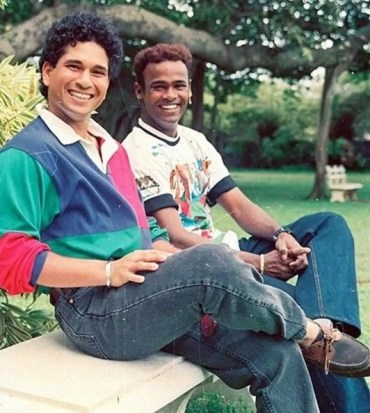
Vinod Kambli scored back-to-back double centuries in his third and fourth Tests. He was twenty-one. Many people who watched him in those early years will tell you quietly that they thought Kambli had more natural ability than Tendulkar.
He was done at twenty-three. The system labelled him difficult and moved on. He never got the professional help he needed for what was clearly something deeper than discipline.
Prithvi Shaw scored a Test century on debut at eighteen. He was a child prodigy, a World Cup winner at under-19 level, compared endlessly to Tendulkar. In late 2024, not a single IPL franchise bid for him at his base price. He went unsold. The same system that had declared him a future great had no use for him six years later.
Both of them were failed, not by talent, but by the absence of any thoughtful structure around them when things began going wrong. The Indian cricket system has always been brilliant at discovering genius. It has been far less careful about protecting it.
We call them cautionary tales. As if they are stories in a book we read to children. But they are not tales. They are men. Kambli wept somewhere alone. Shaw trains in nets now, wondering what happened to the boy who had the world. The system chewed them and asked why they tasted bitter.
Sooryavanshi has the Rajasthan Royals, who have managed young talent carefully before. He has a father who will never be satisfied, which is at least a kind of anchor. He has a coach who answers bizarre phone calls with patience.
But does he have a person who will sit with him when the runs stop? When the shoulder hurts? When the comments turn dark? Indian cricket does not buy sports psychologists for boys. It buys them bats. It assumes a mentor’s example is enough. But example is not therapy. And dozen of sixes cannot heal a panic attack.
Whether that is enough for the particular pressure of being a famous fifteen-year-old in the digital age, nobody honestly knows.
Why we cannot just watch
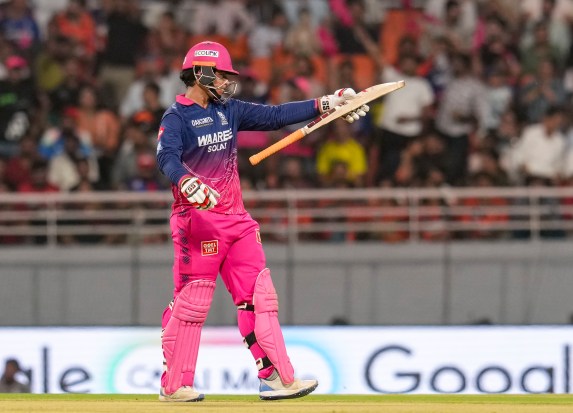
There is a reason we do this to him. The mind hates an open ending. When a 15-year-old hits 97 off 29 balls, we feel joy for three seconds. Then we feel fear. What if this is the best he ever does? What if I am watching a flash, not a flame?
So we compare. Sachin. Kohli. The next Tendulkar. We turn the boy into a spreadsheet. We want to know if our investment of attention will pay off. This is less passion and more anxiety wearing a jersey.
Some psychologists have a name for it. Obsessive passion. The game becomes part of who we are. If the boy fails, we fail. So we cannot enjoy the six. We must defend the six by saying it proves he will be great in 2035. We rob the present to insure the future. And in doing so, we miss the whole point.
When you compare a youngster to a legend, every innings becomes a test. People start expecting greatness every time. And that is not how a boy becomes a man. That is how a boy becomes a machine. Then a broken machine.
Final thought
Sooryavanshi was born in March 2011. Chris Gayle hit his famous 175 in the IPL in 2013. The boy was two years old. He has grown up entirely inside the T20 era, shaped by it, formed by it, and he now surpasses its records as though they were always waiting for him to arrive and claim them.
We are out of words 👏👏
— IndianPremierLeague (@IPL) May 27, 2026
9⃣7⃣(29) of absolute force from Vaibhav Sooryavanshi 🔥🔥
Updates ▶️ https://t.co/OBIYYIuhbt #TATAIPL | #Eliminator | #TheFinalLeap | #SRHvRR pic.twitter.com/gtt63Wwkx1
There will be difficult years. There will be a period, perhaps already near, when bowlers study him, when the plans are made, when the vulnerabilities are found and exploited, because that is how cricket works at its highest level.
He will need to adapt. He may struggle. He may, in the way of all athletes who start in the public eye too young, carry that struggle more visibly than he should have to.
But none of that is happening now. What is happening now is a fifteen-year-old from Samastipur, Bihar, playing cricket with a freedom that looks almost careless but is actually the product of extraordinary talent and years of unglamorous work.
There is no big lesson here. No conclusion to wrap this up. Only a simple request.
Watch him. That is all. Sit with it. When he bats, do not think of 2030. Do not think of Sachin. Do not think of Test averages in England. Think of a boy from Bihar who hits a ball so hard it changes the air around it. Think of the sound. The silence before the swing. The way he sets his feet.
These things are free. They are yours. Atleast for now. Let it be exactly what it is, without immediately turning it into evidence for or against something that has not happened yet.
The future will get here. It always does. But right now, in this particular season, there is a boy who hits sixes with a smile and a stillness that makes you think he has no idea he is supposed to be nervous.
Stop asking what he will become. He is already here. And for this moment, this brief, shining moment, that is more than enough.