



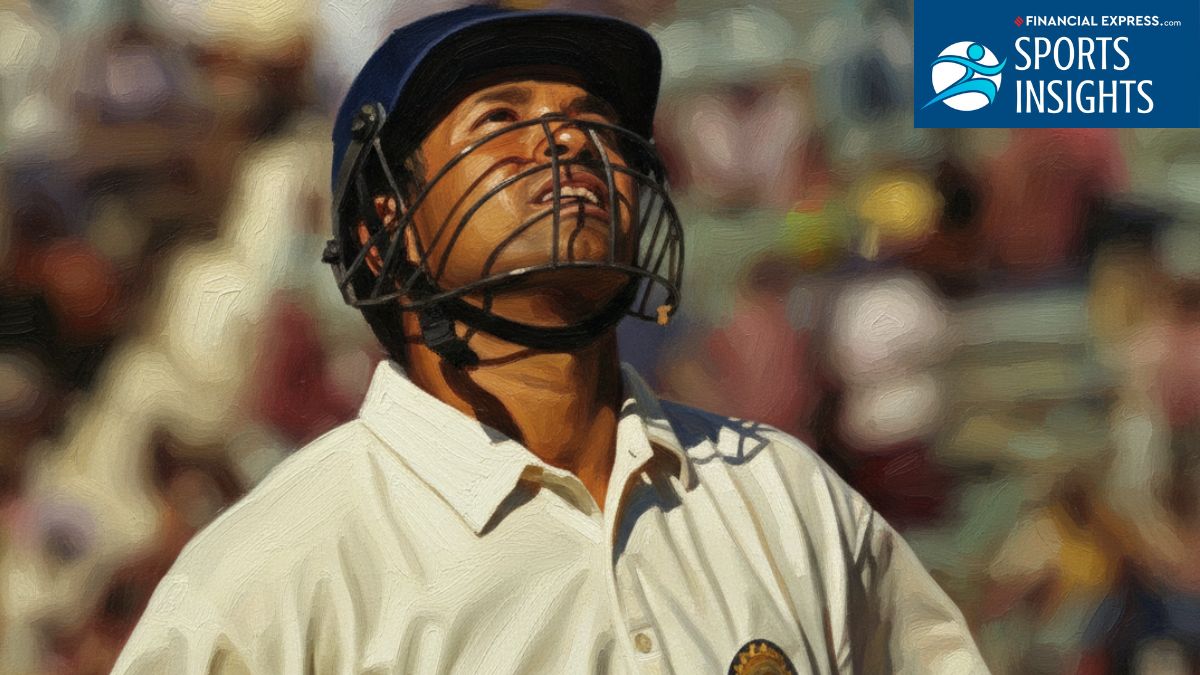
You could smell the liniment from the stands. That winter in Chennai, the humidity still sat heavy, and when Sachin Tendulkar walked out at six for two on the third evening, he moved like a man already carrying something. You could see it in the way he took the first few steps. The back had gone.
When cricket mattered more than borders
But let’s go back. You need to understand what was sitting on this match. Delhi had been cancelled because of the Shiv Sena. They moved it to Chennai three weeks before Christmas. 3000 policemen showed up on day one.
This was the first Test between India and Pakistan in nine years. No one knew if they would finish the game. But finish it they did. And somehow, the cricket made everyone forget the world outside
Mountain grew higher each day
Pakistan made 238. Nothing heroic. Youhana and Moin Khan did the rescue act after Kumble had taken the top order apart. Six for 70. Then India batted. Ramesh and Laxman put on 48 quick ones, but Wasim Akram was bowling with that wrist of his, and suddenly it was 254 all out. Close, but you knew it wasn’t close enough.
Saqlain Mushtaq got Tendulkar third ball on day two. Sachin had walked down the track, trying to hit a doosra, the very delivery Saqlain had invented, over long-on. The ball turned, took the leading edge, and lobbed to backward point. A duck. He walked off faster than he had walked in. You could see him talking to himself.
Then came Afridi. Not the Afridi of the 37-ball hundreds. This was different. He batted five hours and made 141. Inzamam played anchor at the other end, and Salim Malik hung around. They got to 275 for four. The game was drifting away.
Then tea happened on day three.
Venkatesh Prasad. Five wickets in 18 balls. Not a run conceded. The ball was reversing just enough. Pakistan went from 275 for four to 286 all out. India needed 271. The record book said 256 was the best chase in India, and that was in 1964. Before most of these players were born.
The fourth morning
India started at six for two. Tendulkar came out with that heavy bat. The same one he had used to dismantle Warne here the year before. Remember that? The slog-sweeps into the crowd at midwicket?
This was different. He was calculating. You could see his eyes moving; midwicket, cover, then back to the bowler. The helmet grill was down. Mongia was at the other end, struggling.
By lunch, India were 82 for five. Two decisions had gone wrong. Steve Dunne was having a rough day. The crowd had gone quiet. Not the Chennai quiet of contemplation, but that empty sound when people start thinking about traffic and beat cops. It was over. We all thought it was over.
Then they added 136.
Liniment and the pain
Between overs, Sachin would walk to square leg. Not jog. Walk. He would put his left hand on his lower back and press. His face would contort; not the dramatic grimace of a footballer, but that quick, private wince men do when they think nobody’s looking. Sometimes it happened between deliveries.
He would be at the non-striker’s end, waiting for the bowler to turn around, and you could see his shoulders drop for just a second. The back had given up. The spine was protesting. But the hands were still working.
Mongia hung in there. He played and missed. He edged through gully. He survived. Sachin started nudging. One here, two there. The strike rotated. They did not lose a wicket between lunch and tea. The crowd started believing again. You could hear the murmurs building. “Maybe. Maybe he’s doing it again.”
The drop
After tea, Saqlain came on. The doosra man. Sachin knew he could not defend. The back would not allow him to bend and block. He had to hit his way out.
First ball, pulled to midwicket. Four.
Second ball, paddle-swept fine. Four more.
Third ball, he charged. Not all the way to the pitch, but enough to get the momentum going. He swung. Hard. The bottom edge flew to Moin Khan. He could have caught it. Could have stumped him if he’d collected. Could have done anything. The ball hit his gloves and popped out. Landed safe.
Saqlain collapsed. Just went down on his haunches, right there on the pitch, looking at Wasim Akram with his hands spread. Like he was asking why. Moin stood with his hands on his hips. He could not speak.
Two balls later, another paddle-sweep. Four.
Next ball, dragged across the line. Four.
Sixteen runs in the over. The target was 103 now.
Body Said No
Pakistan took the new ball when 95 were needed. Sachin was running on something else now. Not adrenaline. Something deeper. The back had “all but given up,” he would say later. But the mind was refusing to check out.
Mongia got to fifty. The partnership was worth 136. India needed 53.
Then Mongia tried to hit Wasim across the line. Top edge. The ball went up and stayed up. Waqar Younis was at cover. He settled under it. Took the catch. The speakers cut out. The hum of the crowd stopped. Sachin was alone.
53 runs to get. 4 wickets left. The body had nothing. Absolutely nothing.
The top edge
He had to try it. There was no other way. He could not stand straight at the non-striker’s end. He could not bend to defend. Saqlain floated one up, and Sachin tried to hit it over mid-off. He had to clear the field. Had to.
The ball bounced a touch more. The back did not allow the full extension. Top edge. High. Wasim Akram stood under it at mid-off. Waited. Took it easily.
Sachin had batted 405 minutes for his 136 runs. India were 254 for 7. Seventeen runs short.
The end came quickly
Kumble fell lbw to Akram for one. Joshi hung around, made eight, caught and bowled by Saqlain. Srinath made one. Saqlain took the last wicket. India all out for 258. Pakistan won by 12 runs.
The Pakistani players fell to the ground in prayer. Then they got up and ran a lap of honor. The Chennai crowd; this same Chennai crowd that had seen Tendulkar destroy England in 1993 and Warne in 1998; stood up and clapped. Not cheered. Clapped. A steady, rhythmic sound. The Pakistanis kept looking up as they ran. They could not believe it.
The silence after
Sachin did not come out for the Player of the Match award. Raj Singh Dungarpur, the BCCI president, went to the dressing room. He asked him to come out. Just for a minute. Sachin said no. He was crying. Could not stop. The back was in spasm. The heart was broken.
He had given everything. The back, the hours, the calculation. And he had fallen seventeen runs short.
But if you were there that evening, if you saw him hold that back between overs, if you saw the Pakistanis bow to the crowd and the crowd clap back, you knew you had seen something that had nothing to do with winning. You had seen a man use up his body completely. And you had seen a game rise above everything else.
Seventeen runs. They still hurt. Probably always will.