



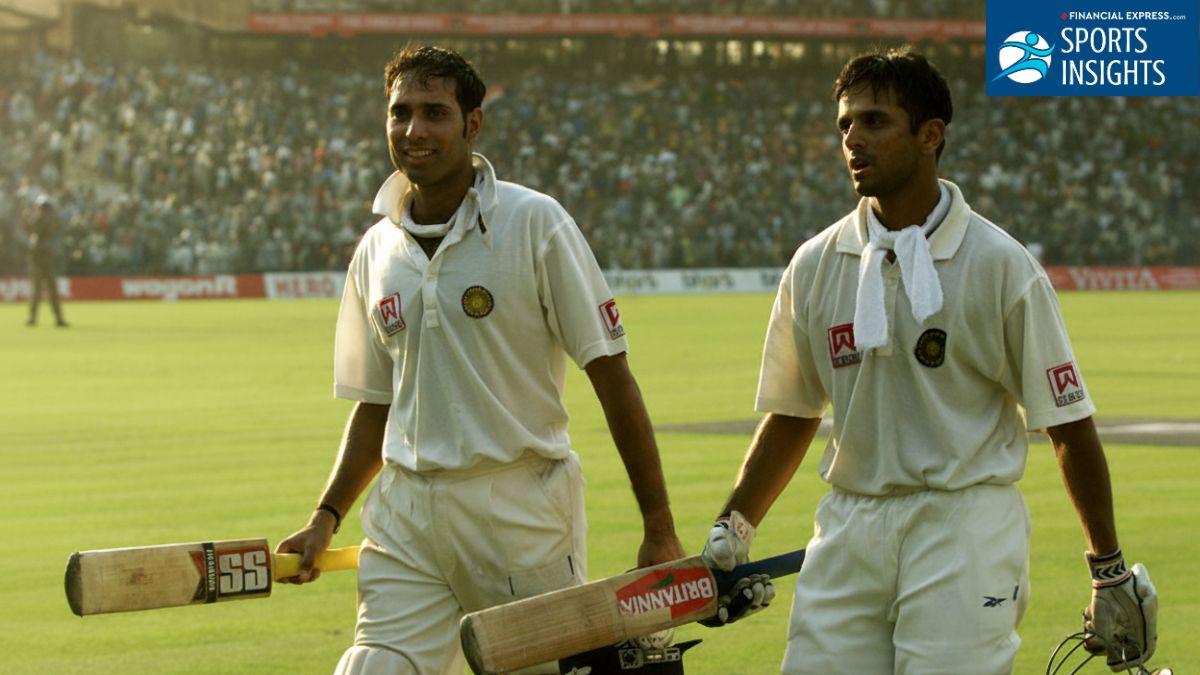
You had to be there. That’s what everyone says about Eden Gardens, March 2001. But the truth is, even if you weren’t in the stands, you were there. In your living room. Around a radio. In some office where work stopped and cricket took over. India was playing Australia.
India was following on. India was supposed to lose. And then something happened that we still cannot fully explain.
Let me set the table first. This was Indian cricket at its lowest point. Match-fixing had ripped out our trust. Sachin Tendulkar had tried being captain and walked away. Sourav Ganguly, barely 28, was learning on the job with a New Zealander named John Wright trying to hold things together.
Australia had won 15 Tests in a row. Fifteen. They were compared to Bradman’s Invincibles. In the first Test in Mumbai, they made it Sixteen. Matthew Hayden and Adam Gilchrist had battered us into the ground.
Then came Kolkata. Three days of cricket that turned into something else entirely.
The Morning Nobody Expected
Day two was a disaster. Australia made 445. Hayden hit 97 like he was angry at the ball. Steve Waugh batted five hours for 110, breaking our spirits one defensive prod at a time. Then we folded for 171. McGrath took four for 18. It was embarrassing.
The only small thing was VVS Laxman at number six, hitting 59 from 83 balls, playing shots that belonged to another era. He was last out, caught at slip off a ball that ballooned from his forearm. He walked off without arguing. That was VVS. Always walking, never complaining.
Then during the innings break, Management made a call. Move Laxman to number three for the follow-on. It looked like protection for the middle order. It was actually hope. They had seen something in those 83 balls. A way of batting that might buy time.
What they did not know: VVS could barely stand straight.
The Physio’s Gamble
Andrew Leipus was Australian, young, still figuring out Indian cricket. He had his table in the corner. Ice buckets. Oils. The usual. On the evening before the game, Laxman walked in smiling.
“Hi Andrew. I have got a bit of a stiff back.”
Leipus asked him to look in the mirror. VVS turned. His shoulders were not above his pelvis. They were off to one side, tilted like a badly hung painting. “Listed over,” in physio terms. The body shifts away from pain without telling you.
The disc was the worry. If that was the problem, five days of batting was madness. But VVS was not in pain exactly. He was stiff. He was uncomfortable. He was also determined.
Good physios know when to listen instead of just saying no. Leipus listened. He asked questions. He watched VVS’s face. He made a calculation that had nothing to do with textbooks.
Leipus said yes. Then he spent four days keeping a broken body upright.
Sweat, Ice Towels, and 376 Runs
Rahul Dravid came in when India were still 20 runs behind. The follow-on was not saved. The game was not safe. He came in at number six because that was where the team put him.
What followed was not batting. It was survival dressed up as batting.
Kolkata heat in March is wet heat. It sits on your chest. You sweat without relief because the air is already full of water. There is nowhere for the sweat to go. Dravid sweated more than most. That was his way. His whites turned dark everywhere. He drank and still lost more than he could replace.
Laxman fought a different battle. His back wanted to bend. His body wanted to fold. Every hour, Leipus ran out with ice towels. No fancy vests existed then. They cut up normal towels, dipped them in ice water, draped them over necks that were cooking from inside.
Between sessions, there was therapy. Manipulation. Stretching. Trying to keep the spine straight enough to function. In the evenings, both batsmen went on saline drips. Glucose fed directly into veins because their bodies could not absorb liquid fast enough. They did not care. They were fighting to stay standing.
Through all this, Laxman smiled. That is what teammates remembered. The smile never left. He would wince when pressed. He would grimace standing up. But at the crease, when the bowler ran in, the face changed. It became calm. It became free.
Pain, we now know, is an output of the brain. It is not a direct measurement of damage. Laxman’s mind had decided to have a different conversation. The back was there. The stiffness was there. But they would talk later. For now, there was the ball. There was the bat. There was the next hour.
Dravid was different. He was not in physical pain like VVS, but he was in professional pain. The doubts had been loud. He batted with the intensity of a man proving something to himself.
Every leave was precise. Every defensive shot was a statement. Dravid batted 62 times in Tests against Australia and only twice he scored a century. This was the first instance.
Together, they batted the entire fourth day. Ninety overs. Three hundred and thirty-five runs. McGrath bowled length after length. Gillespie bent his back. Warne tossed it up and spun it hard. They offered the Australians nothing back.
Laxman played shots that did not make sense. Warne would remember it years later with something like wonder. Bowling into footmarks, expecting turn, watching the same ball disappear through cover or whip through midwicket. It was not just good batting. It was from another dimension.
Dravid, at the other end, was chanceless. He left balls others would have poked at. He drove balls others would have defended. He ran like a man who had forgotten how to be tired.
By the end of the fourth day, they had added 376. The record books were being rewritten. But the numbers do not tell you about the ice towels.
They do not tell you about the saline drips. They do not tell you about two men lying on tables in the dressing room, too exhausted to speak, knowing they had to do it all again tomorrow.
The Nineteen Runs That Never Came
Laxman woke up on day five knowing he was close. The triple hundred was there. 275 already. 25 more runs. In normal times, this is the easiest part. The hard work is done. The bowlers are tired. You milk the singles. You reach the milestone.
But these were not normal times. Overnight, the stiffness had returned. The hours of therapy had bought time, not cure. He walked to the crease knowing he was held together by willpower.
Glenn McGrath bowled the third over. Short and wide. The kind of ball that asks to be hit. Laxman slashed hard. He was not in control. The body that had served him for ten hours was betraying him at the last. The ball flew to gully where Ricky Ponting waited. The catch was taken. Laxman was out for 281.
The roar that went up was not disappointment. It was gratitude. Ninety thousand people stood as one. They knew what they had seen. They knew about the back. They knew about the hours. In Hyderabad, his home town, they would have cheered no louder.
Laxman walked off. The smile was still there, though tighter now. He had wanted the 300. Of course he had. But he had given something more important than a number. He had given his team a chance.
Dravid batted on. He reached 180, chanceless still, before a run-out ended his innings. The declaration came at 657 for seven. India led by 383. The second-highest total in Test history by a team batting second. The game was turned upside down. But it was not yet won.
The Session That Changed Everything
Australia needed to bat 75 overs to save the Test. At 161 for three at tea on the final day, they looked certain to do so. Hayden had been given a life early. He and Slater had added 74. Slater had gone for 43, caught at short leg off Harbhajan. Mark Waugh was trapped lbw by Raju for a duck.
But Hayden was still there. Steve Waugh had joined him. They had added 50 for the fourth wicket. The Australians batted with the calm of men who had done this before.
Then tea ended. And magic happened.
Steve Waugh had been let off by Ganguly at backward short leg just before the interval. A simple chance. The kind that wins or loses matches. After tea, Waugh tried the same shot. The ball turned. Badani, the substitute, was now at backward short leg. He moved left, snapped it up, and Waugh was gone for 24.
The captain’s wicket changed everything.
The Australian middle order found itself against a turning ball on a fifth-day pitch with a crowd that had stopped being spectators and become participants. The noise grew. It was not cheering. It was a roar that lived in the chest. It made communication impossible. It made thought difficult.
Ricky Ponting tried to sweep his way out. He was caught at forward short leg. 166 for three became 166 for four. Then five. Then six.
Adam Gilchrist, who had never lost a Test in his life, walked in having made a duck in the first innings. Tendulkar bowled him leg-before with his first ball. A king pair. Sixteen wins in a row, and now this.
Matthew Hayden, who had batted so long, played all around a full toss from Tendulkar. Lbw. 67 runs. Hours of resistance ended by a moment of misjudgment.
Tendulkar was not finished. His next victim was Warne, bowled by a perfectly pitched googly. The great leg-spinner was beaten all ends up by the part-time bowling of the greatest batsman of the age.
From 166 for three, Australia had collapsed to 174 for eight. Five wickets in Thirty-two balls. The mathematics of disaster.
The tail tried. But Harbhajan was not to be denied. He had taken a hat-trick in the first innings, the first by an Indian in Test cricket. He had taken seven wickets in that innings. Now he took the last that mattered.
Kasprowicz fell lbw. McGrath shouldered arms to one that turned and straightened. Umpire SK Bansal’s finger went up for the fifth time in the day.
Australia all out for 212. India had won by 171 runs.
What We Carried Forward
The scenes followed. The rush for stumps. The burning of paper in the stands. The madness of joy. But there was something quieter too.
In the dressing room, Leipus watched his two patients try to stand. They had given everything. Fluid, energy, resilience, hope. The saline drips were finished. The ice towels were put away. Laxman and Dravid sat together, too tired to speak, and understood what they had done.
For Laxman, the innings changed his life. He became the rescue man we had been searching for. He became the man for the crisis, the man for the impossible situation.
The back would trouble him forever. He learned to manage it, to live with it, to bat through it. But he would never again surprise anyone with what he could do. We knew now.
For Dravid, it was rediscovery. The Wall was not a nickname anymore. It was a description. He went on to become our most reliable batsman across formats, across conditions, across eras. This innings was where he remembered who he was.
For Harbhajan, the match was validation. Thirteen wickets. A hat-trick. The destruction of the world’s best batting order on the final day. He was 21. He would carry the burden of being our lead spinner for the next decade.
For Ganguly, it was the beginning of belief. His captaincy would be defined by aggression, by the willingness to declare and challenge, by the nerve to set fields that asked questions. This match gave him the right to be that captain.
For Indian cricket, it was the turning point that is still turning. Victories against Australia became normal. Expectations changed. The team that followed on and won would, within a decade, become the number one Test side in the world. The players who were there in Kolkata would lead that rise.
But the match itself remains separate from all that. It exists in its own time. You can still close your eyes and hear the noise. You can still see Laxman, tilting slightly to one side, playing that cover drive. You can still feel the heat.
Some perfect Tests are tighter. Some have higher stakes. But Kolkata 2001 is Kolkata 2001. Ask anyone who was there. They will tell you. They will always tell you.