



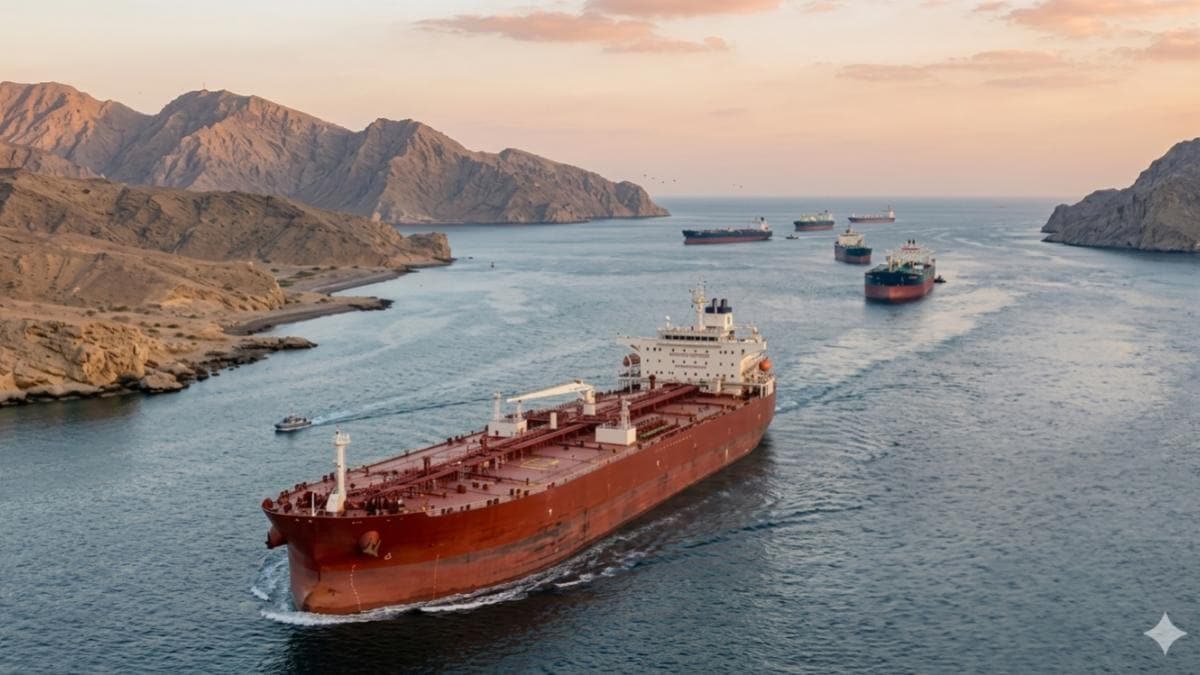
A nearly six-week halt to shipping in the Strait of Hormuz exposed how precarious India’s energy security and even its manufacturing ecosystems are. It is uncertain if the US-Israel ceasefire with Iran will hold. The ceasefire announcement expectedly triggered a sharp fall in global crude prices, but India’s oil and gas supply chains remain under severe strain.
Full normalisation might take several months, even if the situation steadily de-escalates from now. India’s high vulnerability to increasingly uncertain geopolitics is not limited to the potential sudden shortage of industrial raw materials and economic building blocks. It also extends to a still-to-be-bridged infrastructure deficit, fragmented logistics, and unresolved last-mile connectivity. Port facilities have expanded at a brisk pace in recent years, with the dismantling of rent-seeking policies spurring private investments.
However, the present crisis has shown how with a measly share of 1.2% in global shipping tonnage and lack of a strong commercial fleet, India is virtually at the mercy of vessels of other nationalities. Higher shipping costs have made exports and imports unviable for large sections of traders.
Tonnage Trap
Since 45% of crude and 55% of gas imports are from the West Asia region, the war has virtually choked the country’s energy supplies. The fertiliser sector is highly susceptible to supply crunches. The large and diversified petrochemical value chain, which consists of labour-intensive units, takes an immediate hit from disrupted oil supplies. The war has pushed state-run oil marketing companies into steep losses, forcing the government to cut auto fuel taxes and absorb a large fiscal cost.
Beyond Fossil Fuels
India still imports over 200 categories of active pharma ingredients and bulk drugs worth $4.5 billion annually, with China accounting for nearly 75% of these imports. This high reliance on imports is fraught with single-source vulnerability, price volatility, and predatory pricing. Import dependence is equally onerous for critical minerals like lithium, cobalt, nickel, and rare earth elements, all of which are globally scarce and fiercely sought-after. These minerals and base metals like copper are the bare essentials for technology-driven production and electric mobility. India’s pledge for a rapid shift away from fossil fuels to green energy makes the task more daunting. In parallel, the artificial intelligence boom has accelerated power demand.
The government has announced several policies in recent years to step up domestic production of minerals. Natural gas pricing has been eased and made particularly attractive for geologically challenging fields. An auction-based allocation system is in place to encourage the production of deep-seated minerals. The National Critical Mineral Mission, with a significant budgetary outlay and investments by state-owned firms, is a blueprint to secure energy security. New Delhi also aims to be among the top five shipbuilding nations by 2047 and secure a 5% share of the market in the medium term.
However, the pace and scale of the progress don’t match the ambitious goals set. For instance, while addition to global shipping tonnage is around 72 million tonnes annually and China itself adds nearly 40 million, India still contributes less than 50,000 tonnes. Policies should be more pragmatic and result-oriented. Self-deceiving goals are not going to take the country anywhere. For instance, in areas where domestic mining is not commercially viable due to the inadequacy or scattered nature of the resources, there’s no point in keeping targets high. More overseas mineral alliances and a renewed focus on large cross-border infrastructure ventures like the India-Middle East-Europe Economic Corridor are called for.