



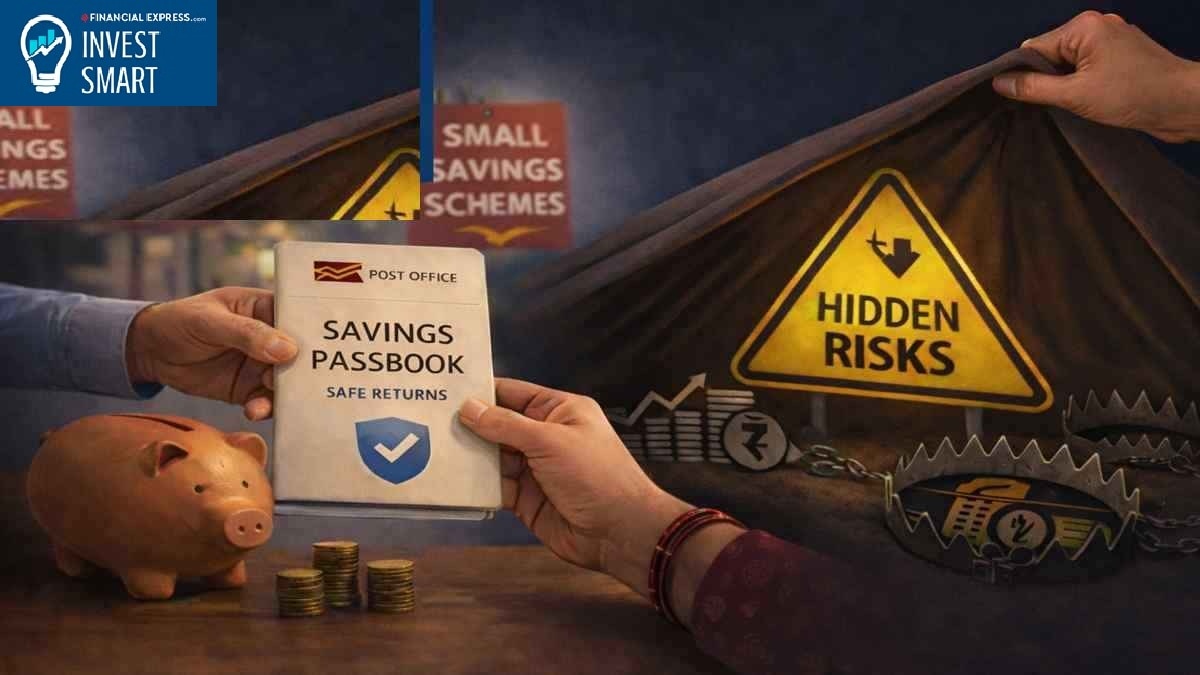
In the previous edition of our ‘Invest Smart‘ column, we looked at how to choose between the old and new tax regimes, and what that decision means for your long-term wealth. At its core, that discussion was about one thing: making smarter choices with your money. In this week’s edition of Invest Smart, we take that conversation a step further. This time, the focus shifts to small savings schemes. They are often seen as safe and reliable, but do they always help you grow your wealth the way you expect?
When it comes to investing your money, “safety” is probably the first word that comes to mind. And that’s exactly why you turn to small savings schemes without thinking twice. These options seem easy to understand, reliable, and simple to invest in. But what if this sense of safety is only part of the story?
With stock markets going up and down, the economy feeling uncertain, and future expenses always on your mind, small savings schemes start looking like an easy choice. No big risk, no daily tracking, just steady returns and peace of mind.
But just because something feels safe does it mean it’s the best decision for your money?
Today, interest rates keep changing, new investment options keep coming up, and your financial needs can also shift over time. In such a situation, locking your money in one place for the long term can limit not only your flexibility but also the ability to optimize returns for your needs. What looks simple and secure today could quietly turn into a problem later.
Small savings interest rates unchanged for long: Should you be concerned?
For many quarters, interest rates on small savings schemes have remained unchanged. Whether it is the Public Provident Fund (PPF) or the Senior Citizen Savings Scheme (SCSS), the rates have remained at comparatively attractive levels. “Comparatively attractive” means these rates are still higher than most bank FDs and other safe options. Since they are linked to government bond (G-Sec) yields, they continue to look appealing. The government uses yields on its bonds (G-Secs) as a benchmark. So, if bond yields rise, small savings rates can be increased, and if they fall, these rates may also come down.
For investors, this sense of stability that small savings schemes offer feels reassuring. As an investor you know that your return on money won’t suddenly fall.
This stability is not just a coincidence. It may actually be a conscious decision. Small savings schemes are important for retirees, senior citizens and people who prefer low risk. Keeping the rates stable helps ensure they have a steady and predictable income.
It also works in the government’s favour. When people get stable and attractive returns, they continue to invest in these schemes. Small savings schemes provide the government with a stable pool of funds, helping it manage spending and parts of funding.
Hidden pressure behind stable small savings rates
But the story doesn’t end with stability. The truth is, this stability may not be completely natural. There’s some pressure building underneath. Normally, small savings rates are linked to government bond (G-Sec) yields so they move with the market. But lately, that link doesn’t seem as tight as it should be.
Here’s what that means in simple terms: these rates are supposed to follow G-Sec yields with a fixed gap. But in recent months, that gap has widened. For example, when 10-year G-Sec yields are around 7%–7.2%, some small savings schemes are still offering similar or even higher returns, even though they should ideally be lower.
What does this mean for you as an investor?
The question now is – how do all these policy aspects impact you? As an investor, it is crucial to understand that something which appears stable and secure on the surface may not necessarily align with your specific financial goals.
This is where many people make a mistake — locking away money for the long term just because something looks ‘secure’ without thinking it through. The risk here isn’t really losing your money, but not being able to access it when you actually need it.
When interest rates are changing and pressure is building in the system, flexibility becomes just as important as safety. Sometimes, missing opportunities or not being able to act on time can be a risk in itself.
5 key things to check before investing in small savings schemes
When you think about investing in small savings schemes, safety alone is not enough to base your decision on. Especially at a time like this, when rates look stable but pressure is building underneath, it is important to look at the fine print.
1. Understand lock-in periods in a changing rate cycle
Small savings schemes are not just safe, they are also restrictive. For instance, Public Provident Fund (PPF) comes with a 15-year lock-in, with limited withdrawal flexibility after year 7.
Now imagine this: you invest today when rates are relatively high. Two years later, if rates fall or better opportunities emerge elsewhere, your money remains locked. The risk is not losing capital but losing flexibility at the wrong time.
2. Today’s stability may not last
What you’re seeing today may not stay the same for long. Rates look steady right now, but they don’t stay like this forever. In the past, small savings rates have moved up and down over time.
At the moment, they are still offering returns that are close to or even slightly higher than government bond yields. But this kind of gap usually doesn’t last. Over time, things tend to adjust.
So, what looks stable today could change tomorrow—and that’s something you should keep in mind before locking in your money.
3. Post-tax returns tell the real story
The return you see on paper is not always what you actually earn. For example, a scheme may offer 8% interest, but if you are in the 30% tax bracket, your real return comes down to about 5.6% after tax.
Now compare that with inflation at around 5 to 6%. Suddenly, that “safe” investment is just about keeping up with rising prices, not really growing your money.
Not all small savings schemes are EEE (Exempt-Exempt-Exempt) category products. While some, like the PPF and Sukanya Samriddhi, offer tax exemption on investment, interest, and maturity, others like the National Savings Certificate (NSC) and Senior Citizen Savings Scheme (SCSS) only provide tax deduction on the investment principal, while interest is taxable.
4. Timing matters more in a policy-driven environment
Unlike market-linked products, small savings rates don’t change quickly, though the government reviews rates on a quarterly basis. Sometimes they are adjusted late, and sometimes not at all.
What this means is that when you invest, you are also depending on policy decisions, not just market movements. If rates are being kept higher than usual right now, the next change could be a cut rather than an increase.
5. Don’t over-allocate to ‘safe’ assets
Over the years, more and more people put money into small savings schemes, as everyone was looking for safety as well as some tax benefits (under the old tax regime). But this also creates another risk, putting too much money in one place.
If a large part of your portfolio is locked into these less flexible options, you may miss better opportunities elsewhere or face difficulty accessing your money when you need it.
Safe returns, changing reality – what investors should do now
When you look at the entire picture, small savings schemes are still a reliable option. They offer stable interest rates, government backing, and predictable returns. That’s exactly why many investors trust them. But it’s also true that this stability is supported by policy, and that support can come under pressure over time.
In simple words, what looks stable today may not stay the same forever. The economy changes, interest rate cycles move, and policies adjust with time. So while small savings schemes are dependable, they are not fixed.
Before you invest in any small savings scheme, ask yourself some simple questions: will I need this money in the next 3 to 5 years and be able to meet my goals with this rate of return?
If your answer is even ‘maybe’, then locking all of it away may not be the best decision. Instead, try to balance safety with flexibility. Keep some money easily accessible and put the rest into longer-term options.
Small savings schemes are dependable, but they should fit into your overall plan, not control it. Because in investing, it’s not just about earning returns, it’s also about having the flexibility to act when things change.
Disclaimer:
This article is for informational and educational purposes only and should not be construed as financial, investment, tax, or legal advice. The views expressed are based on publicly available information and are intended to help readers understand broader trends and concepts. Investment decisions should always be made based on your individual financial goals, risk appetite, liquidity needs, and time horizon. Small savings schemes and other financial products carry their own set of risks, including interest rate changes, policy revisions, taxation impact, and liquidity constraints. Readers are advised to carefully evaluate all factors and consult a qualified financial advisor or tax expert before making any investment decisions.