



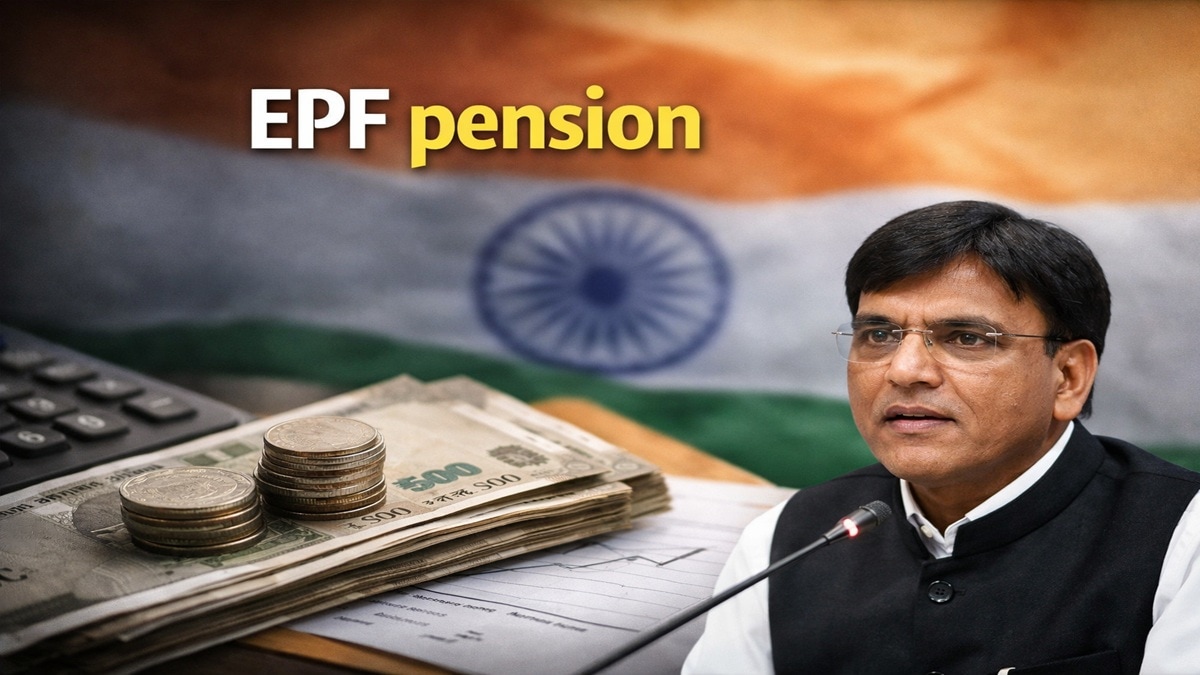
In a fresh clarification in Parliament, the government has indicated that there is no immediate proposal to calculate Employees’ Pension Scheme (EPS-95) pension on the basis of actual basic salary without a wage ceiling, even as demands for higher pensions continue to intensify.
The response came from Labour and Employment Minister Mansukh Mandaviya to a written question by MP Giridhari Yadav in the Lok Sabha on March 30, 2026.
What was asked in Parliament?
MP Giridhari Yadav sought clarity on two key issues:
Whether EPS pension is calculated with a salary cap of Rs 15,000, leading to lower pensions for higher-income employees and also if there are plans to shift to pension calculation based on actual basic salary.
Govt’s response: No proposal to change salary cap framework
In his reply, Labour Minister Mansukh Mandaviya explained the structure of the scheme and effectively ruled out any immediate shift to an “actual salary” based pension system.
He stated: “The EPS 1995 is a ‘Defined Contribution–Defined Benefit’ Social Security Scheme.”
He further clarified how the pension corpus is built: “The corpus of the Employees’ Pension Fund is made up of (i) contribution by the employer @ 8.33 per cent of pay and (ii) contribution from Central Government… @ 1.16 per cent of pay up to an amount of Rs 15,000 per month.”
This effectively means that government contribution is capped at Rs 15,000 salary, which is a key reason why pension calculations are not fully linked to actual higher salaries.
How EPS pension is calculated
The minister also reiterated the pension formula used under EPS:
Monthly pension depends on pensionable service and pensionable salary
The formula is: Monthly Pension = (Pensionable Service × Pensionable Salary) / 70
He added that under the scheme, “pay” includes basic wages, dearness allowance, retaining allowance, and cash value of food concessions.
What about higher salary contributions?
The government highlighted that provisions already exist for certain employees to contribute on higher wages.
Mandaviya noted: “A new para 11(4) was inserted for existing members as on 01.09.2014… who had exercised joint option… for contributing on wages exceeding Rs 6,500.”
However, he also made it clear that: “With effect from 01.09.2014, only such members are eligible to become EPS members whose wages at the time of joining… are up to Rs 15,000.”
This effectively reinforces the Rs 15,000 wage ceiling framework for new members.
Legal backdrop: Shift to Social Security Code
The minister also pointed out that: “The EPF & MP Act, 1952 has been subsumed under the Code on Social Security, 2020… effective from 21.11.2025.”
This indicates that EPS now operates within the broader framework of the Social Security Code, though no change has been announced in pension calculation methodology.
Why employees want pension on actual salary
For years, employee unions and pensioners have argued that linking pension to actual basic salary is essential for fair retirement income.
Their key concerns:
Employees contributing on higher wages still get limited pension due to the cap
Pension does not reflect true lifetime earnings
Retirement income remains inadequate for middle-class workers
The bigger issue: Rs 1,000 minimum pension debate
The Parliament reply comes amid a long-running agitation over the minimum EPS pension, which remains unchanged at Rs 1,000 per month since 2014.
What unions are demanding
-Increase minimum pension to Rs 7,500–Rs 9,000 per month
-Add dearness allowance (DA)
-Ensure a dignified retirement income
Major trade unions like BMS and pensioners’ associations argue that Rs 1,000 is “grossly inadequate” in today’s inflationary environment and rising medical, food, and transport costs have made survival difficult.
Govt’s stand on pension hike
While acknowledging demands in various forums, the government has consistently flagged challenges such as actuarial imbalance in the pension fund and higher fiscal burden due to increased budgetary support.
Earlier, even parliamentary panels had suggested reviewing the pension level, with some recommending a hike, but no final decision has been implemented.
Impact: Why this matters
Over 47 lakh EPS pensioners are affected and salary cap continues to limit pension growth for higher earners. Demand for both higher minimum pension and salary-linked pension remains unresolved.
Summing up…
The latest Parliament reply makes one thing clear: there is currently no proposal to calculate EPS pension on actual basic salary beyond the wage ceiling framework.
However, with mounting pressure from unions and pensioners, the issue of EPS reform—both in terms of minimum pension and salary linkage—is far from settled and is likely to remain a key policy debate in the coming months.
Disclaimer:
This article is based on a reply given by Labour and Employment Minister Mansukh Mandaviya in Parliament to a question raised by an MP. It is intended for informational purposes only and should not be construed as financial or legal advice. Readers are advised to refer to official EPFO notifications or consult a qualified expert for personalised guidance.