



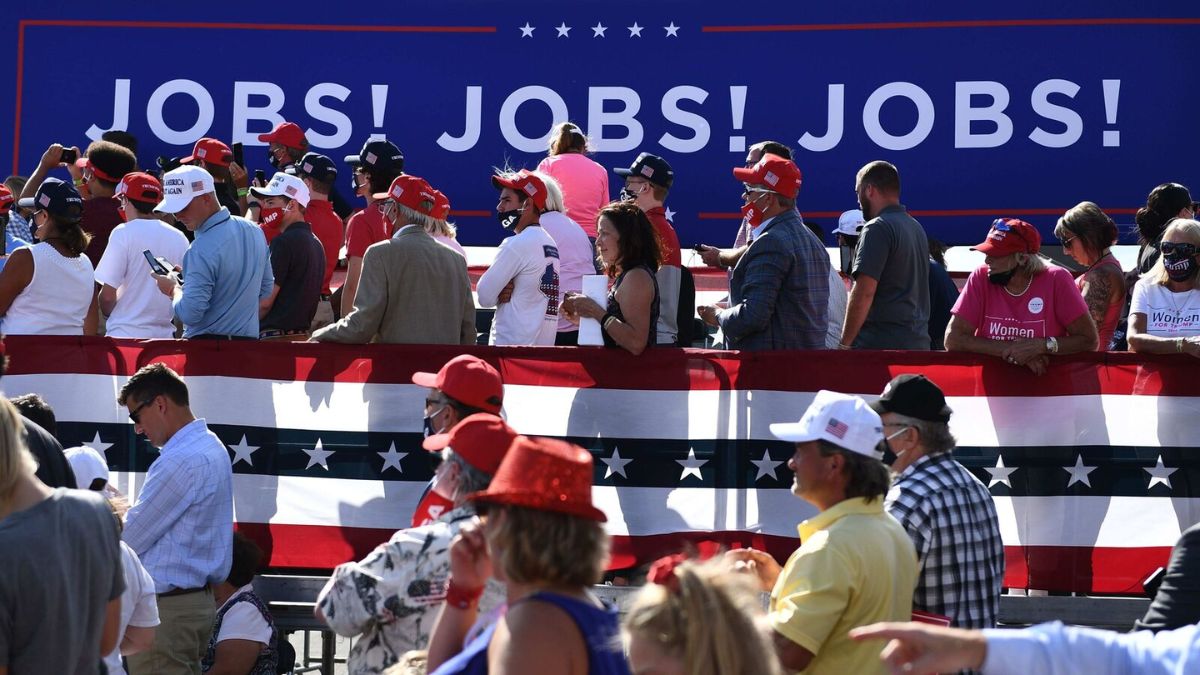
The American labour market proved strong in May, with the economy adding 172,000 jobs and the unemployment rate holding steady at 4.3%, according to data released by the Bureau of Labor Statistics. The figures came in well above the 80,000 jobs economists polled by Dow Jones had projected regardless of the rising inflation tied to the ongoing US-Iran war.
Job growth was led by leisure and local government
Leisure and hospitality added 70,000 jobs in May which is far above the average monthly gain of just 14,000 over the prior 12 months. Within the sector, food services and drinking places accounted for 48,000 of those jobs. Local government added 55,000 positions, largely in non-education roles. However, health care contributed 35,000 jobs, roughly in line with its 12-month average of 38,000. Social assistance employment also continued to trend upward, adding 12,000 jobs.
Financial activities and transportation shed jobs
Not all sectors fared well. Financial activities lost 22,000 jobs in May and is now down by 107,000 since a recent peak in May 2025, with losses concentrated in insurance and commercial banking. Transportation and warehousing was essentially flat overall, but air transportation shed 9,000 jobs largely due to a business closure.
Previous months data revised upward
BLS also revised employment figures for March and April higher. March was revised up by 29,000 to 214,000, and April was revised up by 64,000 to 179,000, which means the two months combined added 93,000 more jobs than initially reported.
Average hourly earnings for private nonfarm payroll employees rose 0.3% in May to $37.53, and are up 3.4% over the past year. But with inflation running at 3.8% as of April, its highest level in three years, wage growth is effectively being erased for many workers. The average workweek held steady at 34.3 hours.
Iran war has pushed fuel costs higher
Since the war with Iran began on February 28, the average price of retail gasoline has surged more than 40%, and crude oil prices have jumped more than 35%. That energy shock has impacted the whole economy lifting wholesale inflation, what businesses pay each other for goods and services to 6% in April, up sharply from 4.3% in March.
Fed is focusing on the inflation figures
Federal Reserve officials are closely watching the deteriorating inflation picture. Beth Hammack, president of the Federal Reserve Bank of Cleveland and a voting member of the Fed’s rate-setting committee, warned this week that action may be coming. “If recent data trends continue, it may soon be appropriate for policy to act to address the growing risks of persistently elevated inflation,” she told NBC, adding that “monetary policy may not be sufficiently restrictive to bring inflation down to 2%.”
Hammack also cautioned against waiting too long, “If we wait for definitive evidence that high inflation has become embedded in the economy, it may require larger policy adjustments, at greater cost.” The Fed’s next interest rate decision is scheduled for June 17.
Long-term unemployment is rising
Even as headline numbers looked resilient, the data contained some important signs. The number of long-term unemployed those out of work for 27 weeks or more stood at 2.0 million in May, up by 524,000 over the past year. Long-term unemployed workers now account for 27.5% of all unemployed people. The labour force participation rate held at 61.8%, and around 6.2 million people outside the labour force said they currently want a job but were not actively searching.