



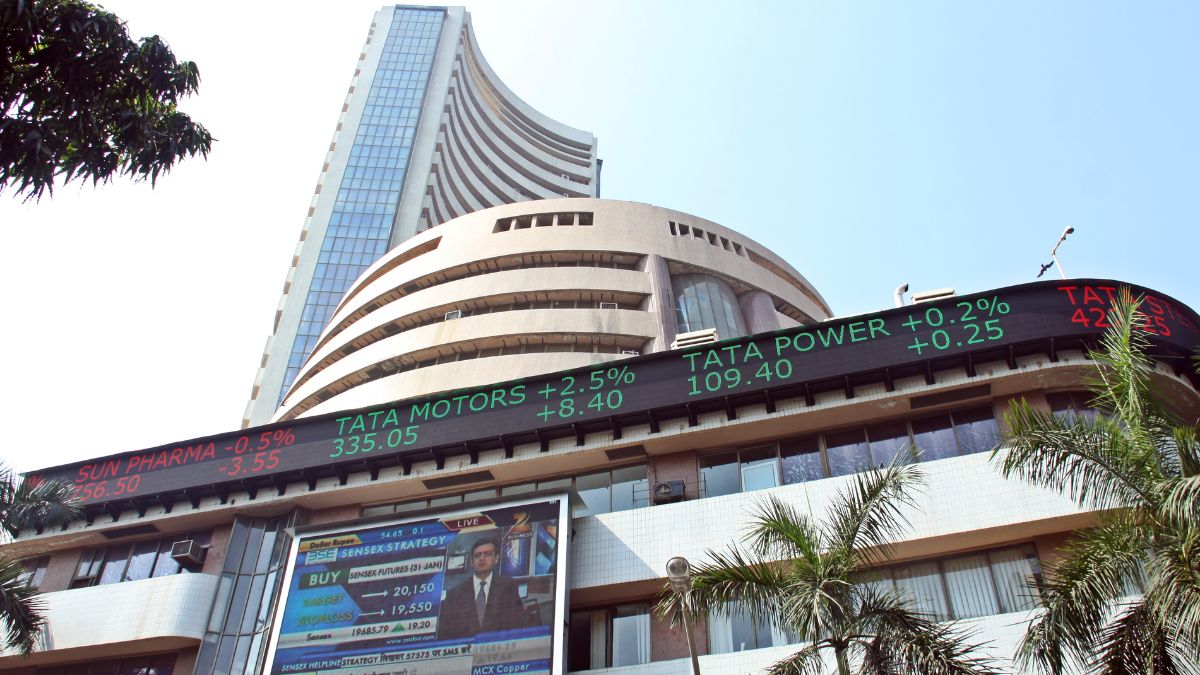
Benchmark indices on Thursday marked their worst fall in nine sessions as the delay in the West Asia truce continued to disappoint investors. The volatility in crude oil prices and the rupee, including the possibility of another lean earnings season are keeping investors wary.
The Nifty 50 index closed 0.8% or over 205 points lower at 24173.05 points after falling 1% during the day. The BSE Sensex ended the day % or more than 852 points down at 77664.00 points. The fear gauge, India VIX, was up 1.6% at 18.59, indicating a slight rise in the nervousness.
Investor wealth eroded by ₹2.97 lakh crore on the BSE to ₹466.40 lakh crore. Benchmark indices closed in the red for the second straight day.
Foreign portfolio investors (FPIs), who have been in a selling spree since the end of September 2024, remain net sellers in the Indian equity market. On Thursday, they net offloaded shares worth 3,254 while domestic institutional investors bought shares of Rs 941 crore, as per provisional data from the National Stock Exchange.
Geopolitical Stagnation
As market participants continue to keep a close eye on the to-and-fro decisions with respect to the Strait of Hormuz, many believe the worst is likely behind, assuming the war will not start again. “One thing we are sure about is that most risks have effectively been priced in. If US-Iran talks collapse and the war restarts, it will be the biggest risk scenario at the moment,” said Nirav Karkera, head of research and fund manager at W by Groww.
Despite the continued conflict in West Asia, energy prices are not seeing as much volatility as it was at the beginning of the war. The Brent crude oil was hovering around $100 per barrel, much lower than the $150-per-barrel mark hit at the end of March.
“If the conflict continues, I don’t think the market will focus more on this beyond a point. The focus might shift to what is going to happen to earnings growth,” said Vaiibhavv Chugh, chief executive officer of Abakkus Investment Managers.
Valuation Reality Check
Chugh said that there can be a 2-4% reduction in Nifty 50 earnings growth from 13-14% this year, “which still looks good.” It might take some time for foreign flows to come back as India is not the only play now, unlike earlier. “China has become cheaper and other economies have started diversifying,” he added.
India remains one of the most expensive markets in Asia, but valuations are not as expensive as before, market experts said. The Nifty 50’s trailing price-to-earnings ratio is 21.09x, lower than the five-year average of 23.6x.