




The United States spent nearly $5.7 trillion on healthcare in 2025, accounting for around 18.5% of the country’s GDP. Going by the trend, it could grow to $9 trillion annually by 2035, as per the PwC estimates.
While much of this spending goes toward hospitals, medicines and medical care, hundreds of billions of dollars are also spent on administrative activities required to process every healthcare transaction.
Unlike many countries where governments directly fund healthcare, the US healthcare system is largely insurance-driven. Most medical expenses are paid by private health insurers or government-backed insurance programmes such as Medicare and Medicaid.
It has created a large administrative outsourcing market spanning claims, billing, coding and revenue cycle management. Two Indian listed companies, Sagility India and Inventurus Knowledge Solution- IKS Health, have emerged as the biggest beneficiaries.
For investors, this story is much bigger than comparing two companies. It is about whether healthcare operations can become India’s next specialised services export, much like IT services did over the last two decades.
Understanding the US Healthcare Value Chain
Both these companies don’t compete with each other. They sit on opposite ends of the value chain.
Every healthcare transaction includes two parties. The first is the provider, which includes hospitals, physician groups, and clinics that provide treatment. And the second is the payer. It includes health insurance companies that pay back providers for the medical services they provide. Between them, there is a huge layer of administration.
Each patient visit has to be documented, coded, insurance eligibility verified, claims submitted, payments reconciled, and regulatory requirements met. These are repetitive but highly specialised processes where small errors can result in delayed payments or cost increases. This is the very place where Indian healthcare outsourcing companies have gained their expertise.
Why Outsourcing Is Becoming More Important
US health insurers operate under a rule called the Medical Loss Ratio (MLR). By law, insurers must spend at least 80% of premium income on medical claims in the individual and small-group market, and at least 85% in the large-group market. The remainder of the premium is left for administration, marketing, and profit.
However, insurers are reporting average individual-market medical loss ratios (MLRs) spanning 84% to roughly 94% in 2025. Much higher than the historical averages. Furthermore, insurers have little flexibility to raise prices to protect margin. As medical costs rise, insurers have few options to protect margins other than reducing administrative expenses. That makes outsourcing claims processing, member services, and care management a necessity rather than a choice.
On the other hand, hospitals and physician groups are facing a different kind of problem. Higher claim rejection rates. National medical claim denial rates reached 12% in 2024 and continue to rise. Roughly one in eight claims submitted by providers is rejected on first submission. US hospitals lose an estimated $262 billion a year to claim denials, most of which are preventable. This is where providers are helping hospitals and physician groups to reduce claim rejections, improve revenue cycle management, clinical documentation, and AI-enabled automation to improve collections.
Same Industry, Different Businesses
#1. Sagility: A Play on Health Insurers
Sagility primarily works with the payer side of the US healthcare ecosystem. Health insurers accounted for nearly 90% of its FY26 revenue, making it one of the purest listed plays on outsourcing by US health insurance companies.
Its services range across the full healthcare administration value chain, from claims management and member engagement to care management, payment integrity and back-office operations. Sagility helps health insurers automate workflows, improve operational efficiency and reduce administrative costs amid rising medical costs and margin pressure.
From Healthcare BPM to Technology-Led Operations
As the industry moves from labor arbitrage to technology-led outsourcing, Sagility has transformed from a healthcare BPM company to a technology and AI-led healthcare operations partner. The company is investing in AI platforms like Synchrony and SmarTec to automate healthcare workflows and deliver measurable business outcomes.
In June 2026, Sagility expanded its technology capabilities by acquiring CareSeed, a US-based healthcare analytics company, for $30 million.
The company’s financials are also beginning to reflect the effects of this transformation. Revenue grew 29.1% in FY26 and 27.6% in Q1FY27 with Earnings Before Interest Tax Depereciaton and Amortisation (EBITDA) margins flat at around 25%. Return on Capital Employed (ROCE) improved by almost 400 basis points to 58.9% in FY26, a sign that the company is scaling growth without compromising profitability. The management expects to maintain the growth momentum in FY27 as well.
Sagility: Financial Performance
| Metrics | FY25 | FY26 | YoY Growth | Q1FY26 | Q1FY27 | YoY Growth |
| Sales (₹ crore) | 5,570 | 7,193 | 29.1% | 1,539 | 1,964 | 27.6% |
| EBITDA Margin (%) | 26.40 | 25.30 | – 110 bps | 24.0 | 24.0 | 0 |
| Net Profit (₹ crore) | 811 | 1,131 | 39.5% | 149 | 217 | 45.9% |
| Return on Capital Employed (%) | 54.9 | 58.9 | + 400 bps | – | – | – |
One of the biggest strengths of Sagility is the stickiness of its business. Healthcare operations are embedded in the core workflows of insurers with sensitive patient data, regulatory compliance and complex claims processing. Once embedded in a client’s systems, switching costs can be high, operationally disruptive and involve lengthy transition periods.
This is reflected in the company’s customer relationships. Sagility has more than 100 healthcare clients with an average client tenure of 18 years. Rather than adding new customers, the company is growing its wallet share within its existing customer base, adding new service lines and AI-led transformation projects.
#2. Inventurus Knowledge Solutions: A Play on Healthcare Providers
IKS Health mostly caters to the provider side of the US healthcare ecosystem. Its clients include physician groups, hospitals and healthcare systems, which it helps improve clinical documentation, medical coding and revenue cycle management (RCM).
The opportunity is significant. Hospitals and physician groups in the U.S. continue to struggle with clinician shortages, increasing administrative costs and growing reimbursement complexity. By automating documentation, improving coding accuracy, and reducing claim denials IKS directly targets these systemic inefficiencies.
IKS’s biggest strength is the sticky nature of its business, like Sagility. Revenue cycle management and clinical documentation are embedded in a hospital’s day-to-day. It is also moving towards technology and AI-led healthcare operations.
In April 2026, IKS acquired TruBridge, a US healthcare technology company with a leading Electronic Health Record (EHR) platform for community hospitals and rural healthcare providers. The acquisition also provides a cross-selling opportunity of over $575 million across the combined customer base.
Consistent Growth with Expanding Profitability
IKS Healthcare: Financial Performance
| Metrics | FY25 | FY26 | YoY Growth |
| Sales (₹ crore) | 2664 | 3194 | 19.9% |
| EBITDA Margin (%) | 30.7 | 35.60 | +490 bps |
| Net Profit (₹ crore) | 486 | 722 | 48.4% |
| Return on Capital Employed (%) | 30.0 | 27.0 | -300 bps |
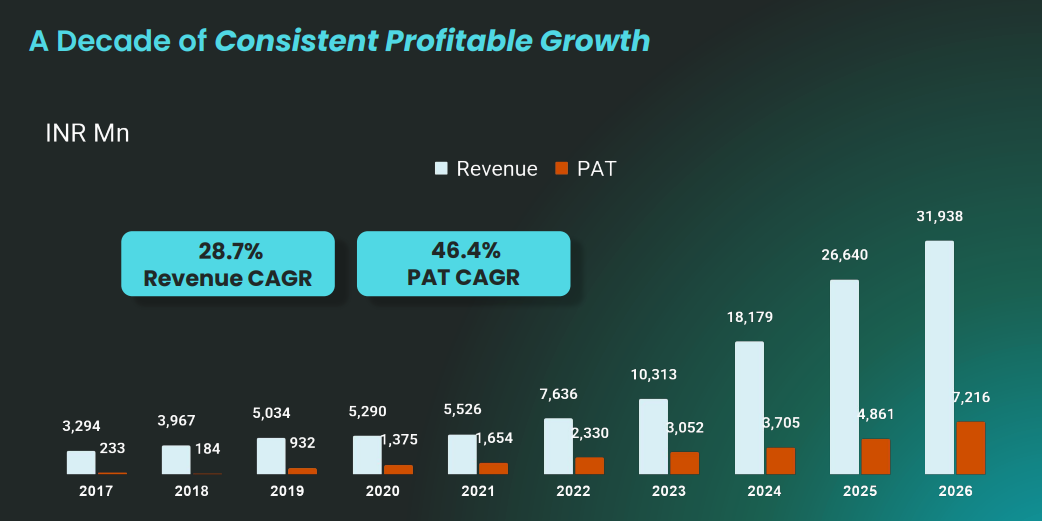
The company’s strategy has also delivered consistent financial performance. Revenue growth of 19.9% in FY26 and EBITDA margin expanded 490bps to 35.6%. Net profit increased 48.4%. Due to continued investments in technology, ROCE of the company declined by 160 basis points to 31.4%.
The faster growth in net profit compared to revenue suggests the company is benefiting from operating leverage and improved profitability. Management’s goal is to generate roughly $1 billion of revenue and $300 million of EBITDA by FY30.
IKS Healthcare: Revenue and Profit Growth
Valuation: Growth Has Continued, But Valuations Have Moderated
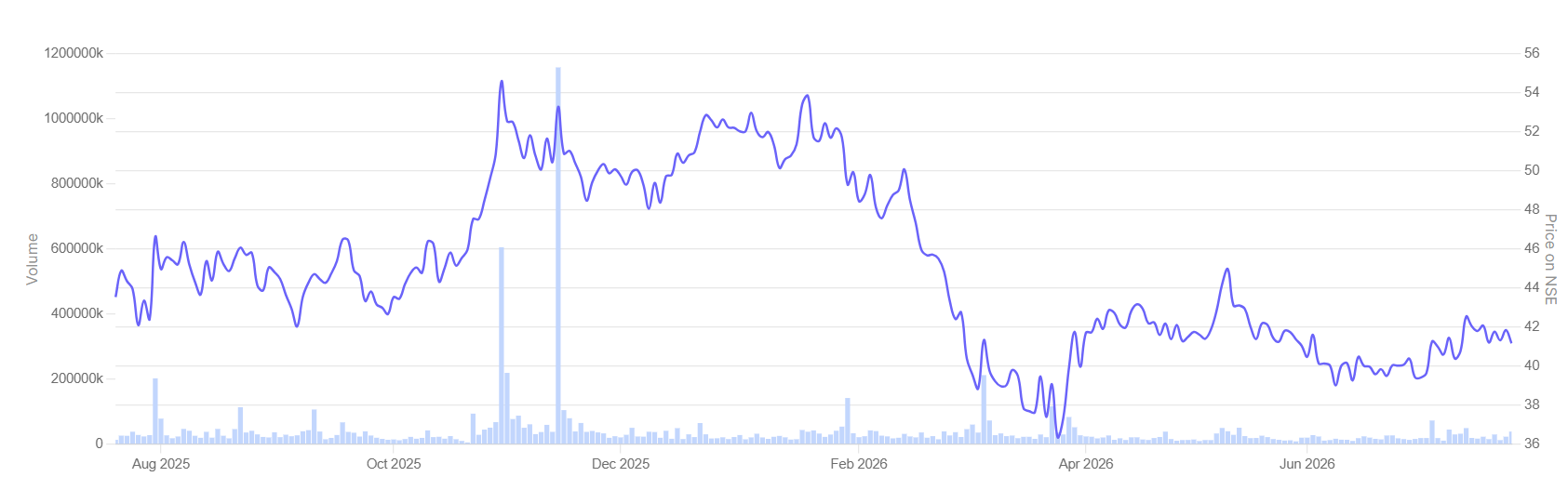
Sagility was listed in November 2024 with an IPO price of ₹30. As of 22 July 2026, the stock was trading at ₹41.2, delivering only modest gains since listing despite reporting strong earnings growth.
Sagility: 1 yr Stock Price Chart
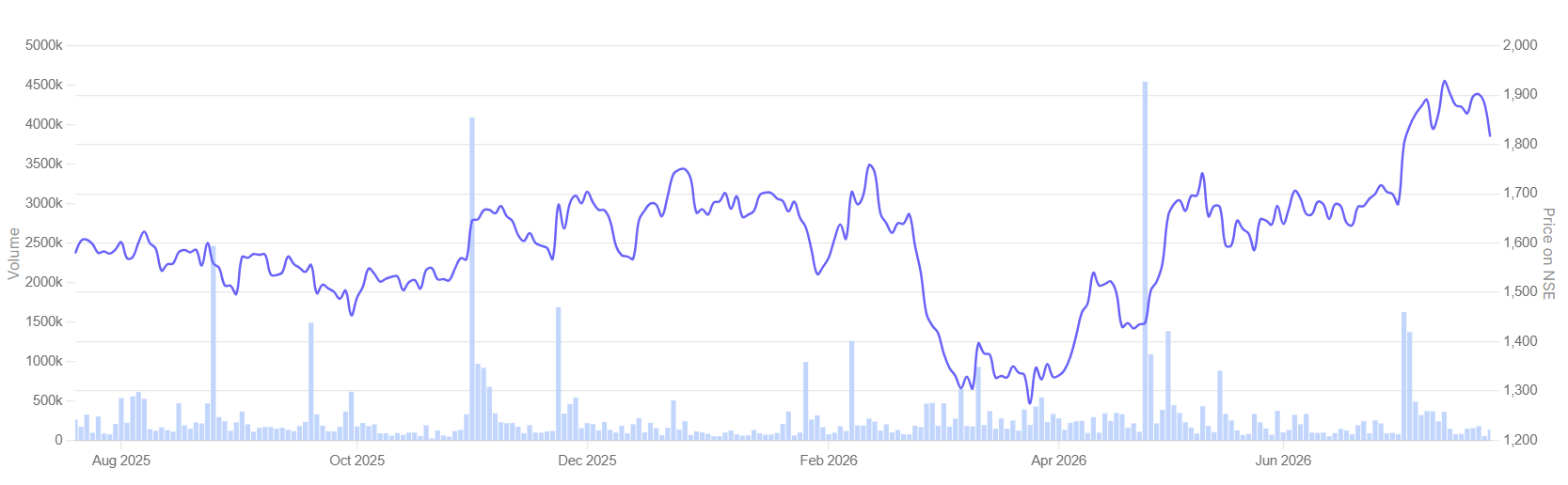
IKS Healthcare has seen a similar trend, with its stock mostly trading sideways in the past year. This has led to a material compression in valuation multiples for both companies.
IKS Healthcare: 1 yr Stock Price Chart
Sagility is currently trading at a PE of 18.7, much below its historical median PE of 31.6. And, IKS Healthcare is trading at a PE of 43.2, below its historical median PE of 48.5.
P/E Multiple Trend
| Company | P/E | Median PE since Listing | Listed on |
| Sagility | 18.7 | 31.6 | November 2024 |
| IKS Healthcare | 43.2 | 48.5 | December 2024 |
For newly listed companies, elevated valuation multiples are not uncommon as investors price in future growth. As earnings catch up over time, these multiples tend to normalise.
That is exactly what has happened with both companies. Despite reporting healthy earnings growth since listing, their current trailing P/E multiples are below their respective median valuations. This suggests that the market is assigning a more measured premium to their growth prospects than it did immediately after the IPO.
For investors, there are two takeaways. First, neither stock appears to be trading at the lofty valuations seen shortly after listing. Second, while Sagility trades at a lower earnings multiple than IKS Healthcare, the latter continues to command a premium due to its consumer facing position, where regulatory limitations are less.
Can Healthcare Operations Become India’s Next Specialised Services Export?
The bigger opportunity is not just choosing between Sagility and IKS Healthcare. It is understanding the long-term shift taking place in US healthcare. As insurers try to reduce administrative costs and hospitals focus on improving collections, outsourcing is becoming an essential part of the healthcare system, not just a way to cut costs.
Although both companies operate in the same ecosystem, they solve different problems. Sagility helps health insurers improve efficiency, while IKS Healthcare helps hospitals and physician groups improve productivity and recover revenue. Their growth drivers are different, but both are benefiting from the increasing use of technology and automation in US healthcare.
For Indian investors, this is more than just another healthcare story. If Indian companies can build global leadership in healthcare operations, much like they did in IT services, this could become India’s next specialised services export opportunity. The real question is not whether healthcare outsourcing will continue to grow, but which companies are best placed to benefit from that growth over the next decade. Until then, add these stocks to your watchlist and track how well they execute their growth strategies.
Disclaimer:
Note: We have relied on data from www.Screener.in throughout this article. Only in cases where the data was not available, have we used an alternate, but widely used and accepted source of information.
The purpose of this article is only to share interesting charts, data points and thought-provoking opinions. It is NOT a recommendation. If you wish to consider an investment, you are strongly advised to consult your advisor. This article is strictly for educative purposes only.
Deepan Datta has spent over a decade studying stocks and mutual funds. His passion is to uncover interesting stories in the financial markets and share them through his writings with investors at large. He is focused on delivering clear, easy to understand and research-backed insights. Deepan began his career as a Research Associate at S&P Global, where he developed a strong foundation in financial research and data analysis.
Disclosure: The writer and his dependents do not hold the stocks discussed in this article.
The website managers, their employees (s), and contributors/writers/authors of articles have or may have an outstanding buy or sell position or holding in the securities, options on securities or other related investments of issuers and/or companies discussed therein. The content of the articles and the interpretation of data are solely the personal views of the contributors/ writers/authors. Investors must make their own investment decisions based on their specific objectives, resources and only after consulting such independent advisors as may be necessary.