



For years, India’s digital agriculture story revolved around connectivity. Mobile phones reached villages, smartphones became affordable and government services steadily moved online. Yet one critical barrier remained: language.
Today, a new generation of artificial intelligence tools is helping bridge that gap, allowing farmers to access expert advice simply by speaking into their phones in their native languages. The result is a significant shift in how agricultural knowledge is delivered across rural India.
In a village in Maharashtra, a cotton farmer notices early signs of pest stress in his crop. Instead of calling a dealer or waiting for an extension officer, he opens an app and asks a question in Marathi. Within seconds, he receives an AI-generated recommendation that factors in weather forecasts, crop conditions and local farming practices.
Hundreds of kilometres away in Gujarat, a dairy farmer concerned about a drop in milk production describes her cow’s symptoms through a voice interface. The system responds with a likely diagnosis, feeding recommendations and guidance on monitoring the animal’s health.
Behind both interactions lies a common technology layer: Bhashini, India’s digital public infrastructure for languages. Unlike consumer-facing applications, Bhashini works largely behind the scenes. It enables voice and text interactions across Indian languages, allowing digital platforms to understand, process and respond in the language most comfortable to the user. Much like Aadhaar created a common identity layer and UPI transformed payments, Bhashini is emerging as a foundational language layer for India’s digital economy.
Silent Infrastructure
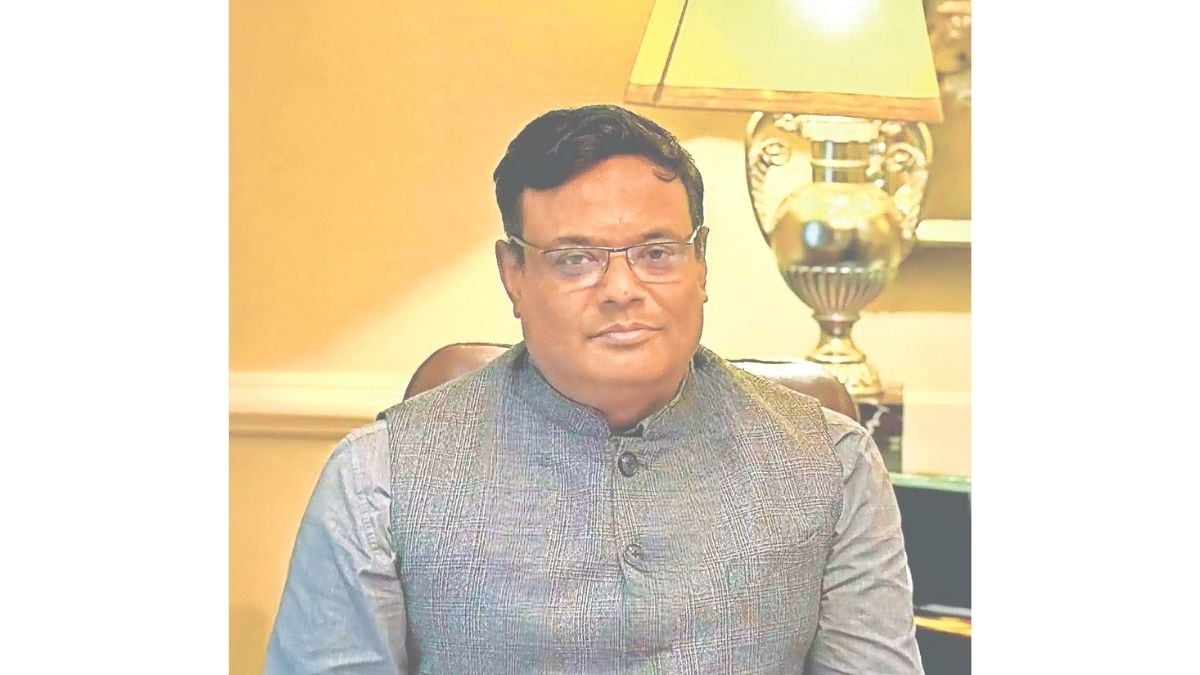
“Voice is emerging as the most natural interface for digital public services,” says Amitabh Nag, CEO, Digital India Bhashini Division. “As India advances towards inclusive digital governance, voice-enabled multilingual technologies are creating new pathways for citizen participation, making public service delivery more accessible to every citizen, regardless of language or background.”
Nag says Bhashini’s mission is to ensure that India’s linguistic diversity becomes an asset in the AI era rather than a barrier. That vision is becoming increasingly visible in agriculture. One of the largest examples is the Maharashtra government’s MahaVISTAAR-AI platform. Designed as a unified agricultural advisory system, it combines crop guidance, weather intelligence, market prices and information on government schemes into a single interface.
What differentiates the platform is its ability to converse with farmers in Marathi and regional dialects. Instead of navigating menus or typing queries, users simply speak. MahaVISTAAR functions as an interactive digital companion, allowing farmers to ask questions and receive guidance in familiar languages. The platform has already reached more than 30 lakh farmers, making it one of India’s largest AI-enabled agricultural advisory initiatives.
The significance extends beyond convenience. Many digital agriculture solutions have traditionally assumed levels of literacy, language proficiency and digital familiarity that large sections of rural India do not possess. As a result, farmers often relied on intermediaries for decisions involving irrigation, pest management, fertiliser use and crop sales.
Bypassing Intermediaries
A similar transformation is underway in Gujarat’s dairy sector through Amul’s AI-powered virtual assistant, Sarlaben. Developed using decades of cooperative dairy data, Sarlaben provides personalised recommendations on animal health, nutrition, breeding and milk production.
The scale is substantial. Amul says Sarlaben is designed to serve more than 36 lakh milk producers across Gujarat’s cooperative dairy network, spanning over 18,500 villages. A large share of the beneficiaries are women dairy farmers. The service is available through the Amul Farmer app, which has crossed 10 lakh downloads, as well as through voice-call interfaces that allow feature-phone users to access support.
Here too, Bhashini’s multilingual capabilities play a critical role. By combining speech recognition, translation and language understanding, it enables farmers to communicate naturally in Gujarati and other local languages, lowering barriers to expert advice.
Industry observers increasingly cite MahaVISTAAR and Sarlaben as among India’s most significant examples of AI deployment at scale in agriculture. According to the EkStep Foundation, Sarlaben drew on learnings from earlier implementations and was rolled out in just three weeks. The system now supports an ecosystem involving 3.6 million farmers, around 40 million cattle and nearly two billion milk transactions annually.
The implications extend well beyond agriculture. Over the past decade, India has built digital public infrastructure in areas such as identity, payments and data exchange. Bhashini is attempting something similar for language, creating a common layer that can be embedded into agriculture, healthcare, education, governance and financial services.
Challenges remain. Dialect-level accuracy continues to improve, adoption varies across regions and many AI systems are still evolving. Yet the direction of travel is increasingly clear. The next phase of India’s digital transformation may not be defined by faster networks or more sophisticated apps. Instead, it could be driven by something far simpler: technology that understands people the way they naturally communicate.
For Indian farmers, that means access to expertise is no longer limited by geography, literacy or language. The technology is finally adapting to the farmer – not the other way around.