



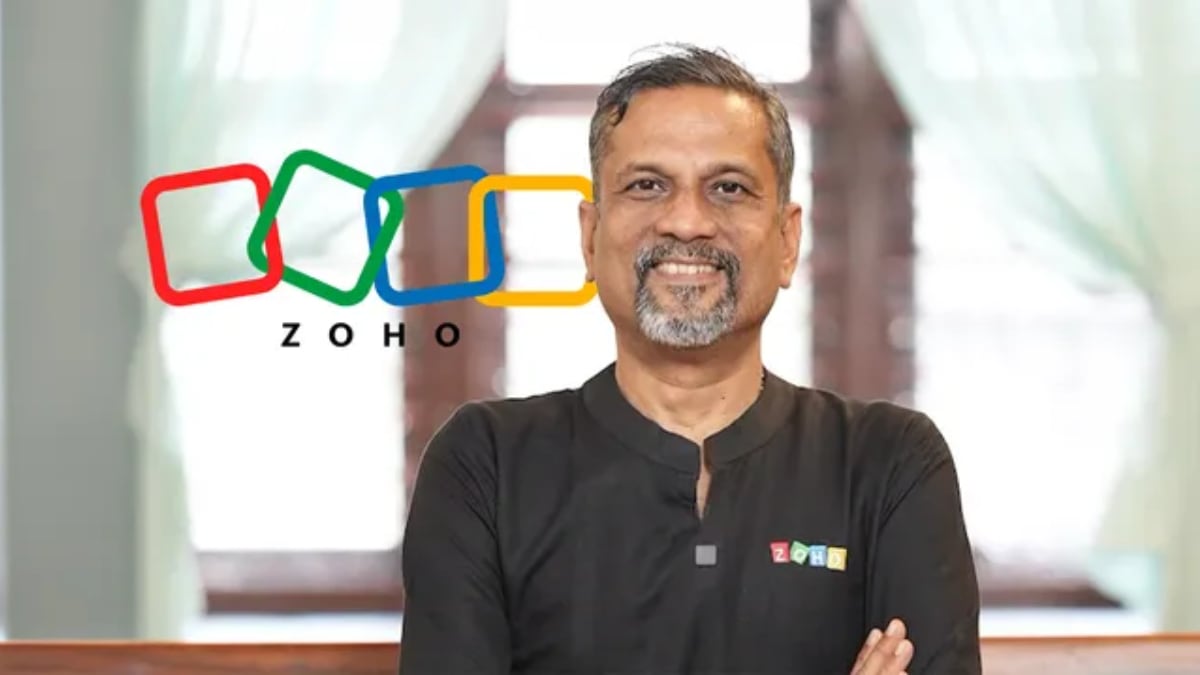
France took the decision to phase out American video meeting solutions with a homegrown alternative, and Zoho’s co-founder, Sridhar Vembu, has shared his take on the matter, calling for ‘technology sovereignty’ as sovereign nations stand up. In a post on X, Vembu likened today’s Big Tech companies to the historical East India Company, praising Europe’s awakening to the risks of foreign tech dominance, while also taunting at the irony.
Vembu’s remarks were in response to a post by geopolitical analyst Emmanuel Pernot-Leplay, who highlighted France’s announcement to phase out US-based platforms like Microsoft Teams and Zoom in favour of a French/European solution called Visio. Set for full implementation in government agencies by 2027, Visio will handle video conferencing with data hosted on French provider Outscale, and transcripts/subtitles managed by local firms.
“The very definition of a ‘sovereign nation’ should now include ‘technology sovereignty’,” Vembu wrote. “Big Tech now is the New East India company and Europeans are now waking up to it. History seems to rhyme with irony,” he added. Vembu’s analogy draws on the East India Company’s colonial exploitation of India and other colonies by the British and French, implying that modern tech giants exert similar control over the market through data and infrastructure dependencies. Although he doesn’t say it directly, Vembu’s implies that Zoho’s solutions are a kind of answer to these Big Tech names.
Vembu’s push for Indian alternatives
Vembu’s post has encouraged strong responses, with many users urging Vembu to accelerate Zoho’s own privacy-focused tools. While his followers echoed the concern as to why Zoho isn’t pushing Arattai and the rest of its utility software suite in India, Vembu replied, “We are updating Arattai weekly. We will make a big push once we reach a certain level of feature compatibility and differentiation.” He added that achieving full tech sovereignty could take at least 5-15 years, citing complex technologies like EUV machines for semiconductors as examples.
France’s Visio initiative aligns with broader EU efforts to enforce data sovereignty under GDPR and the EU Data Act, reducing reliance on US tech amid concerns over surveillance, data breaches, and economic control. Similar moves include Germany’s push for sovereign cloud infrastructure and India’s data localisation rules under the Digital Personal Data Protection Act.
In the wake of the trade tariffs controversy between the US and India, Indian government representatives were seen promoting Zoho’s software suite as opposed to the Western versions. Home Minister Amit Shah had announced at the time that he was switching to Zoho Mail for all his official communications. Similarly, a lot of people advocated for the Zoho suite of productivity apps, with Arrattai also pitched as a homegrown alternative to WhatsApp. Under popular demand, Arattai was given the end-to-end encryption update shortly to make it a worthy alternative to WhatsApp, featuring all the security features.
Vembu hits out at Meta’s privacy controversy
In continuing with the theme, Vembu put another post on X, lashing out at Meta’s ad-based business practices and how it led to the latest controversy. Meta is facing a lawsuit for concerns regarding data privacy on WhatsApp, despite the company stating that these are frivolous claims. Will Cathcart, Head of WhatsApp, came up with a statement as a response to Musk’s post, citing similar concern, “WhatsApp can’t read messages because the encryption keys are stored on your phone and we don’t have access to them. This is a no-merit, headline-seeking lawsuit brought by the very same firm defending NSO after their spyware attacked journalists and government officials.”