



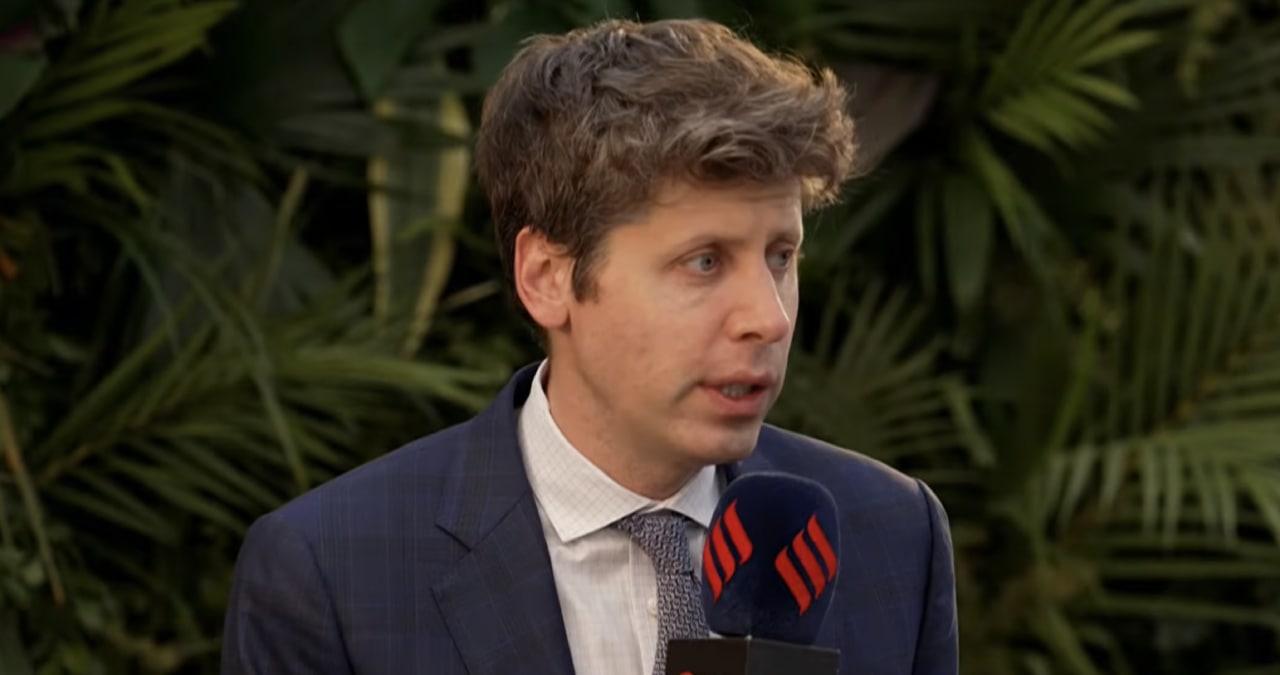
In a world where it gets increasingly difficult to differentiate between humans and AI, how would you verify? Tools for Humanity has a solution in the form of World ID 4.0 – a tool designed to offer an improved biometric human verification system. Backed by OpenAI CEO Sam Altman, the new open-source protocol is designed to help users with something that’s of paramount importance today – proving they are real humans online while protecting privacy.
In an era where the internet is increasingly filled with AI bots, deepfakes, and synthetic identities, World ID allows individuals to verify their ‘humanity’ through iris scanning via the company’s Orb device or simpler methods, thus generating a secure digital credential stored on the user’s phone. This data helps confirm that the user is a unique living person without revealing any personal identity details, effectively replacing traditional CAPTCHA with reliable biometric proof.
Originally launched as Worldcoin in 2019 by Sam Altman, Alex Blania, and Max Novendstern, Tools for Humanity operates independently of OpenAI. While the project has faced scrutiny over biometric data collection and privacy in the past, the company states that World ID 4.0 is a critical infrastructure in the AI age, ensuring digital trust.
Tiago Sada, Chief Product Officer at Tools for Humanity, stated that as AI-generated media improves, traditional verification methods will fail, thus making robust, privacy-first solutions like iris-based World ID increasingly essential.
World ID 4.0: How it verifies humans amid AI
With the latest version, World ID 4.0 introduces enhanced privacy and security tools, including key rotation (allowing users to replace compromised keys without losing their verification history) and multiparty entropy, which splits biometric data across multiple parties so that no single entity can access complete information.
The technology also offers tiered verification options for better accessibility, i.e., full Orb iris scans for maximum security, mid-tier government ID checks via NFC, and a convenient new Selfie Check processed directly on the user’s device.
There is also a redesigned World ID app (now in beta) that lets users manage credentials, control data sharing, and delegate tasks to AI agents. Some additional tools include the Agent Kit for secure human-AI interactions and the Concert Kit to help prevent ticket scalping by bots.
Why World ID 4.0 matters to you
– Verified badges on platforms like Tinder help users avoid fake profiles, catfishing, and AI-generated impersonators, leading to more authentic interactions in dating and social apps.
– On Zoom and professional tools, hosts can require verification to block deepfake intrusions, making meetings more secure and reducing the risk of scams or unauthorised access.
– Tiered options (including quick selfie checks) and improved key management make the system less intrusive and more user-friendly than traditional passwords or CAPTCHA.
– As AI agents become common, consumers gain a reliable way to prove their humanity. World ID 4.0 will help secure access to services, events, and payments while preventing bots from confusing traditional systems.
– Users can manage exactly how and where their World ID is used, with stronger privacy safeguards that limit data exposure.
Since its launch in 2023, World ID has verified nearly 18 million unique users and processed over 450 million authentications. The Altman-backed company has continued refining its hardware, including the compact Orb Mini launched in 2025.
Where will you see World ID 4.0 in action?
World ID 4.0 is now integrating with major platforms, starting with Tinder and Zoom.
On Tinder, verified users can display a “proof of human” badge on their profiles (expanding from a successful Japan pilot program to the US and globally). This is expected to build trust in online dating amid the rise of deepfakes.
On Zoom, hosts can mandate verification before meetings to prevent impersonation. Additional partnerships with services like DocuSign, Okta, and Shopify are in progress, with pilots underway for gaming, events, and more.