



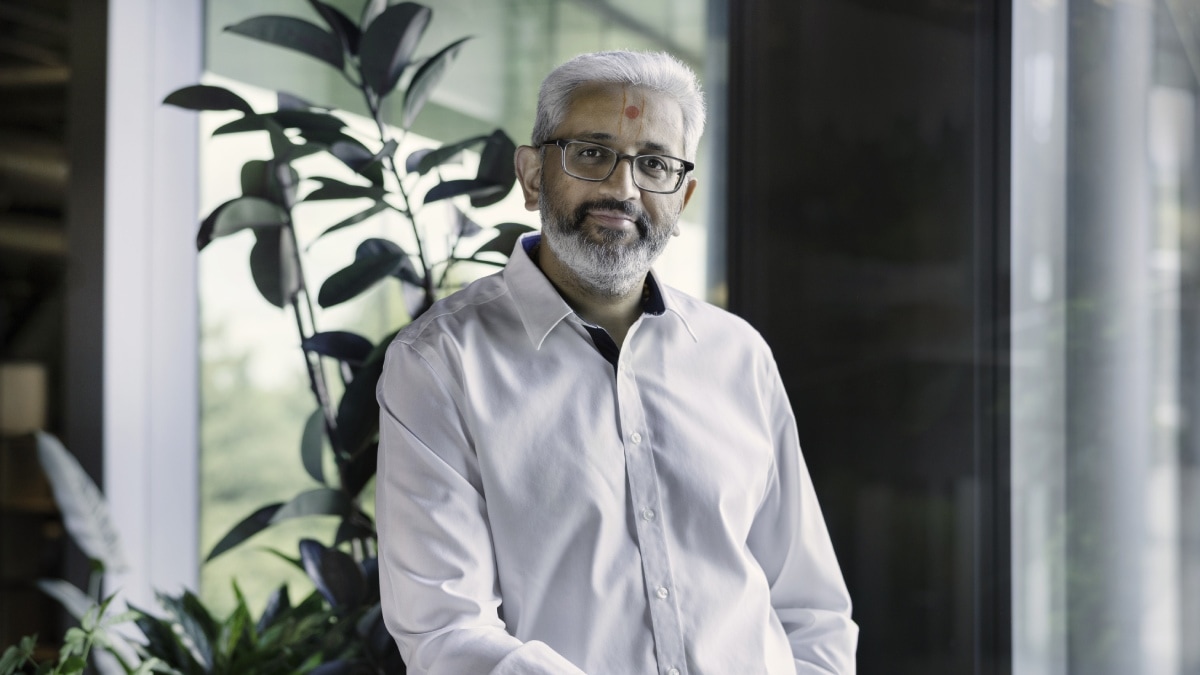
Microsoft has overseen changes within its leadership structure, with Daniel Shapero as the new CEO of LinkedIn, while Mohak Shroff has been elevated to President of Platforms and Digital Work at Microsoft. This change marks a new era for the professional network, with Ryan Roslansky, Executive VP of Microsoft, broadening his influence across the overall Microsoft portfolio.
With all the changes implemented, Shroff now serves as a bridge between the two giants. In a post on LinkedIn, he clarified his mandate to steer long-term technology strategy with a focus on AI-driven innovation. The promotion highlights nearly two decades of Shroff’s quiet but transformative impact, positioning him at the helm of platforms serving over 900 million members. It also signals Microsoft’s aggressive push into AI-native work ecosystems.
But why is Shroff chosen for this crucial development
Shroff’s background presents him as one of the ideal candidates for this role. Born in Mumbai, India, in 1978, with ancestral roots in the state of Gujarat, he moved to Bahrain when he was just 18 months old. Shroff was raised in a hardworking immigrant household, where they focused on an international upbringing, combined with a deep spiritual foundation in the BAPS Swaminarayan tradition.
Shroff eventually moved to the United States to pursue his degree at the University of Texas at Austin, where he earned a Bachelor of Science in Computer Science between 1996 and 2000. It was here that Shroff honed the analytical rigour that would eventually define his path, diving into the nascent world of web technologies just as the internet boom accelerated.
Shroff’s early career stints
Passing his college degree, Shroff managed to nab a crucial Software Engineering Internship at Oracle in the summer of 1999. Working on Oracle WebDB, he built its primary Web-SQL gateway adaptor in C – a hands-on baptism in scalable enterprise software.
However, the real development of his early career was at Ariba, where he spent eight years (2000–2008) as a Principal Software Engineer and Technical Lead. In the pre-cloud era, Ariba was a major name in the B2B e-commerce, where Shroff led major revenue initiatives and developed supplier enablement solutions, including several patent-pending technologies.
The move to LinkedIn
It was in 2008 when Shroff made the move to LinkedIn, and his arrival coincided with the platform’s most explosive growth phase. Shorff began in product engineering, and he quickly ascended to the roles of Vice President of Product Engineering and later as VP of Engineering for Consumer Products.
Some of his breakthroughs at LinkedIn include developing early advertising platforms, scaling Subscriptions and Jobs revenue streams, and rebuilding the payment system. One of his most notable tasks was Project Inversion – a massive, high-risk platform rebuild that allowed LinkedIn to scale to its current 900-million-member strength.
By September 2017, he was Senior Vice President of Engineering, overseeing the global teams responsible for securing the world’s professional infrastructure.
In April 2026, Mohak Shroff now serves as the President of Platforms and Digital Work at Microsoft. In this newly created executive role, he acts as the primary architectural bridge between LinkedIn and Microsoft’s broader productivity suite. Reporting directly to Ryan Roslansky (Executive Vice President of LinkedIn and Microsoft Office), Shroff is tasked with leading the long-term technology strategy and innovation across both ecosystems.
His primary duties include overseeing the integration of advanced AI capabilities into daily workflows, specifically focusing on the ‘agentic web’ strategy, where AI assistants perform complex tasks across Microsoft 365 apps and LinkedIn’s professional graph. By unifying the platforms, Shroff’s mandate is to build an ‘AI-first”’ infrastructure that transforms how the world’s 1.3 billion professionals work, collaborate, and grow their careers.
Shroff’s net worth and influence
Beyond his internal roles, Shroff’s influence extends to the broader corporate world. He has held a board seat at eBay since 2020, advising the e-commerce giant on re-platforming and AI integration.
His financial profile is equally sharp too, with net worth estimates hovering between $1.1 million and $2 million (based on data from Benzinga), which is said to be fuelled by strategic equity holdings, including significant eBay units.