



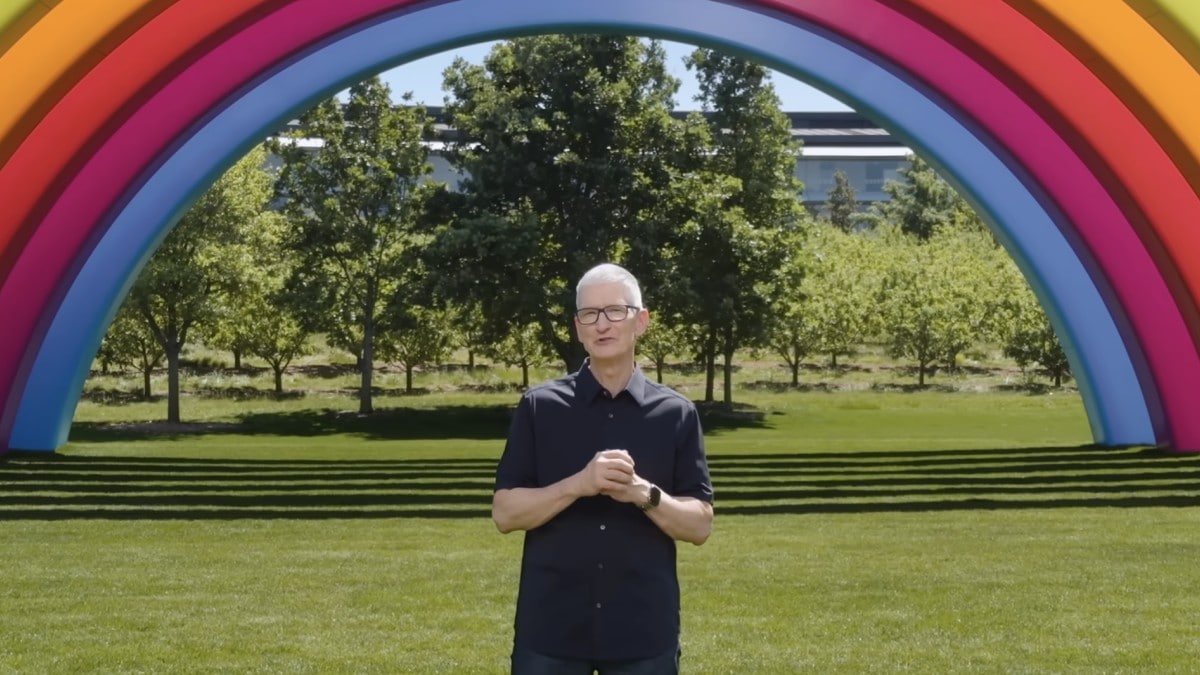
Most of us usually relate Apple’s greatness to its founder and ex-CEO Steve Jobs, the man who is credited with bringing back Apple from the verge of bankruptcy. Jobs shaped the company into more than just a brand that makes personal computers, he gave the world the iconic iPod and the revolutionary iPhone, two products that changed how people live.
His successor, Tim Cook, isn’t usually credited with overseeing the launch of something equally revolutionary or exciting. In fact, Cook was seen as less of an inventor and more of a business guru – a man who used his supply chain expertise to streamline operations at Apple and make it a globally strong name to reckon with.
Cook, who is now ceding his position as CEO to Apple’s hardware chief, John Ternus, heads to a place where he will oversee Apple’s business as an Executive Chairman. Ternus is now expected to lead Apple into its next chapter, guiding the multi-trillion-dollar empire in the AI era with his expertise in hardware design.
Tim Cook: How he changed the way Apple worked
Cook’s focus, right from the get-go, was to make Apple a reliable and disciplined name in the technology space. Unlike Jobs, who had flashy hero announcements to decorate his resume, Cook focused on rather unglamorous bets on supply chains, services, custom silicon, and ecosystem depth.
Whether it was iterative updates, expansion of services and sorting out the supply chain before reaching out to global markets, Cook is more of a master builder scaling Apple into a resilient and extraordinarily profitable empire.
Tim Cook’s core strengths: Where he stood out
Tim Cook’s legacy rests on four foundational ideas:
Ecosystem over gadgets: Every device is a gateway into Apple’s services and recurring revenue.
Services as the profit engine: Shifting from one-time hardware sales to stable, high-margin subscription income.
Operational excellence: Building the world’s most efficient, ‘asset-light’ supply chain.
Values as differentiator: Championing privacy, sustainability, and responsible sourcing as core brand pillars.
Let’s take a quick journey through Cook’s arrival at Apple and how he rose through the ranks to lead the company and make it flourish in the heated consumer technology space.
1998–2010: The ‘operations architect’ behind Steve Jobs
Cook wasn’t an Apple guy from the beginning of his career. Soon after Jobs returned to Apple and took over its reins, Tim Cook was onboarded as the Senior VP of Worldwide Operations in 1998, bringing decades of experience from his previous stints at IBM and Compaq. Back then, Apple’s supply chain was described as chaotic at best, with inventory sitting for months.
Cook slashed the inefficient supply chain, reducing the inventory from months to just days using a just-in-time manufacturing model. This dramatically improved cash flow and reduced risk. Cook pioneered Apple’s “asset-light” manufacturing strategy, which meant the company relied on contract partners like Foxconn while Apple retained tight control over design, software, and branding. This approach allowed the company to scale production rapidly without tying up capital in factories, thus delivering the high gross margins that would later define Apple’s financial power.
Cook also served as interim CEO during Steve Jobs’ medical leaves in 2004 and 2009, successfully steering major launches including the iPad 2 and the announcement of iCloud. These phases quietly proved that Apple’s engine could run smoothly without its founder and smoothly under Cook.
2011: Cook becomes the new CEO
On August 24, 2011, Steve Jobs resigned as CEO of Apple and named Cook as his successor. Six weeks later, Jobs passed away, thrusting Cook into the spotlight at one of the most emotionally charged moments in the company’s history.
Cook’s early moves were understated but strategically vital. In 2012, Apple resumed paying dividends for the first time since 1995 and launched a massive share repurchase program. These decisions signalled a shift from a cash-hoarding startup mentality to a mature, shareholder-friendly powerhouse, while still pouring billions into R&D.
2014–2015: Launching new frontiers for Apple
After sorting out the business front, Cook focused on a new product category since the iPad – the Apple Watch. Announced in September 2014 alongside the iPhone 6 series, the Watch expanded Apple into health, fitness, and fashion. A few months later, Apple Pay arrived to mark the company’s serious entry into financial services and create a new recurring revenue stream through transaction fees. The larger-screened iPhone 6 and iPhone 6 Plus drew more consumers to the brand.
In 2015, Cook greenlit the construction of Apple Park, the company’s futuristic headquarters, which became a symbol of Apple’s growing commitment to sustainability. Under Cook, Apple achieved 100% renewable energy for its global operations and began pressuring its supply chain to do the same.
2016–2018: Cook pushed wearables, services
The 2016 launch of AirPods proved to be one of Cook’s quiet masterstrokes after the controversial axing of the legendary 3.5mm headphone jack from the iPhone. What seemed like a simple wireless earbud became a cultural phenomenon and a massive profit engine, helping the wearables category grow into a multi-billion-dollar business.
Simultaneously, Cook was engineering a profound strategic shift with Apple’s software services. Cook worked on expanding Apple Music, iCloud, the App Store, and Apple Pay aggressively. By 2018, revenue from services had become a more stable and highly profitable counterbalance to hardware sales. That same year, on August 2, 2018, Apple became the first company in history to reach a $1 trillion market capitalisation.
2019–2021: The Apple ecosystem deepens
Cook doubled down on subscription services with the launch of Apple TV+ in 2019 and the Apple One bundle in 2020, the latter combining music, video, gaming, and storage into one seamless package. The Apple TV+ service has hosted several award-winning movies and shows under Apple’s banner, with the recent involvement in the production of ’F1: The Movie’. The 2020 debut of Apple Card further embedded Apple into users’ financial lives. In August 2020, Apple crossed the $2 trillion market cap milestone — just two years after hitting $1 trillion.
2021–2024: Apple Silicon changes the game, Cook eyes expansion
The transition to Apple Silicon with the M-series chips possibly represented one of Cook’s most ambitious business decisions. By replacing Intel chips in Macs and expanding the ARM architecture across devices, Apple offered superior performance, efficiency, and control over its entire hardware-software stack. The MacBooks and Macs earned a reputation for battery life and raw processing performance. Apple’s advancement in its chips has been superior to an extent that it decided to disrupt the entry-level laptop market with the MacBook Neo, a budget laptop running on the same chipset as an iPhone 16 Pro. A MacBook running on an iPhone chip! Talk about flexing!
By early 2021, Apple announced it had more than one billion active iPhones — a massive base that became a powerful engine for services monetisation. Services revenue surged past $80 billion annually, contributing a high share of profits.
By 2024, Apple’s market capitalisation had flirted with $3 trillion, cementing its position as the world’s most valuable public company.
Apple had also started expanding its retail presence into more markets, including India. By early 2026, Apple has been operating six Apple Stores in prime metro cities of India, offering the traditional Apple retail experience.
Then there’s the manufacturing diversification
Under Cook, Apple looked to diversify its manufacturing efforts between 2017–2020, which has eventually accelerated dramatically since 2023, owing to geopolitical tensions, US-China trade disputes, and tariff risks.
In 2025 alone, Apple assembled approximately 55 million iPhones in India — a 53% increase from just 36 million in 2024. India now accounts for roughly 25% of Apple’s global iPhone production. Most iPhones sold in the United States are now manufactured in India, with the company aiming to shift the vast majority (if not all) of US-bound iPhones to Indian factories by the end of 2026. This transition is powered by key partners, including Foxconn (which opened a major new plant in Bengaluru), Tata Electronics (which has acquired and expanded facilities in Tamil Nadu and Karnataka), and Pegatron. Cook has described the ramp-up in India as a strategic success, allowing Apple to maintain supply chain resilience, reduce tariff exposure, and tap into India’s growing talent pool and supportive government policies.
Cook has turned Apple from an innovative yet volatile product company into a diversified technology and services powerhouse, flexing unprecedented financial strength and customer loyalty.
While the next chapter, led by Ternus, raises concerns for the behemoth in an era of AI, it remains evident that Tim Cook hands over an iconic and highly profitable brand to Ternus for the future.