



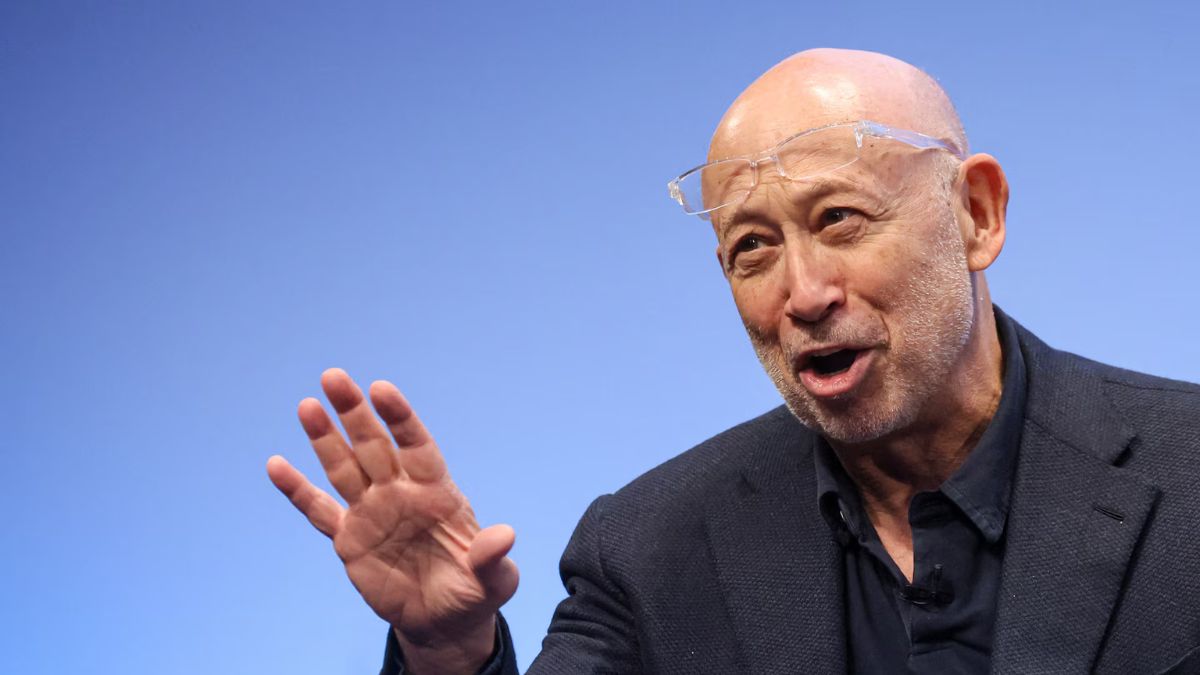
It isn’t every day that a kid from the Brooklyn projects ends up running one of the world’s most influential banks. Lloyd Blankfein’s rise from public housing to the top of Goldman Sachs is a rare example of significant social mobility in action. His 2026 memoir, Streetwise, along with his recent public talks, offers a practical guide for those trying to move from the middle class into the global elite.
Having grown up sharing a small, crowded bedroom in the Lillian Wald Houses in East New York – a rough neighbourhood – and then going on to become CEO of Goldman Sachs, widely regarded as the world’s most influential investment bank is one of the most inspiring rags to riches story today.
Blankfein insists that his difficult upbringing in East New York was a primary driver of his later success, giving him a competitive edge that wealthier peers lacked. He views his career not as a calculated master plan, but as a series of disciplined responses to the immediate challenges placed directly in front of him.
The “moonshot” from Brooklyn to Harvard
Blankfein grew up in the Lillian Wald Houses in East New York, a neighbourhood he describes as notorious for its “concrete and broken glass.” His father was a postal clerk who faced periods of unemployment, and Blankfein attended a public high school that was so chaotic he often felt physically unsafe. Despite these conditions, he became the valedictorian of his class and secured a spot at Harvard University at just 16 years old.
According to his 2026 book and interviews with CBS News, arriving at an Ivy League school from his background was a total “moonshot” that initially felt like a culture shock. He credits this early exposure to an elite environment with helping him bridge a significant confidence gap that many from humble backgrounds struggle to overcome. He often tells students that while technical skills are required for any job, the true value of an elite education is that it forces you to become a “complete person” who can navigate various social layers.
The case for the real accelerator
According to a Fortune report from 2026, Blankfein pushed back against modern tech leaders who suggest that a college degree is no longer necessary for success. He argues that education remains the “real accelerator” for the middle class because it teaches people how to think, write, and build relationships – skills that AI cannot easily automate. While tech training might help someone get a first job, Blankfein believes it is a broader liberal arts foundation that allows a person to lead a company.
He advises young professionals to view their undergraduate years as a chance to be uncomfortable by engaging with subjects outside their immediate field. By studying history or philosophy, they develop a broader perspective that is essential for high-level leadership and decision-making. As reported by Fortune, he believes that being interesting and well-rounded is what makes a candidate stand out once they move past the entry-level technical requirements of their career.
Urgency as a competitive advantage
One of the most practical pieces of advice Blankfein offers is to embrace the lack of a safety net as a unique professional strength. In a recent talk at Goldman Sachs, he mentioned that one of his greatest advantages was that he never had to source his motivation – he knew he had to succeed because there was no other option. He suggests that people from middle-class or humble backgrounds often have a level of urgency that their wealthier peers lack.
His advice to those currently in the middle class is to use that drive to seek out the most challenging roles available in their industry. He emphasizes that “doing great work” is the only reliable way to gain the power of choice in a career and move toward significant wealth. According to Blankfein, a person can completely break away from their poor financial conditions by consistently taking on difficult projects and delivering results; thus building the financial security and reputation required to change their life.