



The global creative economy annually generates revenues worth $2 trillion. This estimate by the United Nations encompasses a vast array of sectors within the creative economy — the media and entertainment industries, fashion and textiles, architecture, and publishing, among others.
But if you peek behind what seems obvious, creativity is not just limited to industries that employ people in the creative occupation. Art knows how to permeate spaces, and it does so beautifully. Believe it or not, even when buying things like cars and phones that one has to use on a daily basis — the look and ‘feel’ sometimes take priority over the utility, performance, and functionality. There are products that have been phenomenal successes that do not bring anything new to the table except for their exemplary and unique designs.
Consider the Mahindra Thar. On August 15 this year, Mahindra launched Thar Roxx, on the heels of the third anniversary of Thar–Second Generation, which has sold over 1,86,000 units so far. The First Generation Thar, brought
in by the company in 2010, was designed by Ramkripa Ananthan, a 50-year-old engineer and now chief of design at Ola Electric.
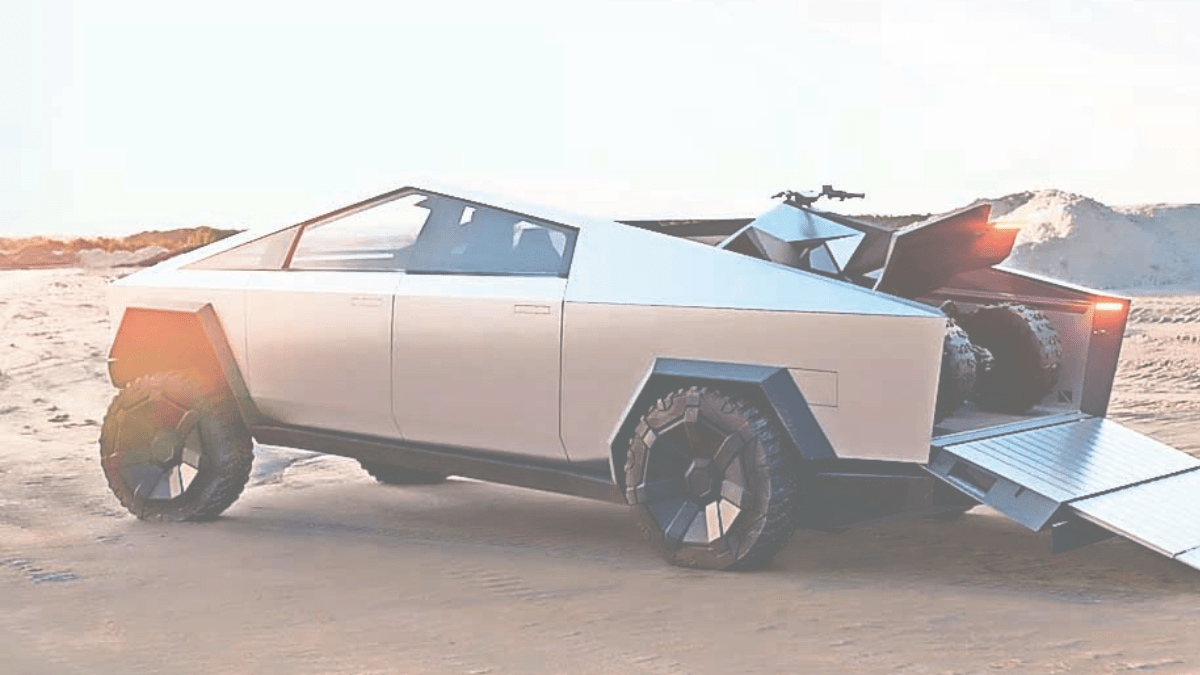
After the Thar Roxx was launched, the stocks of Mahindra & Mahindra increased by 3%. The 4-seater SUV, meant for off-roading, brought a unique box-shape design on the market that soon became famous for its timeless appeal. Similarly, when Elon Musk’s latest delivery, the Tesla Cybertruck, went on floors earlier this year — after five years in the making — even as most reviews were on either of the extreme ends, the electric vehicle priced at $1,00,000 still was able to sell over 11,000 units till July this year — much ahead of its competitors launched around the same time.
The cybertruck has been labelled as an ‘unconventional’ vehicle, both in the good and bad sense, all due to its design, which has so far been its biggest selling factor too. The truck doesn’t have auto-opening doors. But it has ‘steer-by-wire’. The interior is all hard plastic. But it has a sleek design finish. The rear-view mirror is tiny. But it has hidden wireless charging…
On the other hand, ask anyone who loves Mini Cooper the reason behind it and the answer is almost never any of the car’s specifications. The most common terms used to describe the vehicle have forever been — compact. Cute. Classy. Sophisticated.
But yes, it is often known as a vehicle that’s “fun to drive” because of how customisable it is — both for the interiors and exteriors. In 2022, the BMW-owned vehicle touched record sales in India. According to AutoCar India, the car continues to sell thousands of models globally per year.
And no, it’s not just cars… The design quirks go far beyond too! Just in case you missed the bandwagon, flip phones and foldable phones are making a comeback. Though Nokia toyed around with foldable phones as far back as 2008, it was only in 2019 with Samsung’s Galaxy Fold that foldable smartphones hit the market shelves. This was followed by Huawei Mate X and Motorola Razr Plus.
There’s nothing new that a foldable phone offers, per se. The interface or the features do not significantly differ from any regular smartphones. In fact, there might even be questions raised on the durability of these models. But according to a recent report by research firm Mordor Intelligence, the market size of foldable smartphones in 2024 was estimated at $28.72 billion, expected to increase to $63.31 billion in the next five years.
And while we’re talking about smartphones, do you remember the 2014 BlackBerry Passport that was all the rage back then? Priced at almost Rs 50,000, the square-shaped phone had a much larger screen than other smartphones, with a small QWERTY keypad placed at the bottom. Within hours of its pre-orders opening up, the company claimed that it had already sold over 2 lakh units. The hardware specifications were pretty much the same, except that this phone had the new BlackBerry OS.