



Venkata Susmita Biswas
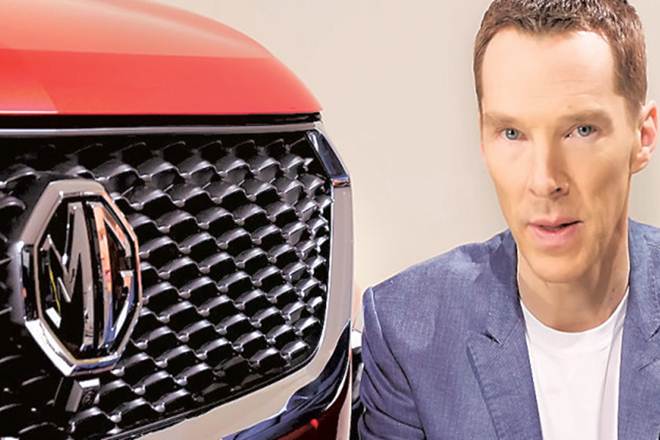
Internationally well known faces are the latest pick for brands trying to make an impression on the Indian consumer. When British car manufacturer Morris Garages introduced its first automobile — Hector — for the Indian market in May this year, it signed on British actor Benedict Cumberbatch as the brand ambassador for the company’s Indian arm. Similarly, last year, Japanese auto manufacturer Isuzu Motors roped in South African cricketing legend Jonty Rhodes to launch a lifestyle pick-up truck and a multi-utility vehicle in India.
As Shankar Srinivas, VP, service and customer relations, external affairs and PR, Isuzu Motors India, says, the company felt the tie-up with Jonty Rhodes “will appeal to many modern and aspirational Indians and leverage brand Isuzu’s significance in the country”. Companies, including Isuzu Motors, often opt for international celebrities for the primary reason of building vanity around the brand. V-Cross, one of the cars that Rhodes endorses, has been in the Indian market since 2016 but it was only in August 2018 that the Japanese manufacturer amped up marketing with star power. This marketing ploy was accompanied by the launch of 30 limited-edition accessory packs bearing Rhodes’ autograph.
Micromax, an Indian smartphone brand, signed on X-Men star Hugh Jackman in 2013 with the purpose of making the brand appear more international to compete against American, Chinese, and Korean smartphone brands that were leading the market. This was also when the company had international aspirations, “but Micromax tried that route rather unsuccessfully with Hugh Jackman”, points out Saurabh Uboweja, chief executive officer, Brands of Desire, a management consulting firm.
Apart from India, Micromax operates in Russia, the Middle East, Nepal, Bangladesh and Sri Lanka and earns a paltry 11% of its revenue from exports. Later in 2016, Micromax shifted gears to promote a local language feature in its phones and ended up dropping Jackman for TV host Kapil Sharma, thereby undoing the aspirational value proposition of the brand. An international endorser may not always be the magic wand, after all.
Most recently, OnePlus endorser for China and India, Robert Downey Jr, has taken over the entire premium out-of-home ad inventory in metro cities — an all-out attempt by OnePlus to win the Indian market with a trending brand ambassador, due to the recently released Avengers: Endgame movie. In the smartphones market that is cluttered with too many celebrities, OnePlus has tried to break away with an international face. The brand has earned flak for this move because as a brand that promises to offer the best features at affordable prices, investing in a premium star like Downey Jr likely goes against its value for money proposition.
International faces have mostly been associated with automotive or smartphone brands. Historically, one atypical brand to sign on an international face was Indian textile brand Vimal. Sir Vivian Richards swaying by the pool to Caribbean music in an ad for Vimal in 1987 positioned the company as up-market. Uboweja says not many brands can pull off such a casting coup. “Product categories that connect with a relatively young, affluent and outward-looking target audience can benefit from global endorsements,” he says.
For brands that wish to sign on celebrities, international stars are a great choice simply because of their “consistency and professionalism”, says Pallavi Singh, head marketing, Morris Garages India. And contrary to popular belief, a star from across the seven seas is not necessarily more expensive than an Indian A-list star, unless one talks of prime stars like DowneyJr. Experts say since the star is being signed on just for one market, the cost is typically low. As per conservative industry estimates, even if an international star charges half the fee of an A-list Indian celebrity, it would amount to Rs 4-5 crore per day, which is a decent bargain for advertisers.
Aditya Gadiyar, brand head, VIP, points out that in most cases international faces represent brands for a limited period — typically for a product launch. This, too, brings down the cost of the association. In fact, the Morris Garages association with Cumberbatch came at a “modest fee”, says Singh. The only factor that raises the cost is logistics, she points out, because the television commercial shoot needs to happen abroad. According to Gadiyar, an international celebrity that comes at a steal is particularly preferable over an Indian star as it allows the brand to plough back the budget saved on the ambassador into media buying.