



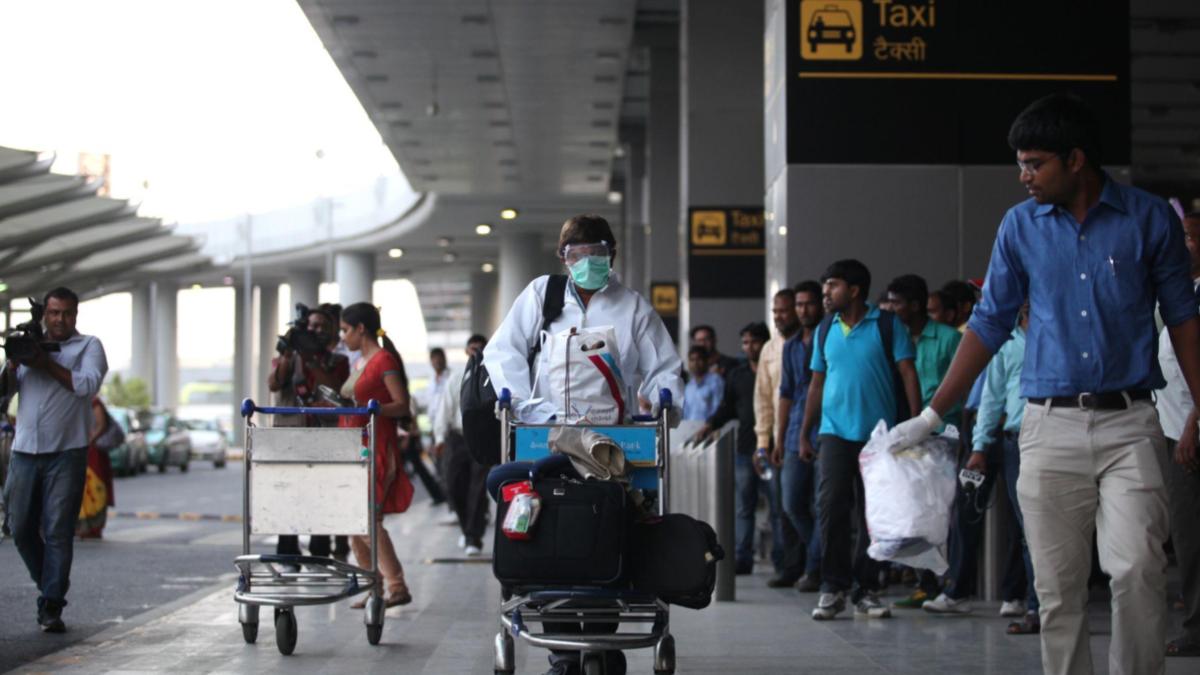
A 28-year-old woman from Uganda, who was suspected of showing symptoms of the Ebola virus after arriving in Karnataka, has tested negative for the infection, state Health Minister Dinesh Gundu Rao said on Wednesday. This brings temporary relief amid heightened nationwide surveillance for the deadly disease.
The woman, who had travelled from an Ebola-affected region, was shifted from a hotel to the state-run Epidemic Diseases Hospital in Bengaluru after reporting mild symptoms including body aches, officials said. Blood samples were collected and sent to the National Institute of Virology (NIV) in Pune for Ebola testing.
The suspected case triggered concern because it was the first such reported Ebola alert in the country. This comes as India is on high alert following fresh outbreaks in parts of Africa, particularly Uganda and the Democratic Republic of Congo.
How are health authorities preparing to screen Ebola cases?
Health Minister JP Nadda reviewed the preparedness by the concerned authorities on Monday. India has activated an extensive surveillance and response mechanism, with the government directing all states and Union Territories to remain prepared to identify, isolate and manage suspected Ebola cases both at airports and within communities.
“Enhanced screening and surveillance measures have been initiated at international airports and other points of entry, and advisories along with Standard Operating Procedures (SOPs) on screening, quarantine, clinical management, laboratory testing and infection prevention practices have been shared with all States and Union Territories,” Nadda said.
The Centre circulated detailed SOPs through the Ministry of Health and Family Welfare (MoHFW) and the National Centre for Disease Control (NCDC). These guidelines cover passenger screening, sample collection and transport, RT-PCR testing, infection control, isolation protocols, contact tracing and safe handling of bodies in the event of fatalities.
Integrated Disease Surveillance Programme (IDSP) units and Airport Health Organisations have been instructed to maintain heightened vigilance for unexplained fever or flu-like symptoms among international travellers, particularly those arriving from affected regions.
Union Civil Aviation Minister K Ramamohan Naidu said the government has already established systems and protocols to respond swiftly if an Ebola case is detected in India.
Ebola SOPs for airlines
The Directorate General of Civil Aviation (DGCA) has also issued a special SOP for airlines after the WHO declared the Ebola outbreaks in Uganda and Congo a Public Health Emergency of International Concern:
- Under the aviation guidelines, airlines operating flights connected to Uganda and Congo must ensure mandatory collection of self-declaration forms before passengers disembark in India
- Carriers have also been instructed to make onboard health announcements asking travellers to report symptoms such as fever, weakness, muscle pain, headache, sore throat, vomiting, diarrhoea or unexplained bleeding
- Passengers developing symptoms within 21 days of arrival have been advised to immediately seek medical care at designated hospitals and inform airport health authorities
The SOP further lays down protocols for handling suspected Ebola cases onboard flights:
- If a passenger develops symptoms during travel, airlines must relocate the person to the rear section of the aircraft, keeping up to three surrounding rows vacant where feasible
- Airlines have also been directed to maintain adequate stocks of personal protective equipment (PPE), triple-layer masks, gloves, sanitisers and biohazard disposal bags
Testing facilities in India
India’s testing infrastructure centers around the ICMR-run National Institute of Virology in Pune, which is fully equipped to conduct RT-PCR testing for Ebola virus disease. The current advisory identified NIV Pune as the country’s primary reference laboratory, while additional ICMR network laboratories may be strengthened depending on the evolving situation.
The Indian Council of Medical Research (ICMR) has also listed Ebola among “priority pathogens” to be tested for in specialised Indian laboratories as part of surveillance efforts.
Ebola virus disease is a severe and often fatal illness that spreads through direct contact with bodily fluids of infected individuals or contaminated materials. Symptoms typically include fever, fatigue, vomiting, diarrhoea and in severe cases, internal and external bleeding.
Oxford University researchers, who have partnered with global partners, including the Pune-based Serum Institute of India, have expressed that clinical-grade vaccine doses will be ready within two to three months.
“Animal studies for the Oxford vaccine candidate are already underway and will be progressing with partners around the world. As for timelines, Serum Institute of India is an organisation that goes far and fast. So we are hoping to have clinical-grade vaccine doses ready within two to three months,” Prof Teresa Lambe, Head of Vaccine Immunology, Oxford Vaccine Group, Pandemic Sciences Institute, University of Oxford, said during a virtual meeting, according to The Indian Express.