



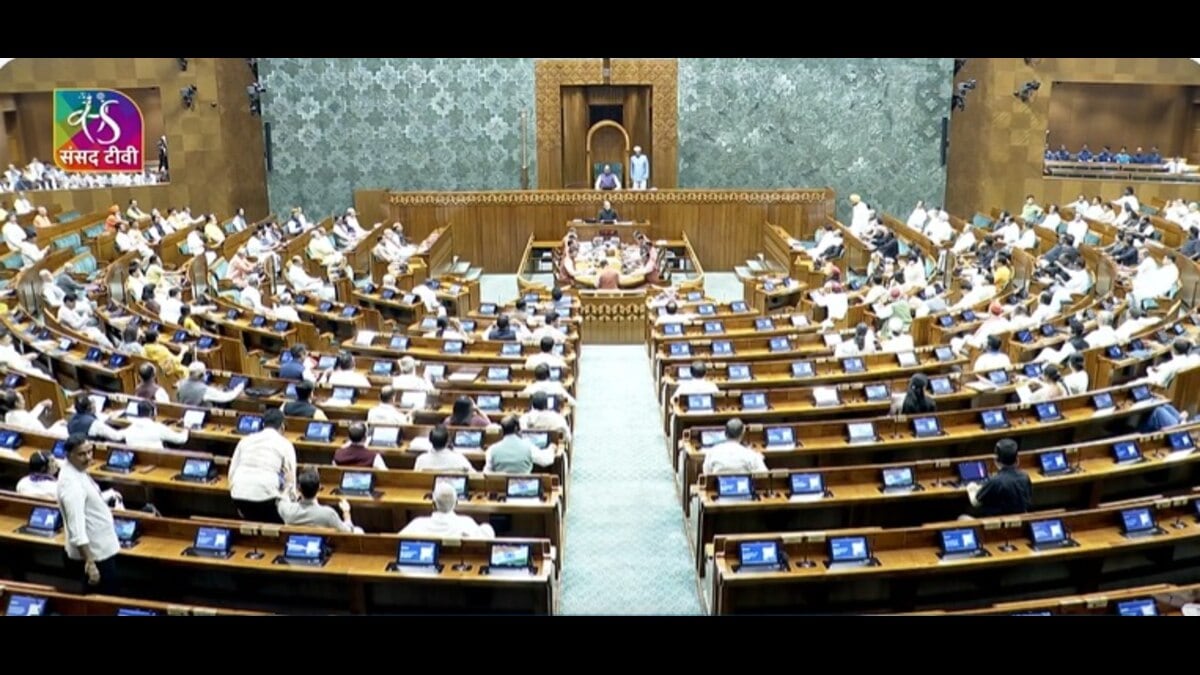
The Constitution Amendment Bill for the implementation of Women’s Reservation from the 2029 general elections failed the Lok Sabha test, with the ruling NDA government failing to get two-third majority in the Lower House.
In the division that took place on the debate on the three bills, 298 members supported the bill while 230 voted against it.
Lok Sabha Speaker Om Birla announced the results of the division.
“The Constitution (131st Amendment) Amendment Bill did not pass as it did not achieve a 2/3 majority during voting in the House,” he said.
After the Lok Sabha did not pass the Constitution Amendment Bill, Parliamentary Affairs Minister Kiren Rijiju said the government had no intention to pursue the two other bills – the Delimitation Bill was introduced to redraw parliamentary constituencies and a third bill to extend the quota to Union Territories
The crucial voting was conducted after over 30 hours of intense debate that saw Union Home Minister Amit Shah targeting the opposition parties over their stance on the bills. He said that when they fight the next elections, they will face the wrath of women.
Replying to the marathon debate in Lok Sabha on the three bills, Amit Shah accused the opposition parties of trying to create a south versus north narrative over delimitation and the proposed an increase in seats and said the southern states have as much right over this house as the northern states do.
“Mahilian dekh rahin hain, raste ka roda kaun hai (women are seeing who is the obstacle in their path). When they (opposition members) fight the polls, they will face the wrath of women,” he said.
Why Is There Opposition?
The main sticking point is the link between reservation and delimitation.
In the Parliament, the opposition parties argued that tying the quota to a future delimitation exercise could delay its implementation. On the other hand, the Centre maintains that delimitation is necessary to restructure constituencies before rolling out the quota.
PM Modi’s Final Appeal
Ahead of the vote, Prime Minister Narendra Modi on Friday made a last-minute pitch to opposition parties to back the legislation.
Acknowledging the numerical challenge, the Prime Minister hinted that the outcome would depend on how the “numbers game” plays out, while also putting pressure on the opposition by framing the vote as a test of their commitment to women’s representation.
Plan to Expand Lok Sabha
A crucial part of the constitutional amendment involves changes to Article 81 of the Indian Constitution, proposing to increase the maximum strength of the Lok Sabha to 850 members, up from the current 543.
This expansion is tied to the delimitation process, which would redraw constituencies based on population changes.
The Numbers Problem
Constitutional amendments require a two-thirds majority of members present and voting, with at least half the House in attendance.
In the Lok Sabha, the current strength is 540 members and the two-thirds mark is 360 votes. However, the NDA strength is 293.
In the Rajya Sabha too, the two-thirds mark is around 163 votes and NDA strength is about 145 members.
This leaves the ruling alliance well short of the required number, meaning it needs support from opposition parties like those in the INDIA bloc.
Even if some opposition MPs abstain, the gap remains significant.
Despite holding a majority in both Houses, the NDA faces a massive task in pushing the bills through. Without cross-party support, the numbers simply don’t add up.