



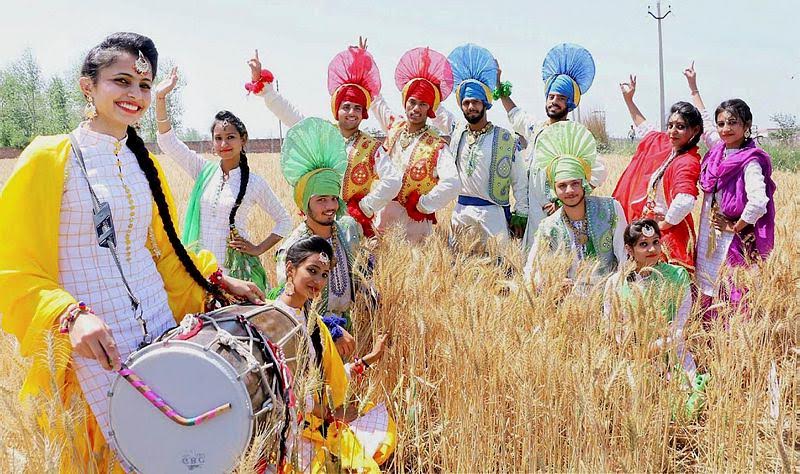
The Baisakhi festival marks the beginning of the Sikh New Year as also solar New Year for Hindus. It also holds an important place among farmers. It is also considered as foundation day of Khalsa Panth among Sikh community.
Hindus also believe that Goddess Ganga descended on earth on this day. Devotees take ritual bath along the sacred river. It is believed that all sins are washed off after taking bath in the holy river. The Baisakhi is celebrated every year on April 13 or April 14. The festival also has astronomical significance as the day marks the sun’s entry into Mesh Rashi. The day is celebrated in several parts of the country in different names.
Significance of festival among Sikh community
It is believed that the ninth Guru of Sikhs, Guru Tegh Bahadur was beheaded by Mughal Emperor Aurangzeb in 1699, as the former had refused to convert to Islam. The tenth Guru of Sikhs, Guru Gobind Singh gave a unique identity to his followers by establishing the Khalsa Panth – also known as the Order of the Pure Ones.
He gave amrit to his five disciples, to turn them into warriors who would go on to defend the freedom of the religion. The Guru also freed the oppressed by inviting them to join this new religion
On the occasion, people participate in kirtans and carry out colourful processions. Farmers also celebrate it as a thanksgiving day for the adequate harvest by performing Aawat Pauni, in which they join together to harvest the wheat and sing and dance.
Significance of festival in Hinduism and Buddhism
The festival of Baisakhi is also important for the Hindus as it marks the start of the solar New Year.
The festival is also celebrated as Puthandu in Tamil Nadu, Pooram Vishu in Kerala, Naba Barsha in Bengal, Rongali Bihu in Assam and Baishakha in Bihar. People take the dip in the Ganges, Jhelum, Kaveri and visit temples. For the Buddhists the festival also holds relevance as Gautama Buddha is believed to have attained Nirvana on this day.