



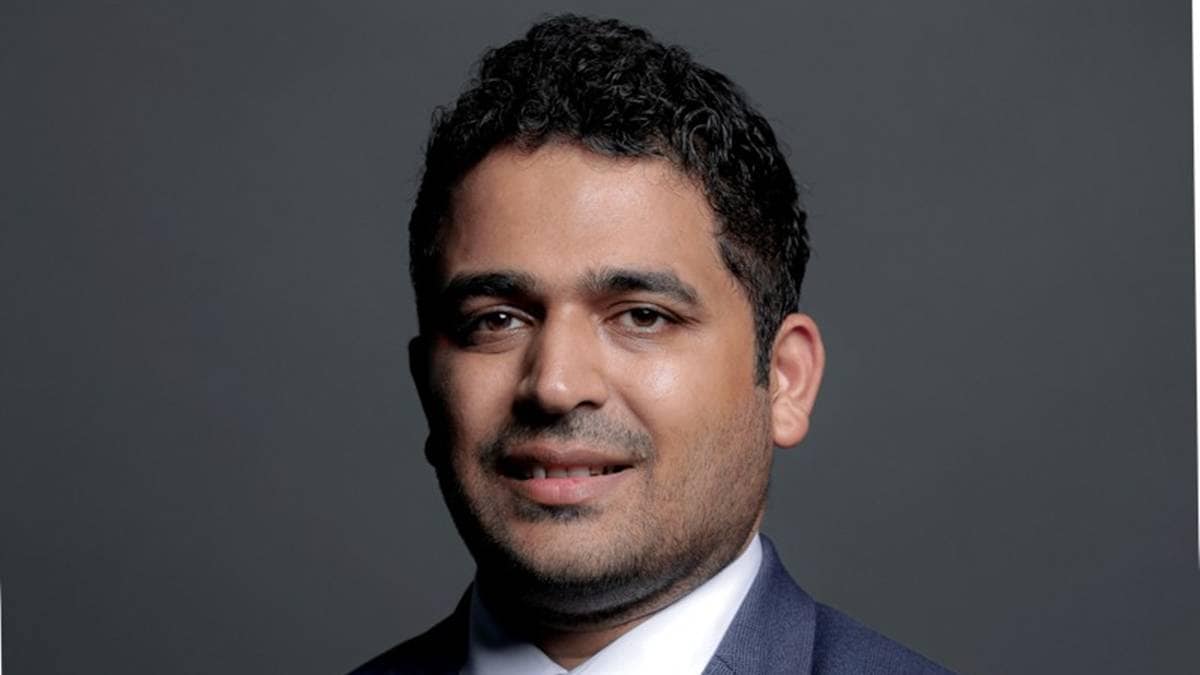
Amid an acceleration in private participation in the space sector, Dhruva Space plans to lead the industry as a full-stack player across satellite, launch, and ground segments. In an interview with Ojasvi Gupta, Founder and CEO Sanjay Nekkanti talks about the company’s decade-long journey, startups entering the sector, capital strategy, as well as plans for India to lead in the global space market. Excerpts:
With multiple startups entering similar domains such as satellite platforms, what prevents commoditisation and differentiation in the crowded market?
Different companies have different priorities. Our focus is on industrialising the space-tech manufacturing value chain in India. We operate across three pillars — space, launch, and ground, but we are very deliberate about what we build and what we source from partners.
For example, we manufacture satellites but source propulsion systems and payloads from other companies. On the launch side, we don’t build rockets but provide separation systems to ensure our satellites are launch-agnostic. On the ground segment, we focus on infrastructure rather than analytics.
This approach allows for collaboration within the ecosystem and ensures that multiple companies can coexist while serving different parts of the value chain.
As a full-stack space company, how do you manage operational depth without spreading yourself too thin, and what does your revenue mix look like?
Becoming a full-stack company has been a gradual process over 14 years — it wasn’t built overnight. Globally, many large players like SpaceX or Airbus operate across multiple segments of the value chain. The key factor is having strong anchor customers. Out of our Rs 450-crore order book, about Rs 100 crore comes from full-stack offerings where we handle satellite development, deployment, and ground infrastructure. So it’s not about spreading thin, it’s about aligning capabilities with demand.
In the Earth Observation PPP ecosystem, where multiple specialised players are collaborating, how is value distributed and what role does Dhruva Space play?
While I won’t speak on behalf of the consortium entity, Dhruva’s role is primarily in the ground segment. We provide the backbone infrastructure for commanding satellites, receiving data, and enabling its dissemination. Other partners focus on payloads, imaging technologies, and analytics, making it a collaborative and integrated ecosystem.
You’ve emphasised capital efficiency. How does Dhruva Space approach fundraising and what are your plans going forward in terms of capital and operations?
We are currently in an oversubscribed pre-Series B round, which was initially planned at $10 million but is now in the range of $20-25 million. We are also targeting a $50-million Series B round within this year. We’ve been very capital-efficient compared to many peers, raising relatively lower funding while building a strong order book. We also take a balanced approach — leveraging both equity and government support rather than relying solely on external capital.
India currently holds a small share of the global space economy. How do you see this changing over the next decade, and what will it take to compete with established players like the US and China?
India currently accounts for about 2% of the global space market. However, the industry is still transitioning from a services-led model to a product-driven one. Over the next 5-10 years, the goal is to capture anywhere between 10-25% of the global market. This will be driven by trade agreements, policy support, and India’s strong talent base. We also have the opportunity to become a global manufacturing hub for space technology, which can significantly strengthen our position.
At a strategic level, is Dhruva Space focused on building deep proprietary IP, or competing on cost efficiencies such as lower cost-per-kg to orbit?
We are fundamentally a product company building core IP. Our vision is to develop strong technological capabilities in India, produce for domestic needs, and eventually become an OEM supplier to global markets. If you look at the evolution of industries like automotive, different regions built their strengths over time. India now has a similar opportunity in space technology, to build a strong industrial base.
As India moves towards industrial-scale space manufacturing, how do you see the sector evolving in terms of capacity, ambition, and global competitiveness?
The sector is entering a phase of industrialisation where the focus is on building at scale. Today, India operates about 60–70 satellites, but global demand is larger. This creates an opportunity not just to meet domestic requirements but also to serve international markets. Startups are now building for large-scale production, whether it is satellites or launch capabilities. At Dhruva, we are setting up one of the largest satellite manufacturing facilities in India. The ambition of private companies is being closely aligned with national priorities, building sovereign capabilities while also making sure that India emerges as a global supplier.
Government support has accelerated the ecosystem, but how can companies ensure they remain market-driven rather than policy-dependent?
Government has always played a foundational role. ISRO has nurtured over 350–500 companies over decades, forming the backbone of the space ecosystem. What has changed now is that the government is enabling companies to move from a service model to a product-driven approach. Initiatives like the Space Tech Fund, SBAS, seed funding programs, and public-private partnerships are encouraging companies to think bigger—building full satellites, launch vehicles, and services. This is not about dependency, it’s about enabling companies to scale and become globally competitive product companies.