



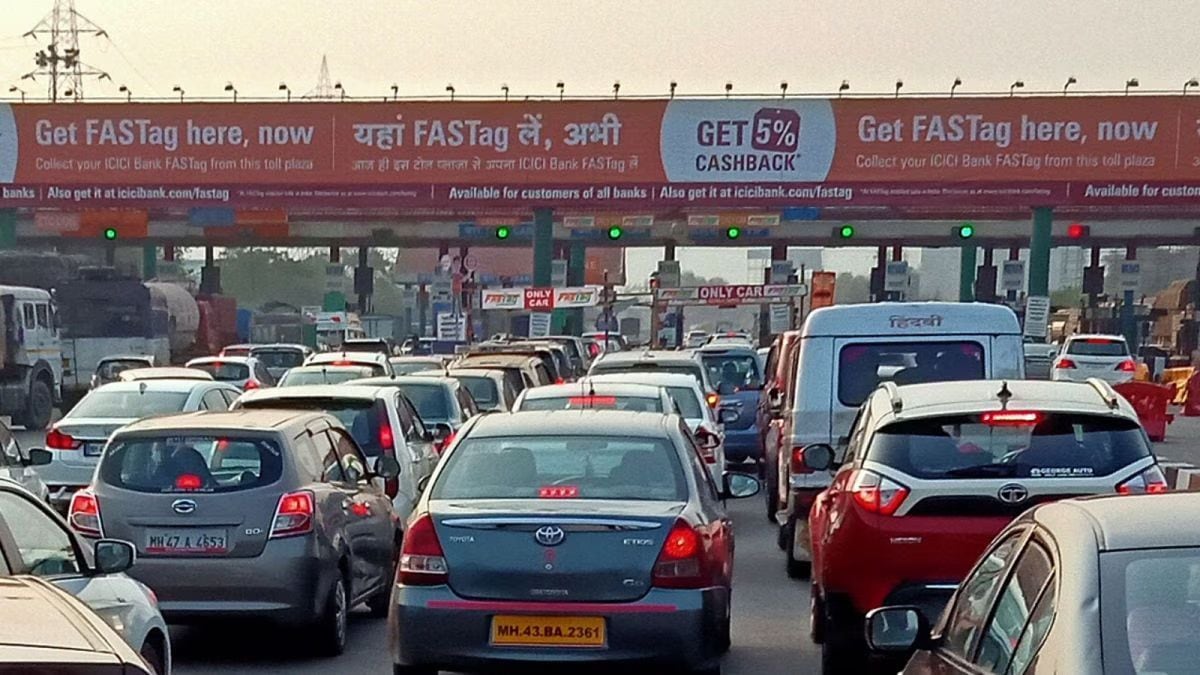
The conflict raging thousands of kilometres away in West Asia has a big role to play in terms of what you pay at the toll plaza on your morning commute.
Toll rate revisions on Indian highways are linked to the Wholesale Price Index inflation of the preceding year. Last year’s WPI was subdued, so the hike you see at toll booths this fiscal is modest. Your commute costs are, for now, relatively stable.
Here is the catch though: the economic disruption from West Asia is expected to push inflation higher this fiscal year. Under the WPI-linkage formula, this means that the toll rate revisions in FY28 might cause a hit at your pocket. Ratings agency Crisil, which studied 91 toll road assets covering roughly 10,000 km of highways, projected on Tuesday that toll collection growth will jump to 8-10% in FY28, up from 5-7% this fiscal.
“Next fiscal, toll rates may see a steeper increase due to higher WPI inflation expected this fiscal amid the West Asia conflict,” Manish Gupta, Deputy Chief Ratings Officer at Crisil Ratings, said.
Why trucks matter to your toll bill
The conflict is also slowing freight movement on Indian highways. Commercial vehicles such as trucks, tempos, and goods carriers account for nearly three-fourths of what toll plazas collect nationally. Fastag data from the Indian Highways Management Company, covering over 900 toll plazas, showed collections from this segment contracting sequentially in both March and April.
That drag is why Crisil estimates overall toll collection growth moderating by 150-200 basis points this fiscal compared to last year. It has little to do with how many of us are driving; passenger traffic, in fact, continues to grow steadily, helped by rising vehicle ownership and better expressway connectivity. The weakness is almost entirely in the freight economy.
The annual pass you may already have
If you drive a non-commercial vehicle and opted for the annual highway pass introduced on August 15 last year, you were among those who clipped toll revenues by 5-7% in the January-March quarter of FY26. The government is compensating road concessionaires for that impact, so the roads are not going anywhere, but the data shows the pass had a real, measurable effect on collections.
Not every highway near you is busier
One in four toll road assets in Crisil’s sample actually saw traffic fall over the last two fiscals. If a stretch you used to drive feels emptier, a newer, faster expressway nearby is likely the reason and that factor alone affected around 12% of the assets studied. Monsoons, sand mining bans and local disruptions accounted for the rest.
“Consequently, diversity of assets helps cushion the impact. Controlled leverage maintained under the InvIT structure, along with resilient operating performance, will keep the debt service coverage ratio of toll road assets strong at ~1.5 times this fiscal and the next. Consequently, credit profiles will remain stable,” Anand Kulkarni, Director, Crisil Ratings, said.