



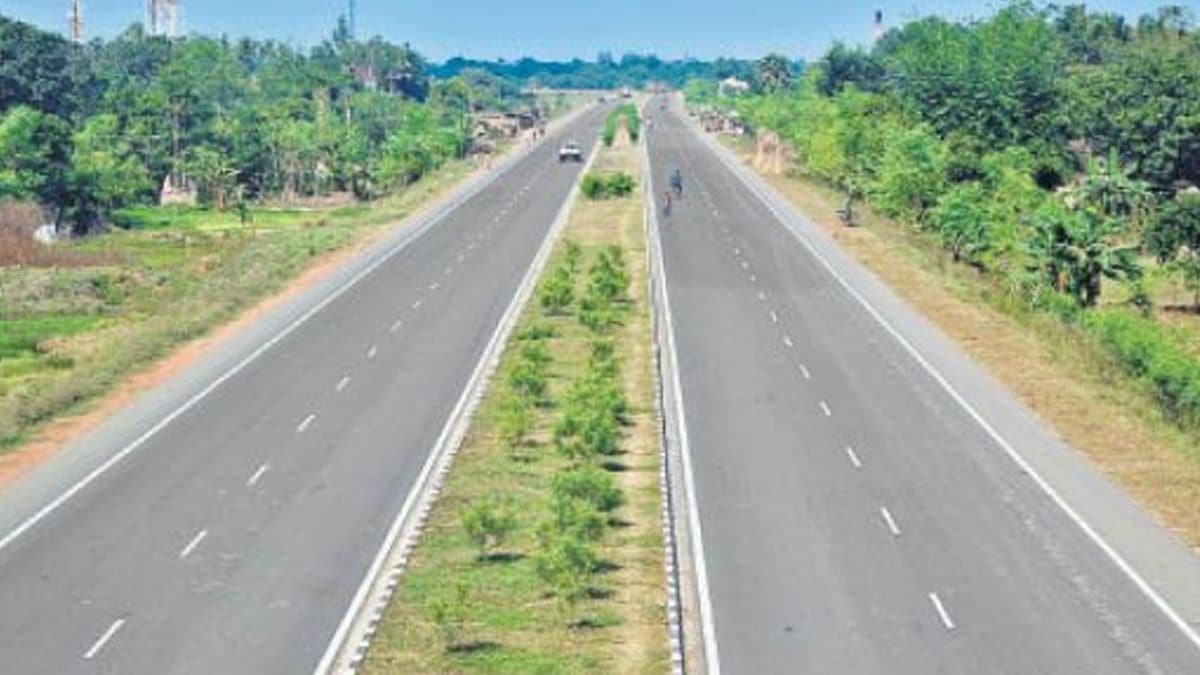
For anyone who regularly moves goods in and out of Jabalpur, the city’s roads have long been the problem. Trucks headed to Uttar Pradesh, Chhattisgarh or Maharashtra have had no choice but to crawl through the urban core, adding hours to journeys that, on paper, should take a fraction of the time.
A Rs 3,540 crore highway project now aims to change that. The under-construction Jabalpur Outer Ring Road, spanning 114 kilometres around the city, is being built to divert through traffic away from Jabalpur entirely. The Ministry of Road Transport and Highways is executing the project in five packages, with sections expected to open in phases through 2026 and 2027, as per a PIB release.
Who stands to benefit
The corridor’s most direct beneficiaries are farmers, truck drivers and small traders who move produce and goods between Jabalpur and surrounding towns every day.
Ram Kumar, a farmer from the region, says delays of three to four hours on city roads were routine. “All vehicles had to pass through the city, causing heavy delays and financial losses,” he says. “Once the Ring Road is completed, we will be able to directly transport our produce from the fields to the mandi more easily,” as per the PIB release.
The five packages cover Barela to Manegaon of 16 km, Manegaon to NH-45 of 20 km, NH-45 to Kushner of 36 km, Kushner to Amjhar of 24 km and Amjhar to Barela of 17 km. Some sections of the first package are already open to traffic.
A bridge over the Narmada
One of the project’s more significant elements is an extradosed bridge being constructed over the Narmada River in Package 2. As per the PIB release, the structure is designed to reflect the cultural weight the river carries in Madhya Pradesh, often referred to as the soul of the state, while also serving as a functional piece of modern infrastructure.
The bridge is being positioned as a landmark for the broader Mahakaushal region.
Tourism and pilgrimage routes
The road is also expected to improve access to some of the region’s most visited destinations. Bhedaghat’s marble rocks, the Dhuandhar Falls, Kanha National Park and the Gwari Ghat on the Narmada are all set to become more accessible once the corridor is fully operational.
Connectivity to Amarkantak, the origin point of the Narmada and a significant pilgrimage destination, will also improve, potentially benefiting tour operators and hospitality businesses across the region.
The wider economic picture
Towns including Barela, Manegaon, Kushner, Amjhar, Patan, Sihora and Shahpura sit along or near the corridor and are expected to see better market access as a result. Districts such as Mandla, Dindori, Narsinghpur and Katni are also likely to benefit from faster connectivity to Jabalpur.
Improved access to industrial zones and logistics infrastructure along the route is expected to support trade and draw new investment into the region.
On the construction side, the project incorporates approximately four million metric tonnes of fly ash alongside green belt development and drainage systems.
What’s left to build
The full corridor includes 14 major bridges, 37 minor bridges, three flyovers, four railway over-bridges and nearly 332 culverts across its five packages. The remaining sections are expected to open over the course of this year and next.