



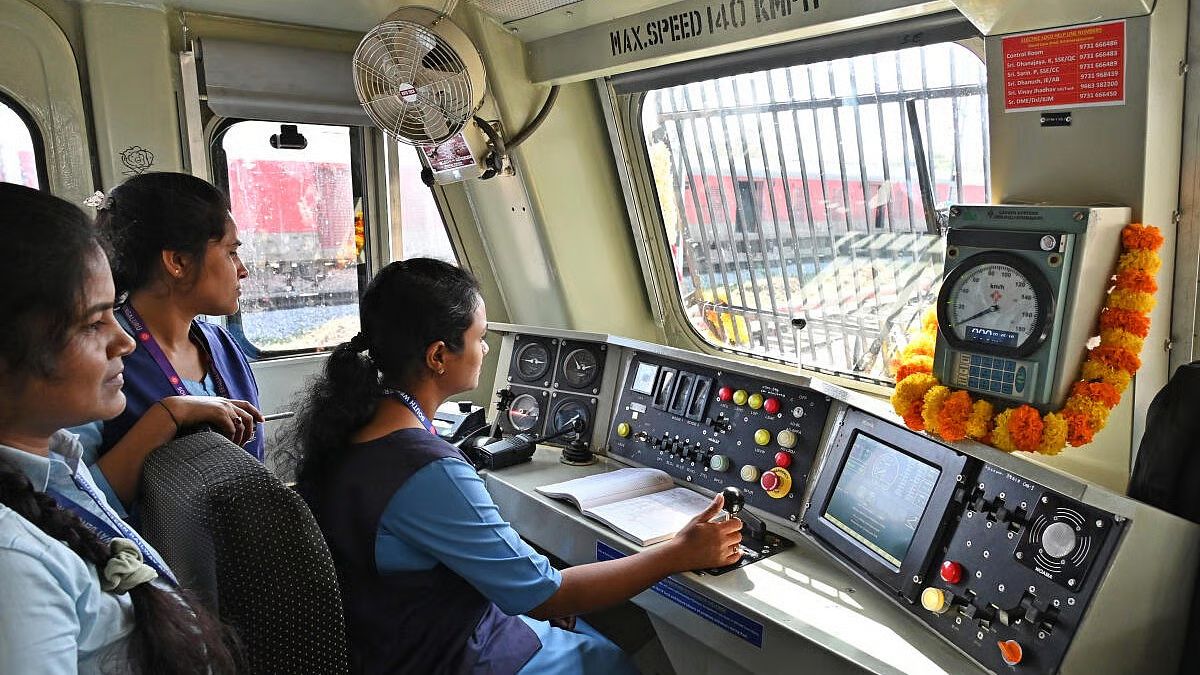
Indian Railways: A fresh concern over working conditions in Indian Railways has emerged after a loco pilots’ union claimed that a significant number of engine drivers exceeded prescribed duty hours during the financial year 2025–26. The findings have raised questions about operational safety and workforce management amid rising rail traffic.
According to the All India Loco Running Staff Association (AILRSA), 8.85 per cent of loco pilots worked for more than 12 hours at a stretch, while nearly 47 per cent were deployed for over nine hours in a single shift—well beyond the recommended limits.
Union flags safety concerns over extended duty hours
As per existing railway regulations, loco pilots are not supposed to work beyond nine hours continuously, with a maximum cap of 11 hours from sign-in to sign-out. Since 2021, the Railway Board’s safety wing has also directed that at least 80 per cent of train operations should be completed within the nine-hour window.
“We have analysed the total number of duties performed by loco pilots in the financial year 2025-26 and concluded that almost nine per cent performed duties for more than 12 hours a day, and 47 per cent worked more than nine hours a day,” AILRSA Secretary General KC James said.
The union argued that despite official claims of improved monitoring and reduced vacancies, ground realities indicate persistent overwork among running staff. It added that the burden on loco pilots has increased alongside record freight movement and a rise in passenger services.
Railways cite recruitment drive, monitoring mechanisms
Responding to concerns, the railway ministry has maintained that steps are being taken to ease workload pressures. Over 15,000 assistant loco pilots have been recruited in recent years, and hiring for around 20,000 more is currently underway.
On March 25, 2026, Railway Minister Ashwini Vaishnaw informed Parliament that duty hours are governed under the Hours of Employment Rules, which mandate 104 working hours in a fortnight for loco running staff.
“Duty hours of loco pilots are governed by the Hours of Employment Rules (HOER), according to which loco running staff are required to work 104 hours in a fortnight. The running hours of loco pilots are meticulously monitored and are maintained, except in exigencies,” Vaishnaw said.
Meanwhile, the union has urged authorities to take immediate steps to reduce excessively long shifts in the coming financial year, warning that fatigue among loco pilots could impact safety. It also highlighted disparities across railway zones, noting significantly higher over-utilisation in freight-heavy regions compared to others that have adhered more closely to norms.
The AILRSA recently staged protests and held a convention to press for demands including better allowances, stricter limits on duty hours, and improved working conditions, underscoring growing discontent among the railway workforce.