



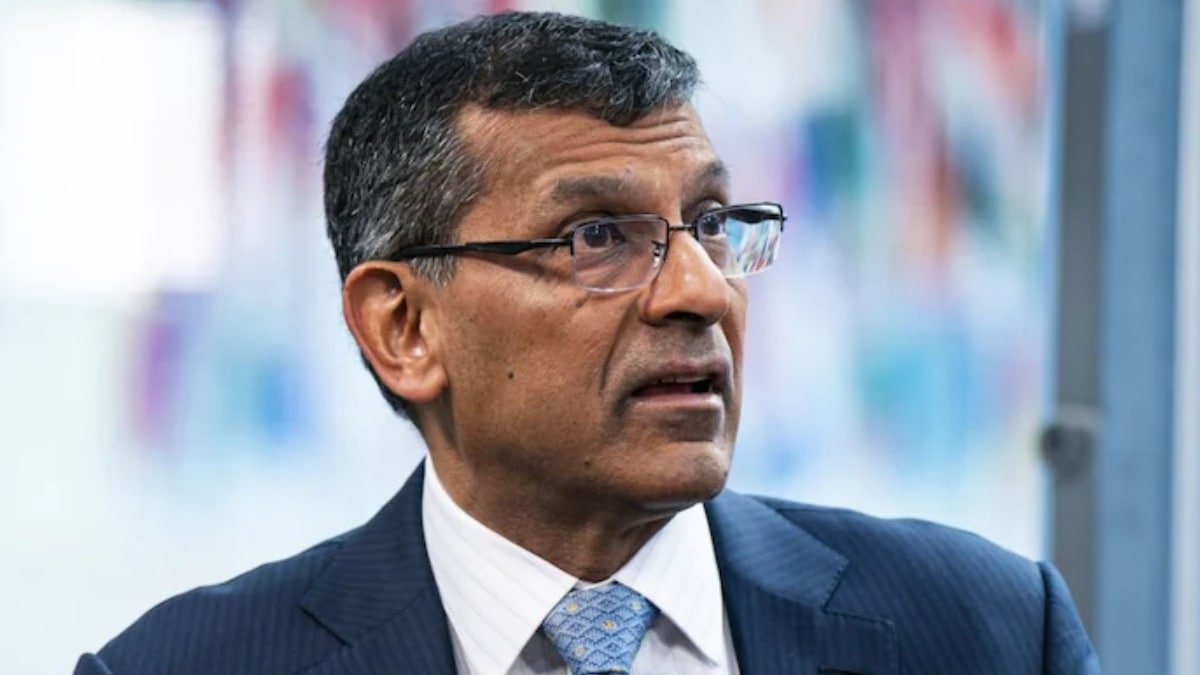
Former RBI Governor Raghuram Rajan has joined the ongoing debate about the future of India’s IT sector, responding to concerns raised by Citrini Research. While he agreed that Artificial Intelligence (AI) is changing the industry in a big way, he rejected extreme “doomsday scenarios” and offered a more balanced and practical view of India’s tech future.
Speaking to Bloomberg Television, Rajan admitted that AI presents challenges. However, he said that “the Indian services story can still persist in many other areas outside of software.”
“Things take time. The firms that are not technology-savvy will take more time. That is it,” Rajan, who is now a professor at the University of Chicago Booth School of Business, further added.
AI fears grow among tech leaders
His comments come at a time when several tech founders and senior executives have warned that AI could significantly affect jobs, especially entry-level and routine white-collar roles.
Rajan noted that although some software companies are reducing staff as they adopt AI, the technology could also create new kinds of jobs. He said Indian software firms and their employees will need to retrain and upgrade their skills “really fast,” but added, “this is not something they cannot overcome”.
For years, India has been known as the world’s back office, handling everything from call centres to IT outsourcing. These areas are considered vulnerable as AI tools increasingly automate routine coding and customer service tasks that currently employ millions, along with many more who are preparing to enter the workforce.
Citrini report triggers market anxiety
The debate intensified after a report by Citrini Research highlighted major risks for Indian IT companies. The report warned that Generative AI could sharply reduce revenues for traditional outsourcing businesses, as routine coding and back-office work become automated. Its “sell” call on Indian IT stocks created concerns in the market, raising questions about whether the “Golden Age” of Indian software services is nearing its end.
“Let’s not get overly wound up in science fiction and think that is the outcome,” Rajan said, referring to the Citrini note.
“The fastest users of technology are the people creating the technology. Sometimes there is a sense that this is going really, really fast. What they don’t see is adoption outside the frontier is much longer,” he said.
Rajan also stressed that large-scale job losses are unlikely. He pointed out that many companies around the world have not yet fully adopted AI, which leaves room for Indian software firms to support them in the transition. According to a report by Bloomberg, he believes the shift will happen gradually rather than suddenly, reducing the risk of massive job cuts.
He further noted that multinational companies continue to expand their global capability centres in India, moving more advanced engineering and digital work to the country. This trend could help balance out job losses in routine roles.
“The reason many firms are moving to India is because of its highly skilled service people,” with a consultant in the country being “one-fifth the price of a consultant in the West.” He added that this cost advantage, along with access to the same AI tools, gives India a strong competitive edge.
A report published last December by Boston Consulting Group (BCG) also highlighted India’s growing strength in global talent. It said India increased its share of global AI professionals by 1.9 percentage points and its share of STEM talent by 1.4 percentage points, placing the country among the top 10 worldwide in key talent categories.
Backed by one of the world’s largest educated populations and a strong presence in leading international universities, the report concluded that India remains well-positioned for steady long-term growth despite the rapid rise of AI.