



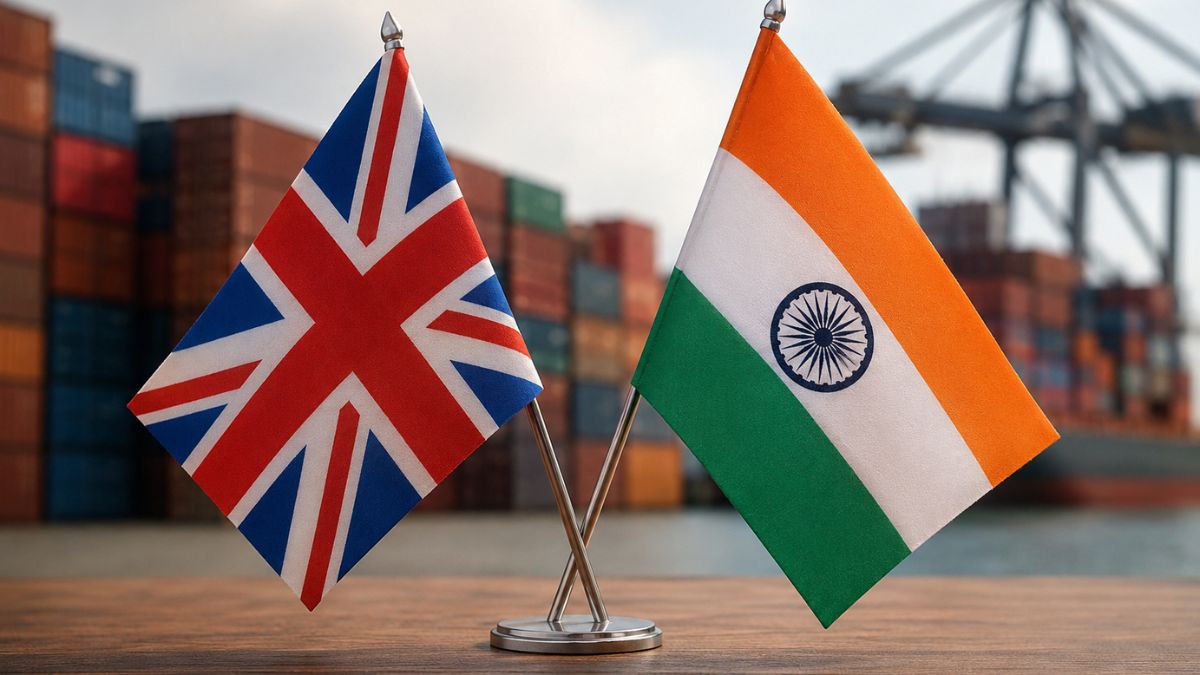
India’s annual trade with the United Kingdom could nearly double to $115 billion by 2030 following the implementation of the bilateral trade agreement, according to a new study by industry body ASSOCHAM.
The trade trajectory is expected to expand from about $58 billion in 2025-26, while creating an estimated 7 lakh to 10 lakh employment opportunities, the study by the ASSOCHAM Global Research and Strategy Centre said.
The India-UK Comprehensive Economic and Trade Agreement, or CETA, came into force on July 15, giving nearly 99 per cent of Indian exports zero-duty access to the British market. The tariff concessions cover almost the entire value of India’s existing exports to the UK.
The pact is expected to provide greater market access to labour-intensive industries such as textiles, leather, engineering goods, pharmaceuticals and automobiles. ASSOCHAM said this could support both export growth and employment generation, particularly among micro, small and medium enterprises.
Competitiveness will determine gains
ASSOCHAM, however, cautioned that tariff reductions alone would not guarantee the projected gains.
Indian businesses would have to meet British requirements relating to product quality, certification, sustainability and rules of origin to make full use of the agreement, the chamber said.
“Indian businesses will need to meet product quality, certification requirements, Rules of Origin compliance, and international sustainability standards,” ASSOCHAM President Nirmal K Minda said.
Continued improvements in the ease of doing business, logistics, infrastructure and supply chains would be critical to achieving the projected trade expansion, he added.
Rules of origin determine whether a product has undergone sufficient production or value addition in India to qualify for preferential tariffs under the agreement.
Engineering and MSMEs to benefit
The engineering goods sector is expected to be among the major beneficiaries of the pact, supporting the expansion of MSMEs and generating additional jobs, according to Minda.
Simplified customs procedures and digital-trade provisions could also reduce compliance requirements and shipment turnaround times, creating a more efficient trading environment for businesses, the study said.
India and the UK have complementary economic strengths, ASSOCHAM noted. India offers a large consumer market, a young workforce, a broad MSME base and significant capabilities in labour-intensive manufacturing. The UK brings advanced technology, investment capacity and expertise in high-value services.
The chamber said these strengths could support long-term trade growth, innovation and more resilient supply chains at a time of increasing uncertainty in the global trading system.
Nearly all Indian exports get duty-free access
Under the CETA, Indian businesses receive duty-free access on around 99 per cent of UK tariff lines, covering nearly all of India’s exports to the country.
British exporters, meanwhile, will receive tariff reductions or elimination across 90 per cent of tariff lines, covering about 92 per cent of the UK’s current exports to India.
The agreement also covers services, customs, digital trade, financial services, telecommunications, intellectual property and professional services.
Alongside CETA, an agreement on social security has come into effect. It exempts eligible Indian professionals sent temporarily to the UK from making duplicate social-security contributions for up to five years.
More than 50 Indian export consignments worth over $140 million were flagged off from ports, airports, inland container depots, factories and special economic zones on the first day of implementation. The shipments included electronics, pharmaceuticals and gems and jewellery.