



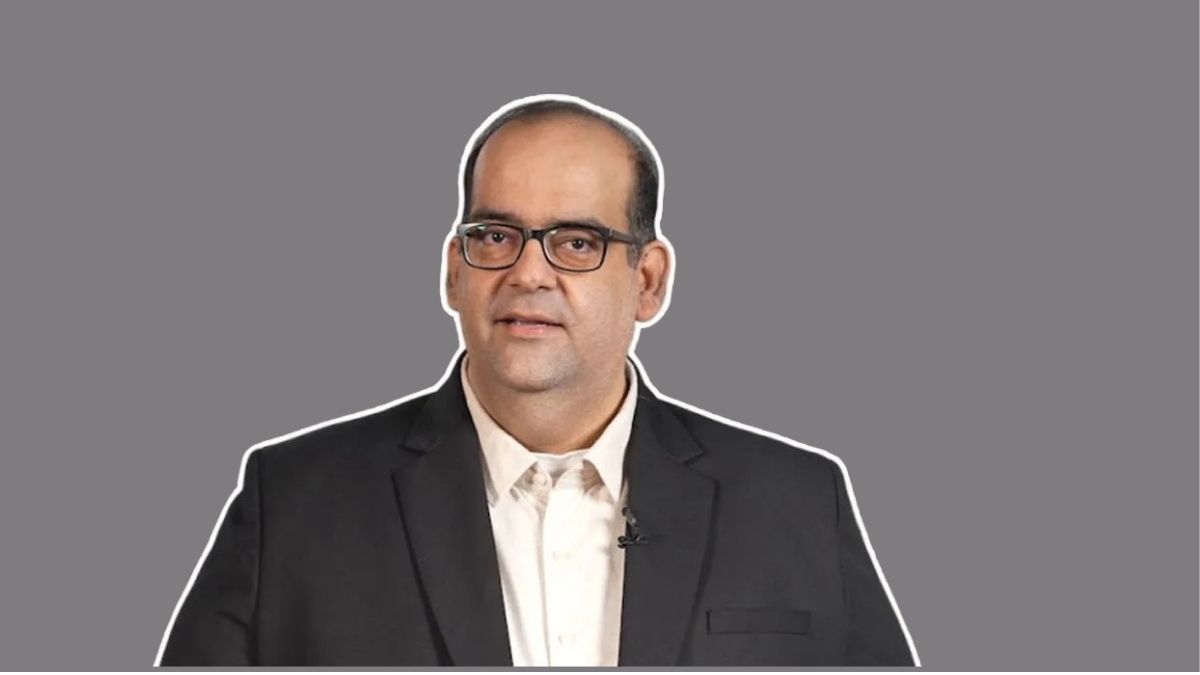
As Microsoft expands its India presence, with a fourth data centre region coming up in Hyderabad and a commitment to reskill 20 million people in AI by 2030, Dahnesh Dilkhush, chief technology officer, Microsoft India and South Asia, speaks to Ojasvi Gupta about the company’s infrastructure roadmap, its multi-model partnership strategy, its views on AI regulation and token efficiency, and the enterprise adoption of Microsoft 365 Copilot. Excerpts:
Microsoft’s biggest data centre in India, in Hyderabad, is expected to go live around mid-2026. What’s the progress?
It hasn’t gone live yet, but it will be soon. We already have three data centre regions in India, and Hyderabad will be our fourth. Our focus is on building trusted infrastructure, along with the associated technology and skilling. The project is well on track.
AI adoption, like every technology wave, has its pros and cons. How do you see its impact on jobs and layoffs, at Microsoft as well as the industry at large?
The focus is on the use cases coming around AI and how they’ll shape the way we work. If you look at our Work Trend Index, the fundamental focus is on human-agent teams that will keep evolving. AI is definitely going to reshape how we work. The big focus is on scaling, how each of us empowers ourselves at work with AI.
How do you view upskilling and reskilling, given it’s no longer only for new entrants, but for mid-career and senior professionals too?
Scaling is the number one focus in the industry. The question is how you bring AI into the flow of work rather than as a separate tool. For example, if you’re using Word, Excel, or PowerPoint, you bring AI directly into those tools. It doesn’t become another standalone tool, it becomes part of how you work on documents, synthesise information, summarise content, and suggest areas to look at. For this, one should be skilled in AI, and, more importantly, use it responsibly. We’re also committed to equipping 20 million people in India with essential AI skills by 2030.
Microsoft has expanded its partnerships with multiple large language model providers. Is the recent Mistral AI partnership relevant for India?
That announcement is currently for Europe. But alongside our partnerships with OpenAI and Anthropic, the idea is to give anyone on the Microsoft platform a choice of models, since our focus is on intelligence plus trust. The model is an important part, but you also need the right tool sets, orchestration and a governing framework so agents are monitored and can improve over time.
India is reportedly working on a new AI legislation, while many countries are appointing a minister for AI. Do you think countries need dedicated AI laws?
I won’t comment on A specific law or region, but any AI platform needs the right toolsets to provide governance, which means the human must remain in control. If an AI agent performs a task, users should be able to review its decision and feed that back into the instruction sets, so it keeps improving. Our focus is making those capabilities available through our platform so such a framework can be applied.
Where does Microsoft stand on efficient token usage, especially since companies have reportedly burned through entire AI budgets in three or four months?
The most important thing is identifying the right use case. What you’re automating, whether it’s deterministic or probabilistic, and the business value it’s meant to drive. From there, you work backwards to how tokens are used, how often, and across which models. For instance, Microsoft 365 Copilot offers multiple models plus an auto mode that routes each question to the right kind of model, driving efficiency. So the idea is to get clarity on business value, use the right model at the right time, and have the right tool sets around it.
What’s the market condition for Copilot amid rising competition?
We’ve seen a massive response from customers. Infosys, TCS and Wipro have together scaled Microsoft 365 Copilot to more than 300,000 users across delivery, engineering and corporate functions; productivity and decision-making; and an AI-first transformation built around it. Copilot broadly is the UI for AI, not one tool, but a range of technologies, whether that’s creating agents, building AI-first applications, or orchestrating workflows. We’ve also introduced Copilot Co-Worker, letting you schedule tasks for it, working with you across desktop, mobile or browser.
What is Microsoft’s approach towards cybersecurity and AI in India?
We’re absolutely committed and focused on cybersecurity. It’s one of our most important priorities. We’re continuing to invest in cybersecurity capabilities while also ensuring that the technologies we’re bringing to India support sovereign technology priorities. The goal is to make sure India can use these technologies in a democratised way. We’re committed to bringing AI capabilities, infrastructure, trusted platforms, and skilling to India as a key focus. We’re making a significant bet on India’s AI future.