



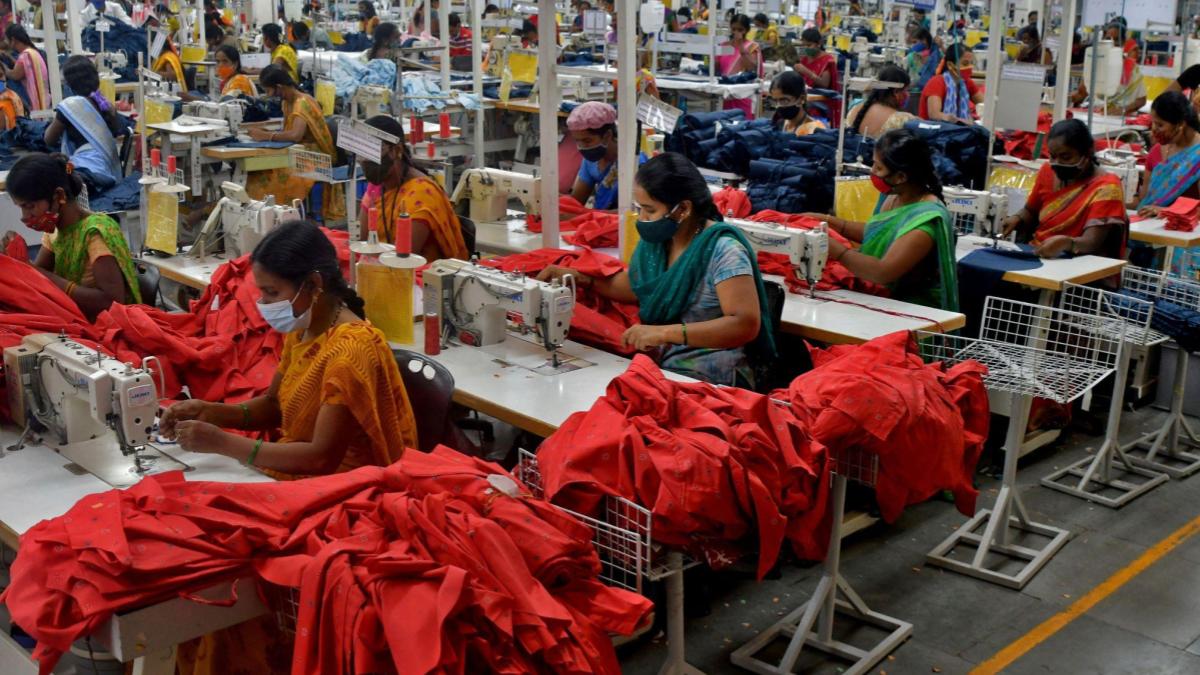
India’s apparel exporters are pressing the government for immediate intervention after steep US tariffs. Industry bodies have warned that the tariffs could hit production, employment and the sector’s global competitiveness.
The Apparel Export Promotion Council (AEPC) has written to Vice-President CP Radhakrishnan, seeking immediate policy support and diplomatic intervention following the imposition of a cumulative 50% tariff by the United States on Indian apparel exports. The levy includes a 25% tariff along with an additional 25% Russian oil-related “penalty”.
‘Action required for vibrant industry’
In a letter dated January 10, AEPC chairman A Sakthivel warned that any delay in resolving the tariff issue could force exporters to scale back production and shut factories. “Necessary action and support are required for the vibrant apparel garment industry,” Sakthivel said. He added that urgent steps were needed to address India-US tariff issues to safeguard textile exports.
The US remains the single largest market for Indian apparel exporters, accounting for around 70% of exports for several large manufacturers. According to the council, the new tariffs have already disrupted trade flows, with US buyers either withholding or cancelling orders.
The AEPC cautioned that without swift relief, the sector could face order stoppages, widespread job losses and a permanent erosion of market share.
AEPC says little room to absorb tariff shocks
The council said the apparel industry operates on thin margins, leaving little room to absorb sustained tariff shocks. “The tariff has wiped out profits and depleted reserves of export units,” the letter noted. Even after offering discounts of up to 25%, exporters are unable to absorb additional costs, while passing on higher prices to buyers is also not commercially viable, it said.
AEPC has called for the immediate conclusion of an India-US trade treaty to ease the pressure on exporters. “The textile industry has already absorbed significant losses in the national interest to protect exports and employment,” the letter said, warning that there is no further shock-absorption capacity.
It added that a delay of even three to six months risks causing irreversible damage to a strategically important export sector.