



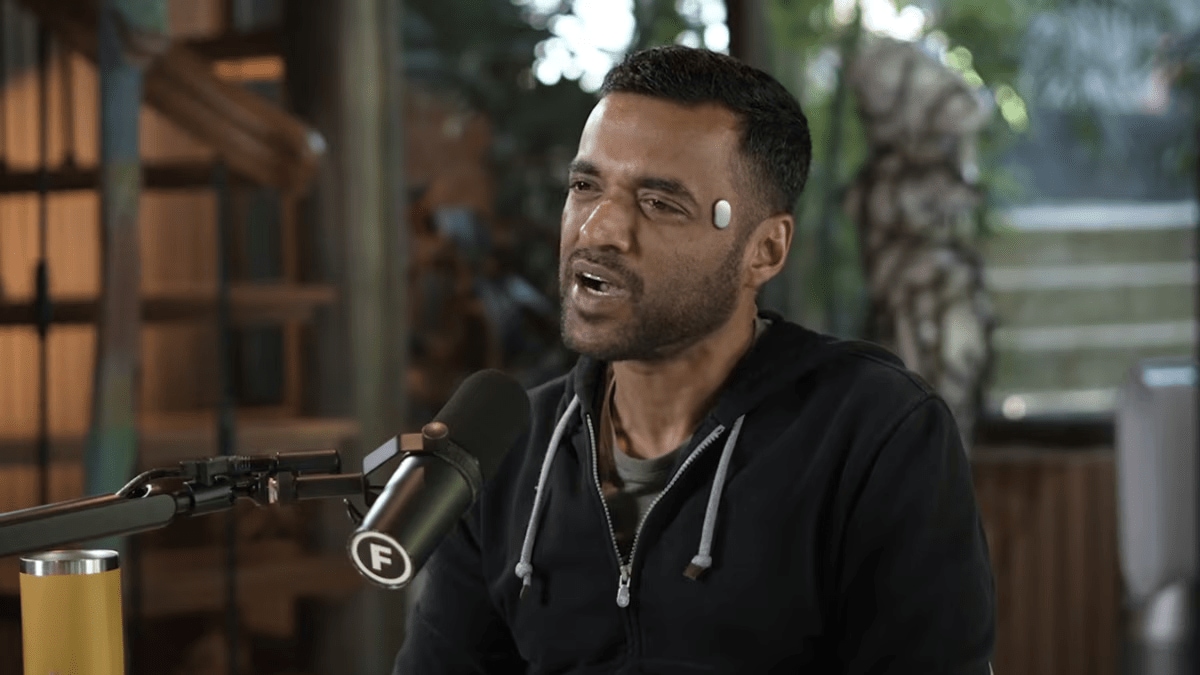
Zomato founder Deepinder Goyal on Wednesday announced on X that he will step away as group chief executive officer of Eternal, the parent of Zomato and Blinkit, and, subject to shareholder approval, move into a vice-chairman role, as Blinkit CEO Albinder Singh Dhindsa takes over as the new group CEO.
In his letter, Goyal said he has increasingly been drawn to “higher-risk exploration and experimentation” that sits outside Eternal’s strategic scope, adding that the legal and governance demands of running a listed company in India require “singular focus”. While he did not name specific projects, his recent public activity points to a cluster of ambitious, personally funded ventures spanning healthtech and aviation.
Temple & Continue Research: a longevity bet
One of Goyal’s most visible experiments is Temple, an experimental wearable device designed to monitor cerebral blood flow in real time. The metallic, clip-like sensor drew widespread attention after Goyal appeared wearing it on Raj Shamani’s Figuring Out podcast.
Temple is being developed under a separate health-tech startup linked to Goyal’s privately funded initiative, Continue Research. Goyal has described it as a research tool to test what he calls the “Gravity Ageing Hypothesis”, the idea that gravity may chronically stress the heart’s ability to pump blood to the brain, potentially accelerating ageing over decades.
Temple is not yet a consumer product and has no announced launch timeline or regulatory pathway. Media reports indicate Goyal has already invested about $25 million (around Rs 208 crore) into Continue Research, and the startup is said to be exploring a $50 million seed round.
LAT Aerospace: a moonshot in aviation
Goyal is also the co-founder of LAT Aerospace, an aviation startup launched in January 2025 with Surobhi Das. The company is working on a new generation of short take-off and landing (STOL) aircraft designed to operate from compact air-stops rather than conventional airports.
In a recent interaction with podcaster Raj Shamani, Goyal said LAT Aerospace aims to build six-to-eight-seater aircraft capable of taking off and landing within 20–50 metres, potentially eliminating the need for elaborate airport infrastructure.
“This has never been done in this world. This is radical in terms of aviation,” he said, calling the current airport-to-airport model “senseless” for short domestic trips such as Delhi–Chandigarh.
According to its website, LAT Aerospace plans to use electric motors, batteries, and a turbogenerator to create energy-efficient engines. The first demonstrator aircraft are already under development, with flight testing underway.
A strategic pivot
Goyal said his long-term commitment to Eternal remains unchanged, and that he will continue to be involved in long-term strategy, culture, leadership development, and governance. Operational control, however, will now shift to Dhindsa, whom Goyal credited with leading Blinkit from acquisition to breakeven and building its team, culture, and supply chain.
As part of the transition, all of Goyal’s unvested ESOPs will revert to Eternal’s ESOP pool, a move he said would strengthen long-term retention for future leaders without additional shareholder dilution.
“I want Eternal to become India’s most valuable company. I want us to serve a billion customers,” Goyal wrote. “This is a change in title, not in commitment towards outcomes. Eternal remains my life’s work.”
For now, his growing portfolio of experimental bets offers a glimpse of the high-risk ideas he plans to pursue beyond the confines of a public company, from decoding brain health to reimagining short-hop aviation.