



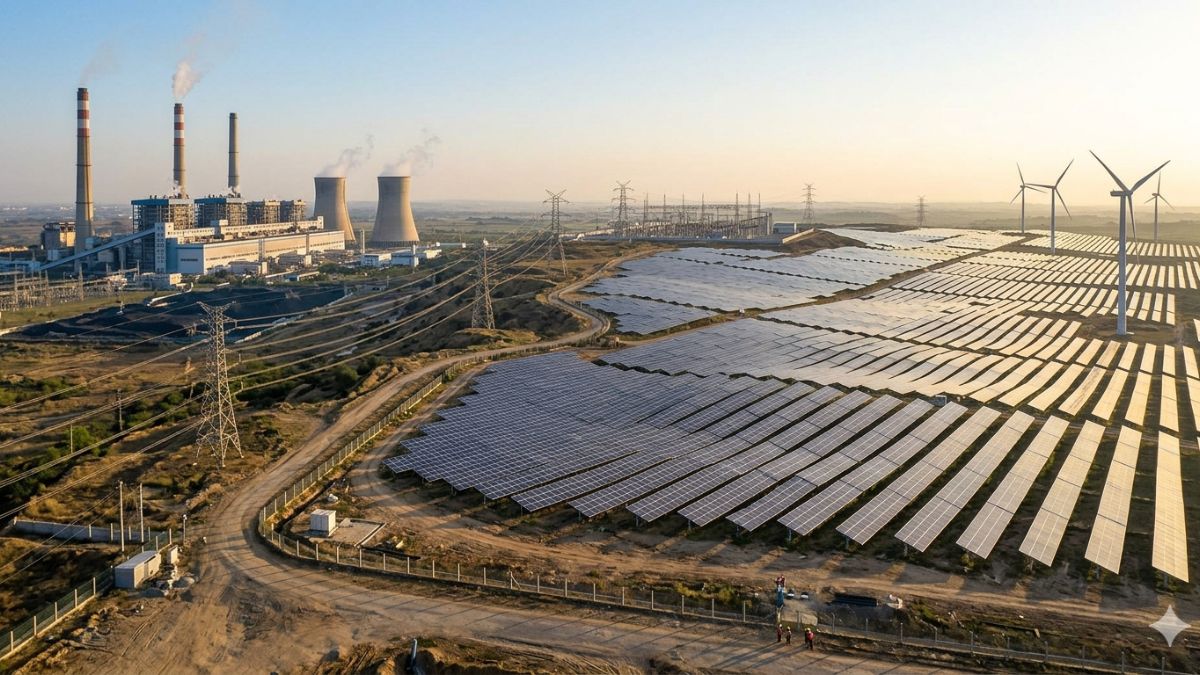
Fossil fuel-based power generation in India and China declined simultaneously in 2025 for the first time this century, as a record surge in solar and wind energy outpaced electricity demand growth — marking a decisive shift in the global power mix.
According to Ember’s Global Electricity Review 2026, global fossil power generation fell by 38 TWh (-0.2%) even as electricity demand rose by 849 TWh (+2.8%), with clean energy sources expanding by 887 TWh to fully meet incremental demand . The year marks only the fifth instance since 2000 when fossil generation has not increased.
The turning point
The turning point was driven by India and China, which together account for 42% of global fossil generation. Fossil output fell by 56 TWh (-0.9%) in China and by 52 TWh (-3.3%) in India, breaking a long-standing trend of rising coal-based electricity .
India’s shift was led by a sharp acceleration in renewable energy. Clean power generation rose by a record 98 TWh (+24%) in 2025 — double the previous peak — supported by strong gains in solar and wind . Solar output increased by 53 TWh (+37%), while wind generation rose by 22 TWh (+28%), both marking their highest annual additions.
Slower electricity demand growth in the past decade
This surge coincided with slower electricity demand growth of 49 TWh (+2.4%), among the lowest in the past decade, partly due to milder temperatures that reduced demand by an estimated 32 TWh compared to the previous year . The combination of strong renewable growth and subdued demand led to a clear reversal in fossil generation trends.
Globally, solar power was the single largest driver of change. Solar generation rose by a record 636 TWh in 2025, a 30% increase, taking total output to 2,778 TWh—equivalent to the entire electricity demand of the European Union . Solar alone met 75% of the increase in global electricity demand, while wind added another 205 TWh, with the two sources together accounting for 99% of demand growth.
“Solar has been the dominant driver of change in the global power system, and along with battery storage, it is opening a path to fast-scaling, round-the-clock clean power,” said Aditya Lolla, Interim Managing Director at Ember .
The rapid scale-up of clean energy has also altered the global electricity mix. Renewables accounted for 33.8% of total generation in 2025, overtaking coal’s 33.0% share for the first time in more than a century . Coal generation declined by 63 TWh (-0.6%), pushing its share below one-third of global output for the first time.
The report noted that unlike previous declines driven by economic slowdowns, the 2025 shift occurred alongside steady global growth, indicating a structural decoupling of electricity demand from fossil fuel consumption.
“We have firmly entered the era of clean growth. Clean energy is now scaling fast enough to absorb rising global electricity demand, keeping fossil generation flat before its inevitable decline,” Lolla said .
With India accelerating renewable deployment and China’s fossil growth plateauing, the global power sector is entering a phase where rising demand is increasingly being met by clean energy rather than coal and other fossil fuels.