



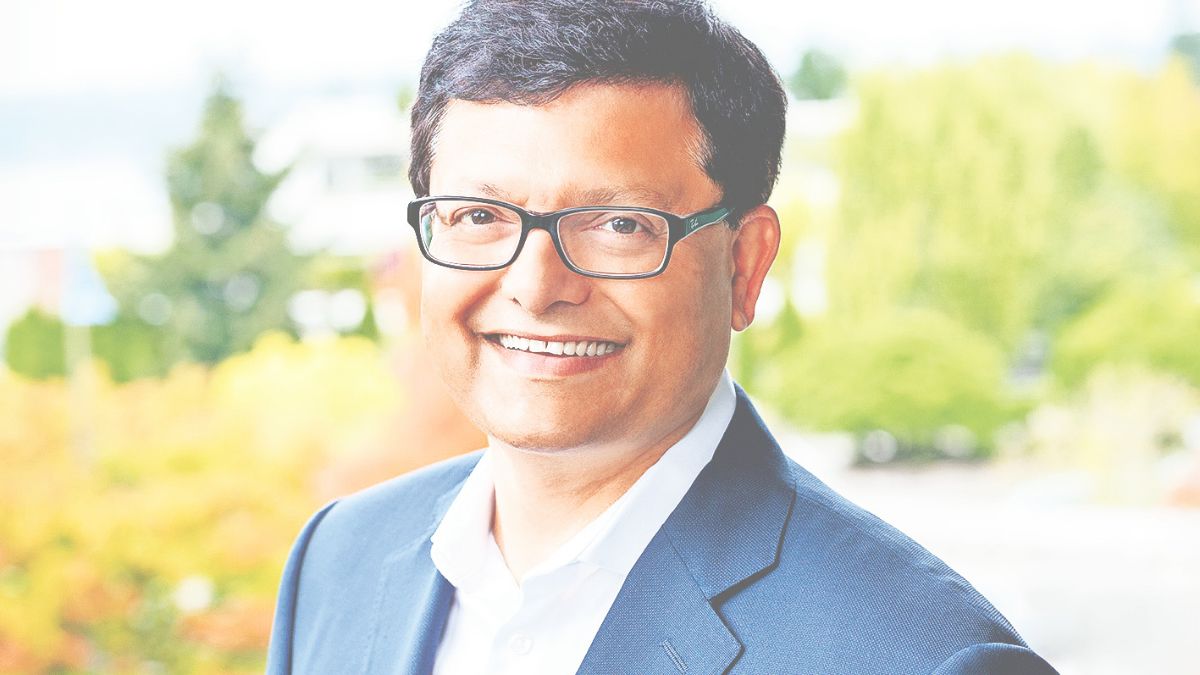
Digital transformation was fuelled by fear of disruption, but AI raises the stake even higher – forcing every organisation to rethink how it applies AI across its operations, according to Srini Tallapragada, president & chief engineering and customer officer, Salesforce. In his role, Srini leads the global engineering team to drive innovation at Salesforce. In this interview, he tells Sudhir Chowdhary that the real transformation happens when organisations redesign workflows around AI, supported by strong data foundations. Excerpts:
Is enterprise software moving beyond SaaS into an AI-native era?
Software as a service (SaaS) is evolving, and Agentforce – Salesforce platform for building and managing autonomous, AI-driven agents – represents that shift. SaaS democratised access to software; now it’s enabling agentic technology to sit at the core of enterprise platforms. Salesforce has consistently adapted to major technology shifts, from cloud and mobile to social, predictive AI, and now generative AI. Our promise remains the same to bring together the best technologies so customers can focus on business outcomes. Agentforce is the next step in that evolution, built for the AI era.
What’s holding companies back from realising real AI value?
Many organisations assumed adopting a model would solve the problem. But most are stuck in what we call “pilot purgatory.” It’s easy to run demos; deploying AI in production is far harder. The last mile requires clean data, clearly defined roles for agents, secure API access, strong guardrails for trust and compliance, and mechanisms to monitor performance. For example, Hero FinCorp reduced loan origination time from two days to about thirty minutes using Agentforce. Air India used it to manage complex customer queries following its merger.
As AI systems are probabilistic, they require strong oversight. Without the right platform, a promising demo cannot translate into reliable, scalable outcomes.
Where will the next AI breakthrough come from?
AI faces “model overhang” and “diffusion.” Model overhang means the models themselves are already very powerful, with a lot of untapped potential. Diffusion means organisations have not yet been able to spread that value across their operations. The real constraint isn’t the model; it’s fragmented data, legacy systems, and the complexity of integrating AI into everyday workflows. That last mile of adoption is the biggest challenge.
AI adoption typically follows a crawl-walk-run curve. Most companies start with productivity gains in areas like call centres or sales. The real transformation happens when organisations redesign workflows around AI, supported by strong data foundations. Our approach is to meet customers where they are delivering quick wins today while enabling deeper transformation over time.
How has Salesforce adopted agentic AI internally?
Every CEO and board today wants to build an agentic enterprise, one that drives growth while lowering costs. At Salesforce, we became “customer zero.” A year ago, humans handled about 1.3 million calls, and AI agents handled none. Today, AI agents manage between two and three million calls, while humans continue to handle around 1.3 million. That shift has saved us over $100 million annually. As the cost of handling calls declined, engagement increased, and our employees could focus on more proactive, higher-value work.
What differentiates your AI approach from hyperscalers or pure-play AI startups?
Startups and hyperscalers often take a do-it-yourself approach. A demo might work well, but running AI reliably at scale inside an enterprise is far more complex. There’s a clear value chain in AI. Models typically sit on hyperscaler infrastructure, while application platforms operate above them. Salesforce sits at the application platform layer. For most companies, the real question isn’t whether they can build this themselves; it’s whether they should, when their focus should remain on their core business.
What role does India play in Salesforce’s AI innovation?
India is one of our most important talent, R&D, and business hubs, and our fastest-growing operating unit. A significant share of our global R&D, including major Agentforce teams, is based here. Our teams build products end-to-end. Several industry solutions and core Agentforce engines have been developed here.
How should IT services firms reposition themselves in an AI-first world?
Scaling AI is much harder than building a demo. At Salesforce, our biggest constraint isn’t demand, it’s implementation capacity. That’s why we work closely with partners like TCS, Infosys, Accenture, and Deloitte. The ecosystem will increasingly be judged on outcomes. The firms that adapt fastest to delivering real AI value will lead the market.