



By Anuj Gupta
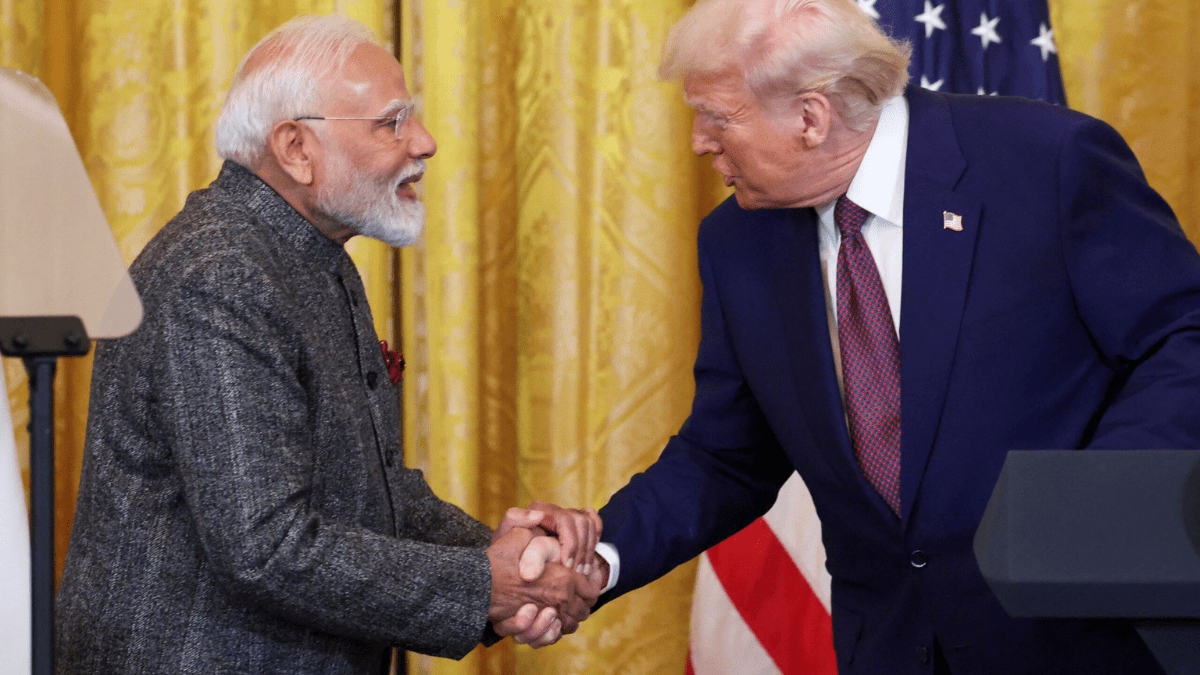
Fresh off the conclusion of its long-pending free trade agreement (FTA) with the European Union (EU) on January 27, New Delhi received a second, strategic boost on Tuesday when the US recalibrated trade terms in what observers hailed as “the biggest victory for US-India relations in nearly a year”.
Negotiations with the EU moved at a brisk pace to deliver what was dubbed the “mother of all deals”. The agreement with the US reversed a year of high-tariff friction. By any measure, this dual-track success is consequential. Yet, history offers a reminder—the day after the deal is often far more complex than the celebration preceding it.
From celebration to compliance: why trade deals rarely end at signing
The post-deal world is increasingly shaped by dynamic protectionism, where trade is restricted not by tariffs but non-tariff barriers and the strategic use of courts, parliaments, and sub-national politics to slow or reshape commitments.
Yet, when these subtle bureaucratic hurdles aren’t enough, governments are willing to discard the free trade playbook in favour of raw political leverage. The US provides a blunt illustration. Last month, it declared a 25% tariff on advanced computing chips and automobiles. South Korea argues its FTA protections apply, the US counters that “national security” under Section 232 overrides any trade deal. The Korean trade minister has reportedly been shuttling between Washington offices ever since.
Global precedents show preferential access is fragile and contested
The deals made by other Asian partners also serve as a warning that preferential access is never “free”. Japan and Vietnam offer cautionary contrasts. Tokyo’s July 2025 agreement, trading a 15% tariff cap for a $550-billion investment commitment in US energy, AI, and semiconductor sectors, has ignited domestic backlash over capital flight and the loss of economic autonomy. Vietnam, meanwhile, faces 40% US tariffs on suspected transhipped goods, forcing a costly overhaul of customs and origin-tracking systems to prove exports are genuinely “Made in Vietnam”. Washington’s decision to lower tariffs on Indian goods to 18% has narrowed Vietnam’s competitive edge, proving that in modern trade diplomacy, preferential access is provisional, closely policed, and constantly contested.
The EU FTA’s full legal enforcement is contingent on the European Parliament and all 27 member states ratifying it. In this provisional phase, EU trade policy enters a fragile middle ground that must navigate Brussels’ notorious politically-charged bureaucracy.
The EU-Mercosur FTA was signed on January 17, and political contest began almost immediately. Within weeks, the European Parliament narrowly voted to refer the deal to the European Court of Justice after intense lobbying and farmer protests framed as “cars for cows”, opposing cheaper beef and poultry in return for expanded EU automobile exports. While provisional application may proceed, ratification is on hold pending judicial review, leaving Mercosur trapped in a political loop disguised as a legal process.
The 2016 EU-Canada Comprehensive Economic and Trade Agreement offers a cautionary parallel. It was nearly derailed by the regional Parliament of Wallonia, Belgium, over farm and labour issues. While the EU as a whole may welcome greater access to India’s labour-intensive exports, regional politics will complicate ratification.
The EU-China Comprehensive Agreement on Investment (CAI) offers the sharpest warning. After seven years and 35 rounds of negotiations, the CAI was concluded in late 2020, only to slide quietly into political limbo. Sanctions, parliamentary resistance, and shifting geopolitics have turned it into what many now describe as a “zombie agreement”, technically alive but functionally inert.
The post-deal phase is often one of administrative trench warfare, endless committee meetings, clarifications, and vigilance to ensure commitments survive domestic politics. Success will depend on how India manages the issues set aside in the rush to conclude, like navigating the EU’s Carbon Border Adjustment Mechanism which can prove to be a double tax that erodes the FTA’s benefits.
Ultimately, the convergence of EU and US agreements reflects a growing confidence in India’s economic credibility and strategic centrality at a moment of global realignment. The real test now lies in following through with discipline, navigating regulatory frictions, defending market access, and converting diplomatic momentum into durable commercial outcomes. In trade, the day after the deal is the true starting point.
The author is the India Managing Director at BowerGroupAsia
Disclaimer: The views expressed are the author’s own and do not reflect the official policy or position of Financial Express.