



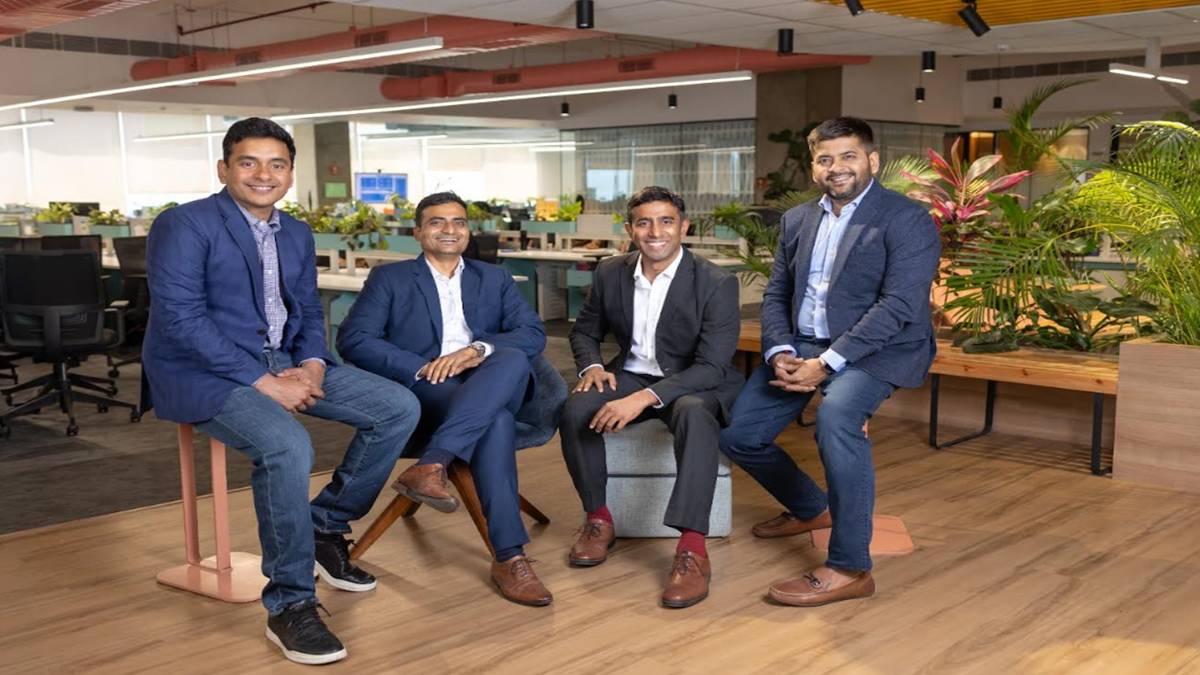
The moment that nudged Jayant Paleti towards entrepreneurship came on the day he graduated from IIM Lucknow in 2010. His father, who had grown up with limited means, told him he had never been able to take risks himself and wanted his son to try. He transferred a modest sum of money and said he would not ask questions if it was lost.
The gesture stayed with Paleti, an IIT Madras graduate, long after he joined investment banking. The idea for Darwinbox emerged a few years later, during a merger and acquisition assignment. While working on a deal, Paleti realised how little clarity companies had about their own people data.
Information on talent quality, attrition and retention, which are critical to valuation, was scattered and often unreliable. It took him over a week to assemble numbers that differed sharply from what management believed to be true.
The experience exposed a structural gap: organisations did not have a clear, unified view of their workforce, even though people costs and productivity were central to performance. The problem, he found, was not a lack of data but fragmentation.
Lack of modern HR tech
Most enterprises ran two or three disconnected HR systems across hiring, payroll and performance management. Legacy platforms were rigid, slow to update and poorly adopted by employees. They were built for a different era and often imported from Western markets without accounting for regional complexity.
HR technology, Paleti felt, had not evolved at the pace of the modern workplace. What seemed missing was a system designed not just for administrative efficiency but for the employee experience itself, while reflecting local realities.
“Work was changing, but HR tech wasn’t,” he said. The idea was to build software that could help organisations adapt to change rather than struggle with it.
Building a team
He discussed the idea with longtime friends Chaitanya Peddi and Rohit Chennamaneni. The initial reaction was sceptical. HR software was a crowded and unglamorous category.
But as they examined the problem more closely, they saw that despite decades of products, there was no modern, end-to-end platform built for large enterprises in emerging markets. That gap convinced them to proceed. Darwinbox was founded in Hyderabad in 2015, later joined by Vineet Singh, the company’s first engineer.
From the start, the founders were clear that the product would have to be enterprise-grade. That meant depth rather than speed, and architecture that could handle complexity across geographies. HR systems, they realised, were fundamentally different from finance or CRM software.
Payroll rules, compliance norms and workplace practices varied sharply across regions. Global platforms struggled to adapt, while Indian SaaS firms largely focused on small US businesses. Darwinbox chose to build with Asia as the core market, not an afterthought.
Before writing code, the team spoke to more than 150 CHROs and CXOs to test their assumptions. The feedback was consistent: companies wanted a single platform that could scale, adapt locally and still deliver a modern user experience.
That validation shaped the product roadmap. The first version went live within six months, and while early customers were small, the real test came when the firm signed its first large enterprise client with over 8,000 staff. It proved the system could handle scale.
The decision to build for enterprises also meant a longer and more capital-intensive journey. Early investors were not easy to find. In 2015, Asia-focused SaaS was seen as a tough bet, with most capital chasing US-facing models. Darwinbox’s early backers, including Mohandas Pai and Endiya Partners, took a different view.
They backed the thesis that large, under-served markets existed outside the US and that HR software could be a core system of record.
That conviction has since been reflected in the company’s growth. Darwinbox became a unicorn in January 2022 after raising $72 million in a Series D round led by TCV. It has since raised additional capital, taking total funding to over $250 million, with investors including KKR, Partners Group, Peak XV, Lightspeed, Microsoft and Salesforce.
Financially, the company has scaled steadily. Revenue rose to Rs 534 crore in FY25 from Rs 34 crore a year earlier, driven by enterprise additions and expansion in international markets.
What began as an India-focused product now serves over 1,000 enterprises across more than 100 countries, covering over 4 million staff. The firm has expanded across Southeast Asia, the West Asia and, more recently, the US.
Despite the growth, the original thesis remains intact. Darwinbox has stayed focused on building a unified HR platform that reflects how organisations actually operate, rather than forcing them into predefined workflows.
The bet was that HR, long seen as a back-office function, would become strategic as companies grappled with talent scarcity, hybrid work and productivity pressures.
A decade after that conversation at IIM Lucknow, the idea has taken shape in ways its founders could not have fully predicted.