



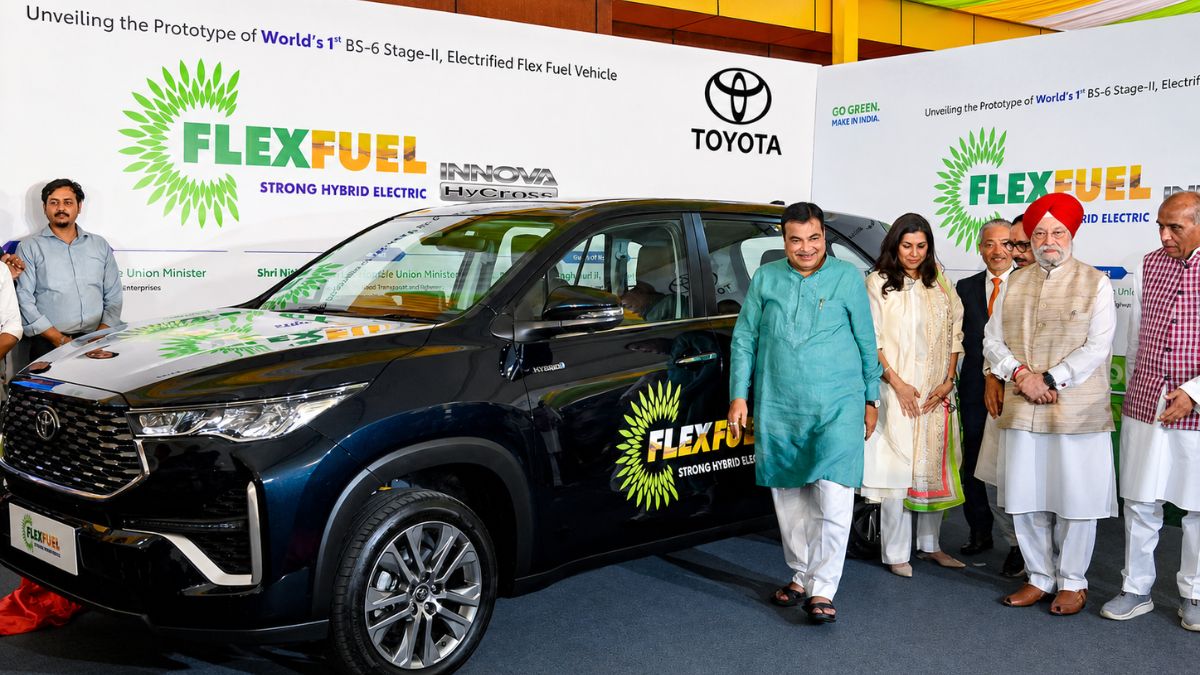
The Centre is in the final stages of determining the retail price of E100 fuel, a key step ahead of the commercial rollout of flex-fuel vehicles by domestic automakers, according to people aware of the development.
The move comes as the country’s largest carmaker, Maruti Suzuki and leading two-wheeler manufacturer, Hero MotoCorp, prepare to bring flex-fuel vehicles to the market following recent regulatory changes that permit the use of high-ethanol fuels.
Officials familiar with the discussions said E100 is likely to be priced at a discount of about 15-20% to regular petrol. Based on Delhi’s current petrol price of ₹102.12 per litre, E100 could be priced in the range of ₹82-87 per litre.
However, the proposed discount is significantly lower than the incentive available in Brazil, the world’s most mature flex-fuel vehicle market and the only country where E100 is used widely at scale.
In Brazil, hydrous ethanol currently sells at an average price of about BRL 4.27 (around ₹81) per litre compared with petrol at BRL 6.62 (around ₹126) per litre. This translates into an ethanol-to-petrol price ratio of roughly 64.5 per cent, giving motorists a much stronger economic incentive to choose ethanol.
The pricing gap is important because ethanol contains less energy per litre than petrol, resulting in lower fuel economy when used in pure form. As a result, Brazilian consumers typically follow the “70% rule” — ethanol is considered financially attractive only when its price is 70 per cent or less of the petrol price.
At current Brazilian prices, ethanol comfortably meets that threshold, allowing drivers to offset the lower mileage and still achieve savings. In contrast, India’s proposed pricing would result in an ethanol-to-petrol price ratio of around 80-85 per cent, potentially making the economics less compelling for consumers.
The pricing decision assumes significance as India takes its first major step towards introducing flex-fuel mobility. Last month, the Ministry of Road Transport and Highways amended vehicle regulations to formally include high-concentration ethanol fuels, including E85 (85 per cent ethanol) and E100 (nearly pure ethanol), within the country’s legal vehicle framework.
The regulatory change cleared the path for automakers to launch flex-fuel vehicles capable of running on petrol, ethanol, or any blend of the two.
E100 fuel was rolled out by Indian Oil Corporation in 2024 on a pilot basis through 183 retail outlets across several states. The network has since expanded to around 400 outlets. However, most of these outlets remained largely non-operational due to the absence of compatible vehicles and the lack of a clear retail pricing framework.
Industry executives said the final fuel price will be critical in determining consumer acceptance of flex-fuel vehicles, as the economic benefits at the pump are expected to play a major role in influencing purchasing decisions.