



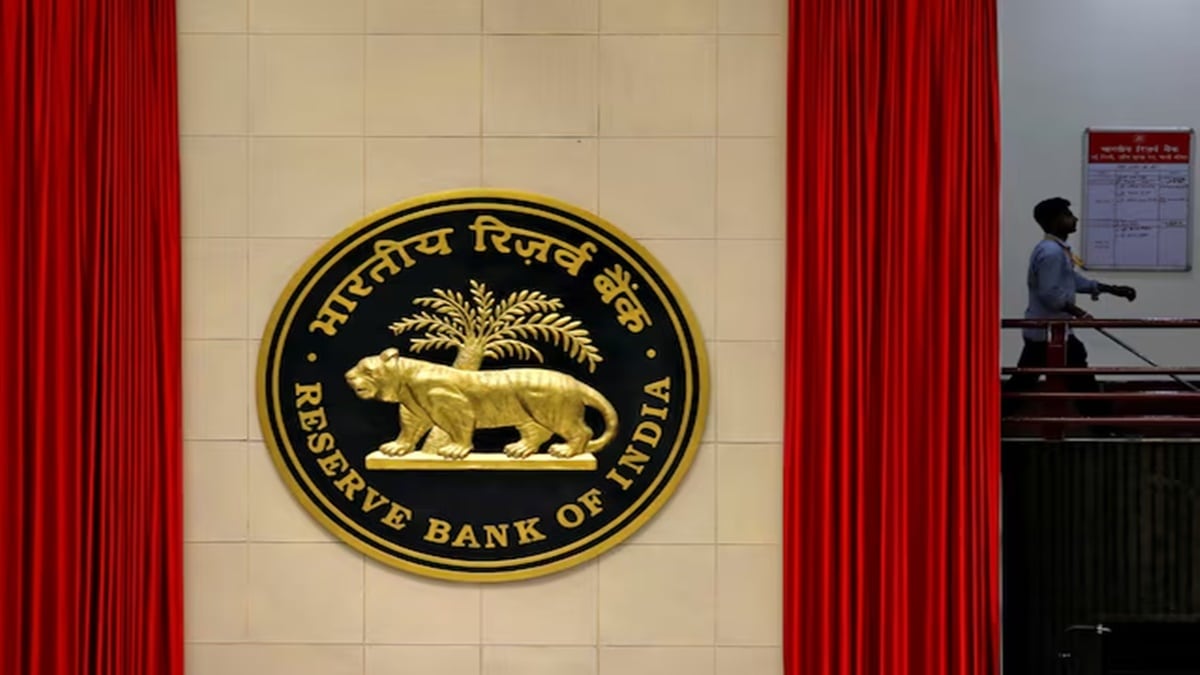
The Reserve Bank of India (RBI), in its first monetary policy of FY27 on Wednesday, kept the policy repo rate unchanged at 5.25%, while warning of lower growth and higher inflation as the West Asia crisis reverses a “Goldilocks phase” for the economy. The six-member Monetary Policy Committee (MPC) voted unanimously to retain the neutral stance, signalling flexibility to respond to evolving conditions without committing to either tightening or easing at this stage.
“Real GDP growth remains strong, but elevated uncertainty warranted a pause before taking a call. With a neutral stance, the repo rate can move in either direction. It is possible that low rates may persist for an extended period,” said RBI Governor Sanjay Malhotra. He added that with the economy facing a supply shock, it is prudent to wait and watch how the growth-inflation dynamics evolve.
Growth and Inflation Risks
The decision comes against the backdrop of heightened geopolitical tensions in West Asia, which have disrupted energy markets and global supply chains. Rising crude prices, freight costs and insurance premiums, along with supply chain disruptions, are expected to weigh on growth momentum. Safe-haven flows have strengthened the US dollar, pressuring emerging market currencies, while equities and sovereign bond yields have turned volatile.
For FY27, GDP growth is projected at 6.9%, with downward revisions for Q1 and Q2 to 6.8% and 6.7%, respectively. CPI inflation is estimated at 4.6% for the year, with quarterly variations ranging from 4% in Q1 to 5.2% in Q3.
For the first time, the RBI has projected core inflation at 4.4% for FY27. “While core inflation has always been monitored, this does not mark a shift in monetary policy. Headline CPI will remain the primary anchor,” Malhotra said.
Markets reacted positively. The 10-year G-Sec yield fell 15 basis points to 6.89%, marking its sharpest single-day decline in four years. The rupee strengthened to close at 92.58, up 42 paise or 0.45%.
“Today’s neutral-to-marginally dovish stance suggests a prolonged pause, though much will depend on how geopolitical risks evolve,” said Upasna Bhardwaj, chief economist at Kotak Mahindra Bank.
“The policy reflects a careful balancing act. Inflation is contained but vulnerable to external shocks, while growth remains resilient but faces downside risks. The MPC has opted for stability over abrupt shifts,” said Gaura Sengupta, chief economist at IDFC First Bank.
Sengupta added that the RBI is likely to remain on pause as long as headline inflation stays within the upper tolerance band of 6%. “Ensuring adequate liquidity alongside a pause will help limit downside risks to growth,” she said.
K Balasubramanian, India CEO and Banking Head at Citi India, said the decision reflects a prudent and balanced approach. “Preserving policy flexibility allows the RBI to assess evolving risks while consolidating gains from earlier easing. This supports macro stability while retaining room to respond,” he said.
Bhardwaj added that the RBI’s emphasis on ample liquidity points to a near-term bias towards supporting growth. “Downside risks to growth, benign core inflation and a commitment to liquidity suggest financial conditions are likely to remain easy for some time,” she said.
Market Resilience
Among other measures, the RBI said it will rationalise board-related norms, consolidate supervisory instructions and ease MSME onboarding on TReDS to improve ease of doing business. On capital adequacy, banks will be allowed to include quarterly profits in CRAR without NPA provisioning, and the investment fluctuation reserve (IFR) requirement will be withdrawn. The RBI also expanded participation in the term money market to non-bank entities.
With conditions evolving rapidly, Malhotra said policymakers must remain prepared for all eventualities. “The news this morning was reassuring, though not entirely unexpected. It would, however, be premature to speculate on the MPC’s next move,” he said.