



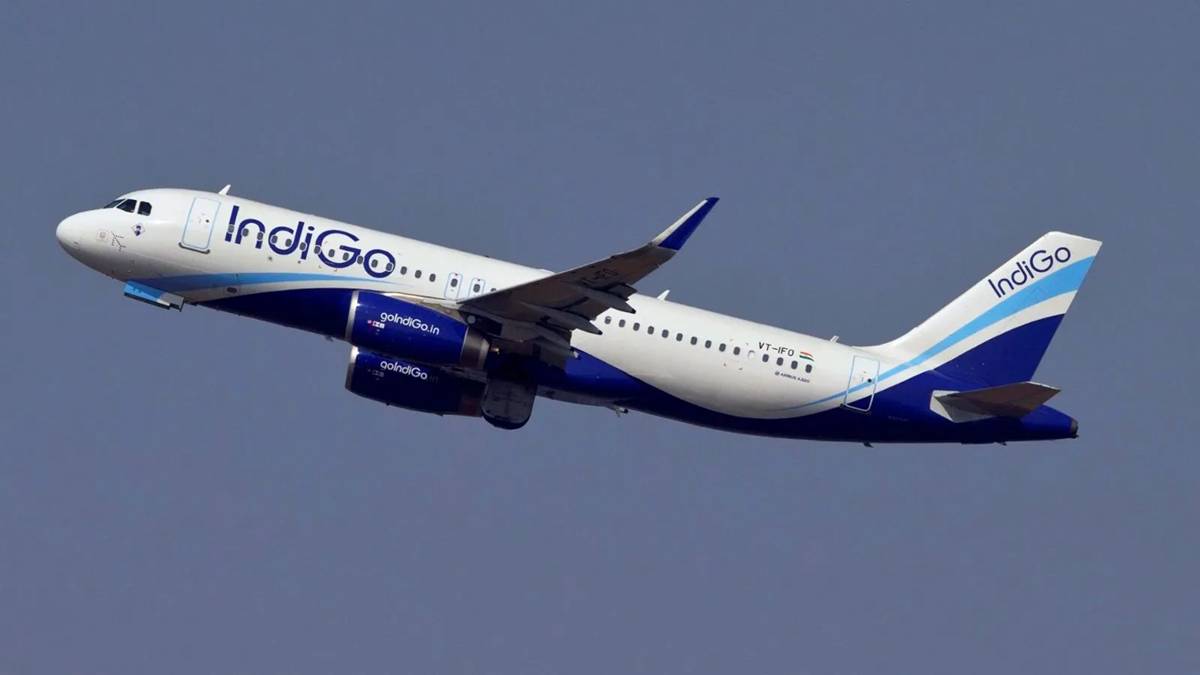
InterGlobe Aviation, the parent of IndiGo, reported a consolidated net loss of ₹238 crore for the quarter ended June, against a net profit of ₹2,176 crore a year earlier, as elevated aviation turbine fuel prices, rupee depreciation and disruptions in West Asia outweighed strong revenue growth.
The airline’s performance fell well short of Bloomberg’s estimate of a ₹1,430-crore net profit. However, the loss narrowed sharply from ₹2,536 crore in the March quarter, indicating sequential improvement in profitability.
Revenue from operations rose 19.9% year-on-year to ₹24,584 crore from ₹20,496 crore, exceeding Bloomberg’s estimate of ₹24,115 crore. Total income increased 18.9% to ₹25,614 crore.
However, Earnings Before Interest, Taxes, Depreciation, Amortisation, and Restructuring or Rent costs (EBITDAR) declined 33.2% to ₹3,833 crore from ₹5,739 crore, while the EBITDAR margin contracted to 15.6% from 28% a year earlier. Aircraft fuel expenses surged to ₹10,833 crore from ₹5,833 crore a year ago, pushing total expenses up 34.4% to ₹25,853 crore. Foreign exchange losses narrowed to ₹83 crore from ₹147 crore.
Operationally, IndiGo expanded capacity, measured in available seat kilometres (ASK), by 2.9% year-on-year to 43.5 billion. Passenger traffic increased 0.7% to 31.3 million, while yield improved 21.3% to ₹6.04 per kilometre. Load factor, however, declined 1.3 percentage points to 83.3%.
Managing Director Rahul Bhatia said the June quarter was marked by a volatile operating environment, with higher fuel costs and network-related constraints in West Asia weighing on profitability despite healthy demand.
“We remain focused on managing capacity prudently, maintaining cost discipline, and responding to market conditions with agility. However, the pressure of fuel costs and rupee depreciation resulted in a loss of around 2 billion rupees for the quarter,” Bhatia said, adding that the airline remains committed to strengthening its network and creating long-term value despite near-term uncertainties.
Looking ahead, IndiGo expects capacity in the September quarter to remain broadly flat year-on-year because of seasonally weaker demand and continued uncertainty affecting travel between India and West Asia. The airline expects aircraft utilisation to progressively improve beyond the weaker season.
CCI Probe Commitments
Separately, the Competition Commission of India (CCI) on Thursday invited public comments on a commitment proposal submitted by InterGlobe Aviation in an abuse-of-dominance investigation linked to widespread flight disruptions in December 2025.
The proposal includes setting up a Crisis Management Group virtually within 15 minutes of a large-scale disruption and physically activating it at the command centre within one hour. During such disruptions, IndiGo has committed to planning and executing network adjustments to restore operations.
The airline has also proposed offering affected passengers alternative flights within 48-72 hours without additional charges or fare differences. Passengers who cannot be accommodated, or choose not to accept the alternative arrangement, would receive automatic refunds within the prescribed timeline along with compensation in accordance with Directorate General of Civil Aviation (DGCA) norms.
IndiGo has further committed not to charge fares above the tariff ranges most recently filed with the DGCA for fresh bookings during a large-scale disruption until normal capacity is restored. It has also proposed operating a dedicated customer grievance “war room” round the clock, with complaints to be resolved, on average, within 48-72 hours.
IndiGo cancelled more than 4,200 flights between December 1 and 9 last year. The crisis was triggered by the airline’s inability to manage its pilot duty roster after the DGCA fully implemented new, stricter rest and duty regulations last month, which increased weekly rest requirements and reduced the hours pilots can fly at night.
The airline said the December disruptions were an isolated event caused by a combination of unforeseen circumstances and did not result in anti-competitive effects, but that it had voluntarily offered the commitments to address the Commission’s preliminary concerns and reduce passenger inconvenience.
The CCI has invited comments, objections and suggestions from stakeholders on IndiGo’s commitment proposal by August 13, 2026.