



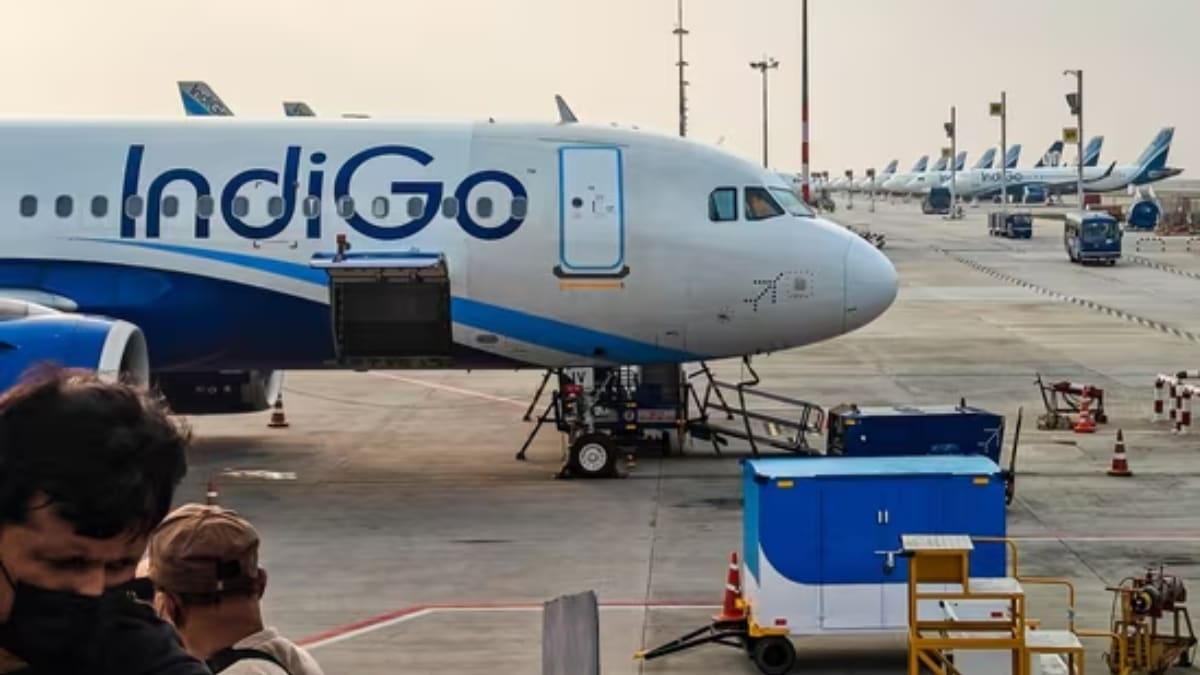
Air India and IndiGo are redeploying aircraft from some long-haul routes to Europe and North America toward Asian destinations, as a weakening rupee nudges Indian travellers toward shorter, more affordable holidays closer to home.
“A falling rupee, coupled with longer flight durations, has dampened sentiment among Indians planning travel to the US and Europe ahead of the summer season. Airlines are realigning schedules to cater to growing demand for Asian countries,” a senior Air India executive said.
He added that demand for Europe and the US is expected to spike later in the summer, particularly with the FIFA World Cup approaching, but in the near term the focus has shifted eastward.
IndiGo echoed that view. “The falling rupee is pushing Indian tourists toward budget-friendly destinations such as Vietnam and Sri Lanka instead of Europe. Thailand, Indonesia and other nearby markets are seeing increased traffic because they offer better value in the current exchange-rate environment,” a senior IndiGo executive said.
The schedule data for April 2026 reflects that recalibration. Air India plans to trim weekly frequencies on select secondary European routes compared with April 2025. These include reductions on Amritsar–Birmingham and Amritsar–London Gatwick, a scaled-back Ahmedabad–London Gatwick service, and the withdrawal of Goa–London Gatwick. Core trunk routes such as Delhi–London, Delhi–Paris and Delhi–Frankfurt will retain high frequencies.
Recalibrating the West
At the same time, the airline is strengthening its Asian network. From April 2026, Air India will add six weekly flights on the Delhi–Singapore route, taking the total to 27. Chennai–Singapore will double to 14 weekly services. The carrier is also expanding or introducing flights from Delhi to Denpasar, Kuala Lumpur, Manila, Ho Chi Minh City and Yangon, operating between seven and ten weekly services on several of these routes — significantly higher than a year ago.
Air India Express, the group’s low-cost arm, is reinforcing the pivot, particularly from non-metro India. Its April 2026 ASEAN schedule shows new or expanded routes such as Bengaluru–Bangkok and Pune–Bangkok, along with higher frequencies on Hyderabad–Phuket. At the same time, earlier links such as Amritsar–Bangkok and Lucknow–Bangkok have been dropped compared with April 2025, effectively shifting capacity from northern gateways to southern and western leisure markets with strong outbound demand to Thailand and Singapore.
IndiGo’s schedules point in a similar direction. While the airline continues to build a long-haul footprint with planned services to Manchester, Copenhagen and London Gatwick, much of its incremental capacity is being deployed into regional holiday markets including Bangkok, Phuket, Krabi, Singapore, Denpasar, Jakarta and Vietnam.
The carrier is also linking secondary Indian cities such as Trichy and Vijayawada to Singapore and adding connections to destinations such as Siem Reap and secondary Malaysian islands, deepening its presence in short- and medium-haul Asian tourism flows.
Aviation analysts say airlines are navigating a delicate balance: robust demand for short breaks, constrained availability of wide-body aircraft, and the need to preserve yields on long-haul routes. The result is measured growth to Europe and North America, alongside an aggressive build-out in fast-growing Asian markets.
Eastward Surge
Data from aviation analytics firm Official Aviation Guide (OAG) underscores the trend. Scheduled seats from India to Southeast Asia in 2025 are projected to be 29% above 2019 levels, reflecting not just recovery but expansion beyond pre-pandemic capacity. Thailand received around 2 million Indian visitors in 2024 — 8.6% higher than 2019 — while Malaysia saw Indian arrivals jump 54% to more than 1.1 million. Vietnam has nearly tripled Indian arrivals compared with 2019 levels, OAG said.
“Southeast Asian countries are actively targeting the Indian market to diversify their tourism base beyond traditional source markets,” OAG noted in its report.
The firm also observed that IndiGo is increasingly connecting secondary Indian cities to secondary Southeast Asian destinations — a pattern that mirrors both the rise of India’s middle class and the relative economics of short- and medium-haul flying.
For now, as currency pressures weigh on long-haul travel budgets, airlines appear to be betting that Asia — closer, cheaper and quicker — offers the stronger near-term yield.