



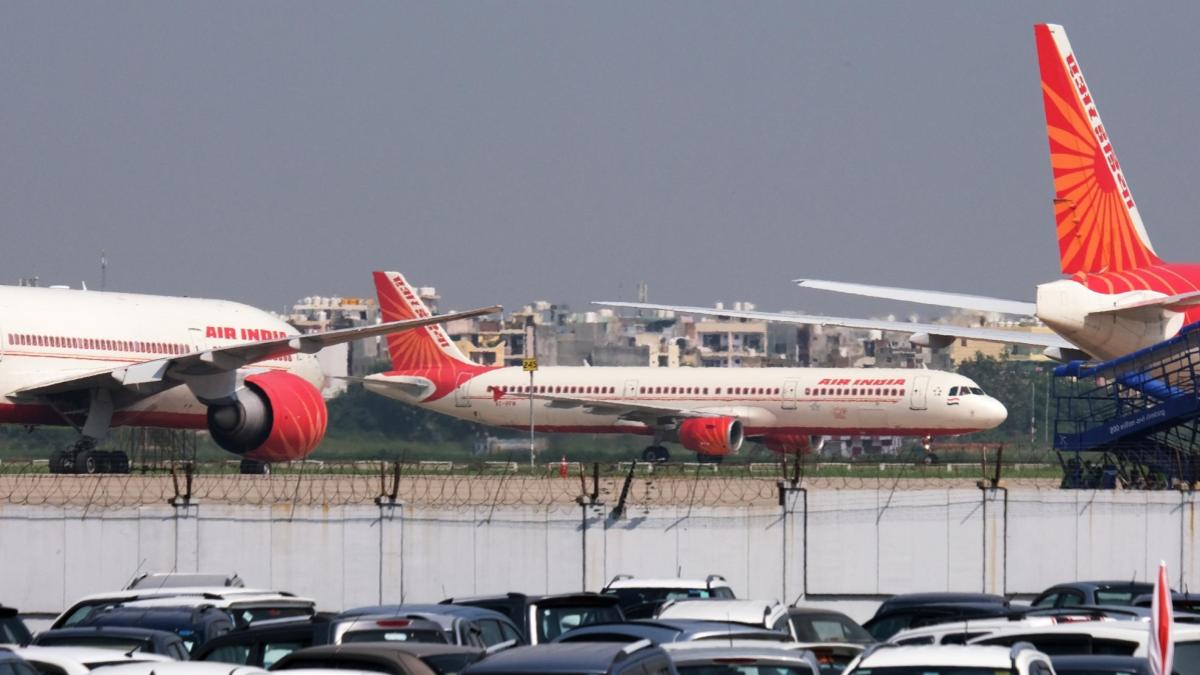
Air India on Monday grounded one of its Boeing 787 Dreamliner aircraft after a pilot reported an issue related to the fuel control switch, the airline said. The incident comes in the backdrop of the ongoing investigations into last year’s deadly Dreamliner crash in Ahmedabad.
The aircraft grounded by Air India is of the same Boeing 787 model as flight AI 171, which crashed shortly after take-off from Ahmedabad in 2025, killing 260 people. Fuel control switches on Boeing 787 aircraft are a key focus of the ongoing probe into that accident.
“We are aware that one of our pilots has reported a possible defect on the fuel control switch of a Boeing 787-8 aircraft. After receiving this initial information, we have grounded the aircraft and are involving the OEM to get the pilot’s concerns checked on a priority basis,” an Air India spokesperson said.
The airline also confirmed that the matter has been communicated to the aviation regulator DGCA. “At Air India, the safety of our passengers and crew remains top priority,” the aviation company added.
What is the function of this switch?
Each Boeing 787 Dreamliner is equipped with two fuel control switches, one for each engine. A preliminary investigation report into the Ahmedabad crash revealed that moments after lift-off, both switches transitioned from the ‘RUN’ position to ‘CUTOFF’ within a second of each other, starving the engines of fuel.
In July 2025, investigators probing the Ahmedabad crash said that seconds after take-off, the plane’s engine fuel control switches were briefly switched off, leading to a sudden loss of engine power. The aircraft failed to recover altitude and crashed shortly thereafter.
Air India inspected fuel control switches
Following the crash, the Directorate General of Civil Aviation had directed Air India to inspect fuel control switches across its entire Boeing 787 fleet. “Air India had checked the fuel control switches on all Boeing 787 aircraft in its fleet after a directive from the DGCA, and had found no issues,” the spokesperson confirmed.
Aviation experts have said that the design of the fuel control switches makes it difficult for a pilot to move them accidentally. However, if moved to the ‘CUTOFF’ position, fuel supply to the engines is instantly shut off.
What happened during Ahmedabad crash?
According to data from the flight recorders in the Ahmedabad accident, the switches for both engines moved from ‘RUN’ to ‘CUTOFF’ one after the other, with a gap of about one second. This led to both engines losing power almost simultaneously.
The cockpit voice recorder captured one pilot asking the other why the fuel had been cut off, to which the other pilot replied that he had not done so. The preliminary report did not specify which remarks were made by the captain and which by the first officer.
Seconds later, the switches were moved back to the ‘RUN’ position, investigators said. At the crash site, both fuel control switches were found in the ‘RUN’ position.