



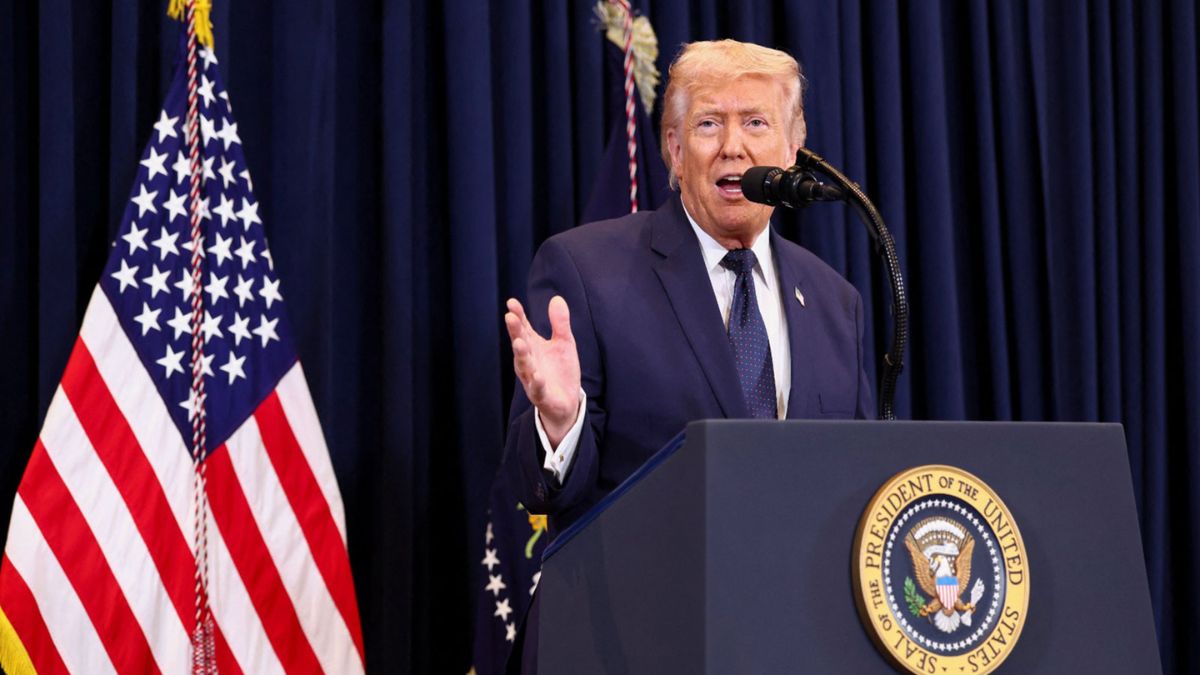
US President Donald Trump’s administration has sparked controversy after warning American broadcasters over their reporting on the ongoing Iran war, with officials suggesting that outlets could face serious consequences if coverage is deemed misleading.
The warning came from Brendan Carr, head of the Federal Communications Commission (FCC), who said broadcasters airing what he described as “hoaxes and news distortions” about the conflict should “correct course” or risk losing their broadcast licenses.
The statement followed criticism by Trump accusing major media organisations of publishing inaccurate reports about the US’ role in the escalating confrontation involving Iran, Reuters reported.
Carr posted the warning on social media alongside a screenshot of Trump’s message criticising outlets such as The New York Times and The Wall Street Journal for what he called “terrible reporting” on the war.
Which media reports were flagged?
According to a report by The Wall Street Journal, five US refuelling tanker aircraft were hit during the attack. However, President Donald Trump dismissed the claim in a post on Truth Social, describing the headline as “intentionally misleading.”
Trump said that four of the five United States Air Force refuelling planes suffered “virtually no damage” and had already returned to service. He added that the fifth aircraft sustained only minor damage and would resume operations soon.
What does the FCC do?
The FCC is responsible for regulating broadcast television and radio stations in the US and has the authority to issue or renew their licenses. However, it does not regulate newspapers or digital-only outlets, meaning that publications operating solely online or in print fall outside its direct control, according to Arab News.
The FCC chairman stressed that television and radio stations that use the public airwaves are legally required to operate in the public interest, Arab News reported.
‘Government can’t censor information about war it’s waging’
The announcement triggered a flurry of reactions from industry insiders. Aaron Terr, the director of public advocacy at the Foundation of Individual Rights and Expression (FIRE), likewise denounced Carr for seeking to silence negative war coverage.
“The First Amendment doesn’t allow the government to censor information about the war it’s waging,” Al Jazeera reported Terr as saying.
In fact, polling has shown that the war, launched by the US and Israel on February 28, is largely unpopular in the US.
A recent Quinnipiac poll found that 53% of voters oppose the military action against Iran, including 89% of Democrats and 60% of independent voters.