



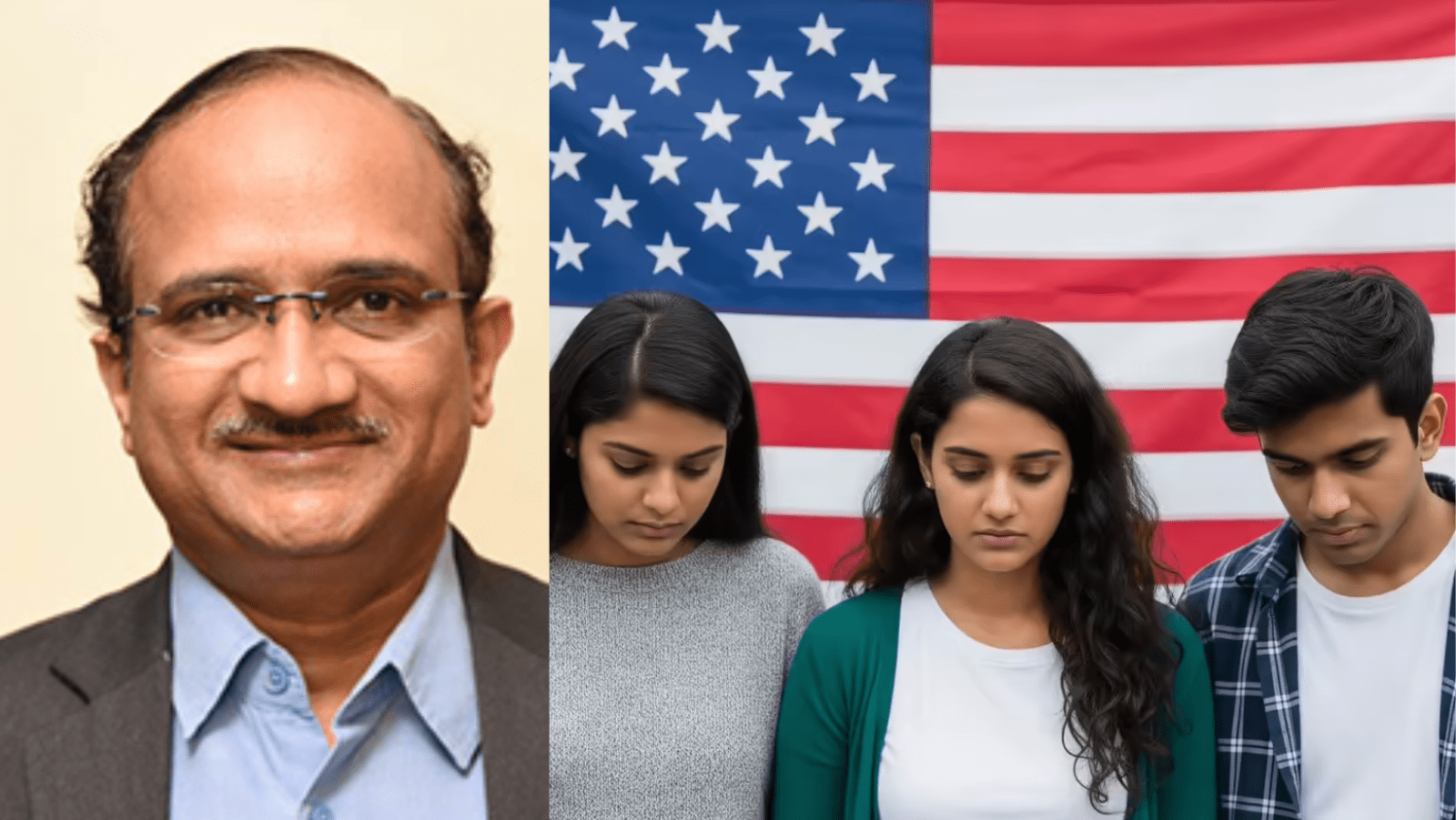
Indian student enrolment in US universities has dropped by nearly 75% in the first year of the second administration of Donald Trump. According to reports from various education consultants, this is due to visa checks, fewer interview slots, and large-scale visa cancellations as the main reasons behind this sharp fall. Reacting to the situation, V. Ramgopal Rao, Vice-Chancellor of BITS Pilani, said the sharp fall in enrolments should not be seen as temporary.
Why the student enrolment is not a ‘temporary phenomenon’ ?
“I do not see the sharp decline in Indian student enrolment in the US as a temporary phenomenon,” Rao noted. “It calls for a calibrated and long-term policy response from India.”
Rao added that the growing hostility towards immigrants and Indians in the US has deeper social and economic reasons. He said this trend is likely to continue beyond any one leader or movement, including Trump or the wider MAGA ecosystem.
I do not see the sharp decline in Indian student enrolment in the US as a passing phase. It is a structural signal that calls for a calibrated and long term policy response from India.
— V. Ramgopal Rao, Ph.D. (@ramgopal_rao) January 21, 2026
The animosity being generated in the US against Indians and immigrants has deeper socio… pic.twitter.com/0fYsFdFtT5
According to the report, by December 2025, around 8,000 student visas had been revoked. Nearly one lakh visas across different categories were cancelled as enforcement increased. Officials say deportations have reached levels not seen in several decades.
The impact is not limited to students. H-1B visa programme, which has traditionally helped Indian professionals work in the US, is also facing tighter scrutiny. Proposals include very high application fees and renewed demands to reduce the size of the programme.
Ramgopal Rao on Indian student enrolment
Rao says this situation creates immediate difficulties for Indian students who want to study or work in the US and said it also creates an important opportunity for India.
“This moment can allow India to retain high-calibre talent and strengthen its own higher education and research ecosystem,” he said. “If approached thoughtfully, this could become a phase of brain gain rather than a brain-drain reversal by default.”
However, Rao warned that making the most of this opportunity will not be easy. India will need to address some tough challenges, including limited seats in top institutions and the uneven quality and global standing of many higher education institutions.
Education experts say the fall in Indian students going to the US could push India to speed up discussions on expanding universities, increasing research funding, hiring better faculty, and strengthening global partnerships. Without major reforms talented students who stay back or return may not find institutions that can fully use their skills.