



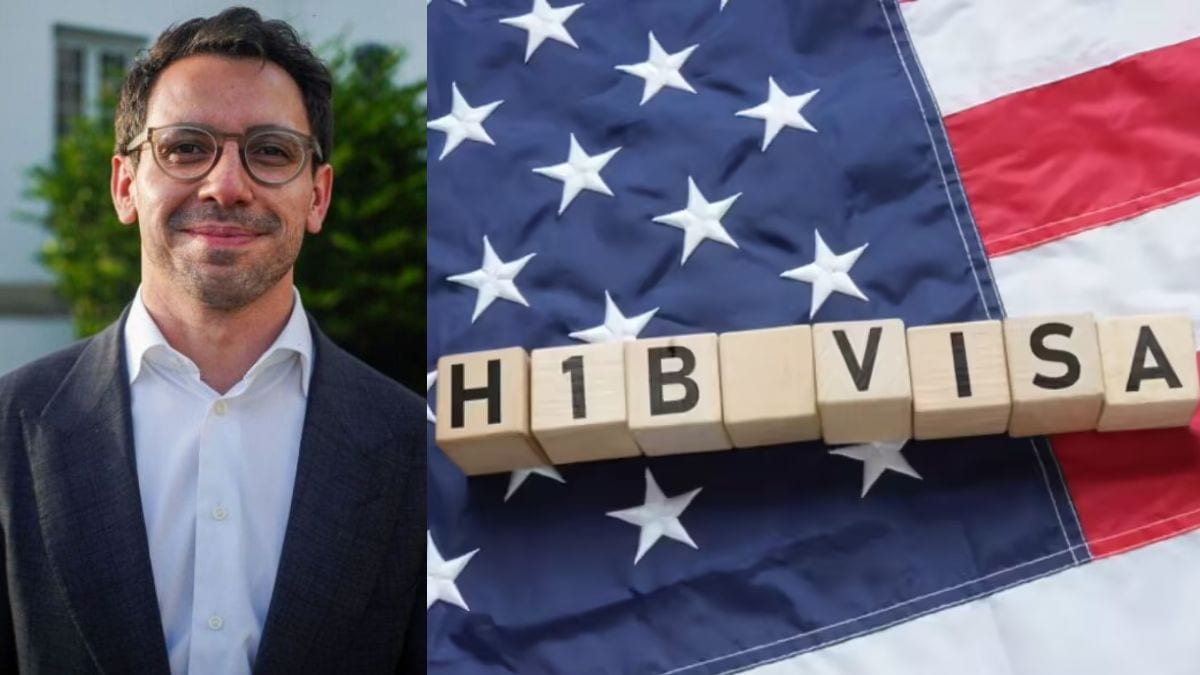
James Fishback, a former DOGE architect and hedge fund founder who has entered the 2026 Florida governor’s race, has sparked debate online after criticising Amazon’s use of H-1B visas in a viral post on X.
Fishback accused the company of hiring foreign workers instead of Americans after it allegedly applied for more than 10,000 H-1B visas. In his post, he wrote, “If Amazon is not hiring right now; then why did they just hire 10,718 H-1B foreign labourers? H-1B’s are stealing jobs from Floridians. I’ll end the H-1B scam once and for all to protect jobs for us.”
H-1B visa programme allows US companies to hire foreign workers in specialised sectors such as technology, engineering, healthcare and finance. Large tech firms including Amazon, Google and Microsoft have long depended on H-1B workers, especially for software engineering and AI-related roles.
If Amazon is not hiring right now; then why did they just hire 10,718 H-1B foreign laborers?
— James Fishback (@j_fishback) May 28, 2026
H-1B’s are stealing jobs from Floridians.
As governor I will end the H-1B scam. Once and for all. pic.twitter.com/8FzXXYpnrE
Supporters of the programme say it helps companies fill skilled labour shortages and maintain innovation in the technology sector. However, critics argue that some firms misuse the system to replace American workers with cheaper foreign labour.
Trump-era changes reshape H-1B landscape
The latest controversy comes amid major changes to the H-1B system under the Trump administration in 2026. The new rules have sharply reduced applications and created uncertainty for Indian professionals, who make up the majority of H-1B visa holders.
According to recent immigration data, H-1B registrations dropped by 38.5%, falling from 343,981 in FY 2026 to 211,600 in FY 2027 after the new policies were introduced.
The administration has also tightened wage rules. Entry-level software engineers in San Francisco are now required to earn at least $162,000 annually, while the minimum salary in New York City stands at $132,000 and Dallas at $113,000.
Another major change is the introduction of a $100,000 application fee for fresh H-1B registrations. Industry experts say the steep fee has discouraged many employers from filing applications.
The system has also moved to a wage-based lottery model, giving preference to higher-paid positions. Reports show that only 17.7% of approved applications now fall under the lowest wage category.
Proposed bill seeks stricter limits
The immigration debate has increased further after Republican Representative Eli Crane proposed a bill seeking a three-year freeze on new H-1B visas.
The proposal aims to reduce the annual visa cap from 65,000 to 25,000, limit visa holders to a three-year stay without extensions, and set a minimum salary requirement of $200,000.
At the same time, green card processing rules have also seen changes. A recent directive suggested that many applicants may need to apply for permanent residency from outside the US instead of adjusting status within the country. However, USCIS later clarified that workers considered to be in the national interest could still continue the process inside the US.
Indian workers face travel and renewal troubles
Indian H-1B workers have also reported growing difficulties during travel and visa renewals. Hundreds of professionals travelling to India for visa stamping were left stranded after the US abruptly cancelled visa appointments. The issue became serious enough for India’s Ministry of External Affairs to formally raise concerns with US authorities.
There have also been reports of increased scrutiny at US airports, particularly at Newark, where returning H-1B visa holders have faced lengthy questioning by border officials. In some cases, travellers reportedly faced visa cancellations and expedited removal proceedings.
The Trump administration has defended the new measures by saying they are aimed at ending “mass, low-wage registrations” and preventing abuse of the immigration system. Critics, however, warn that the changes could disrupt the technology industry and affect the flow of global talent into the US.
Disclaimer: This article is for general informational purposes only and does not constitute legal, immigration, or tax advice. Immigration laws and government policies are subject to frequent change without notice. While we strive to provide accurate updates, readers are strongly advised to verify the latest requirements with the official embassy, consulate, or government portal of the respective country. Financial Express is not responsible for any decisions made based on this information. For personalized guidance, please consult a qualified immigration attorney or a certified professional advisor.