



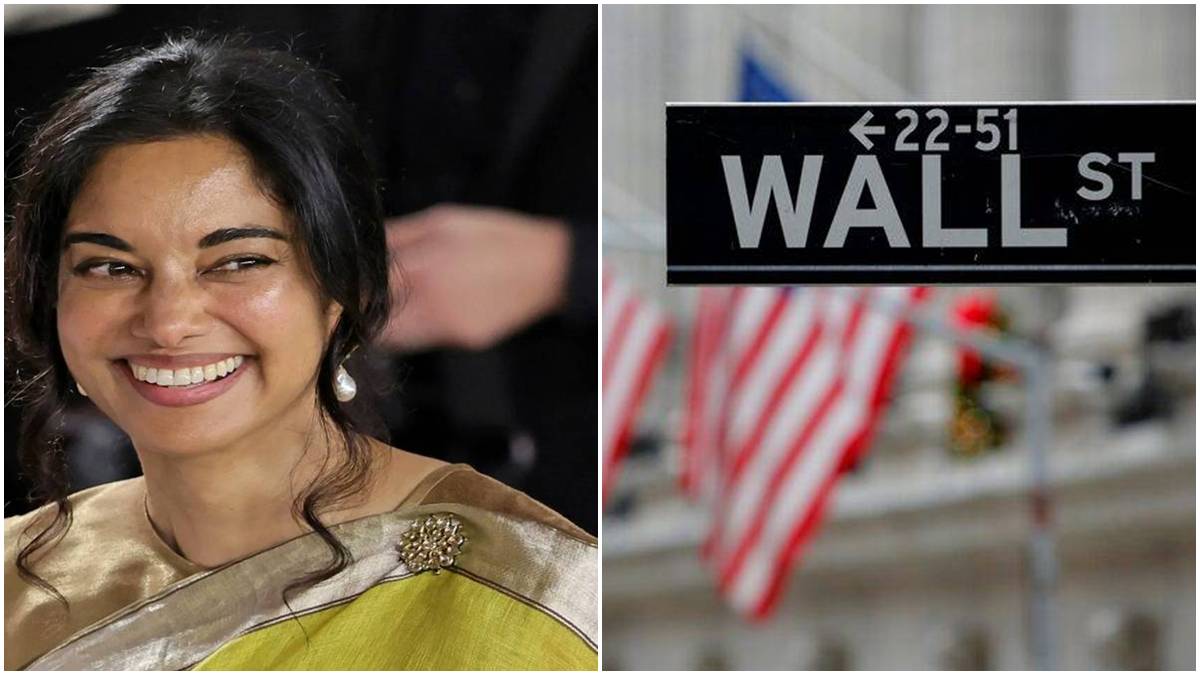
There are ladders that are hard to climb. And then there are ladders that were never meant to exist for you in the first place. For an Indian-origin woman to rise to the summit of global hedge funds, an industry dominated by Western men, elite networks, and unspoken gatekeeping, is not just rare. It is almost statistically invisible. But Mala Gaonkar did exactly that.
In January 2023, she launched SurgoCap Partners with $1.8 billion in assets, instantly becoming the largest hedge fund debut ever led by a woman. By 2026, the fund has grown to around $6 billion, putting it in the same league as the biggest launches in hedge fund history.
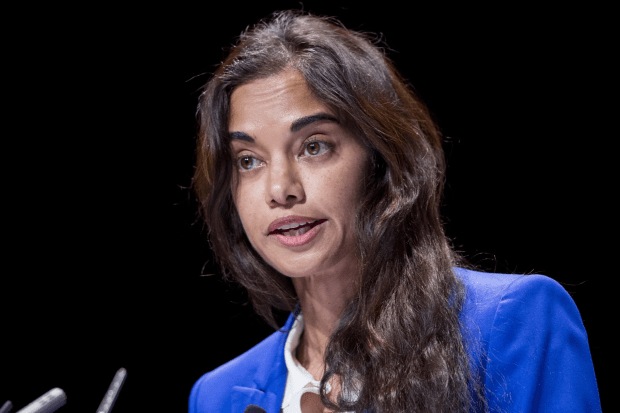
Gaonkar was born in the United States but raised largely in Bengaluru, long before it became India’s Silicon Valley. This was a pre-liberalisation India inward-looking, bureaucratic, and deeply unequal.
“It was considered a retirement town back then,” she said on the Norges Bank Investment Management podcast. Her parents were academics and doctors. Medicine ran in the family for generations. In rural India, doctors were not just professionals, they were lifelines. So when Gaonkar chose economics instead of medicine, she felt like an outlier even at home.
“I was the family black sheep,” she recalled in the podcast. Yet those early years gave her something no finance textbook could, a lived understanding of systems, scarcity, and inequality. Summers spent near Goa on her grandmother’s cashew farm exposed her to rural realities that stayed with her. This grounding would later shape both her investing philosophy and her philanthropy.
“The value of a business is the return on incremental invested capital, multiplied by the dollars you can put to work at those incremental returns,” says Gaonkar to Business Insider. It is a statement that neatly captures her core investment philosophy, which centers on identifying scalable opportunities where capital can be deployed at consistently high returns.
Leaving India but never leaving its lens
Like many ambitious Indians of her generation, Gaonkar left to study abroad. She graduated in economics from Harvard, then earned her MBA from Harvard Business School. From the outside, her trajectory looked seamless.
But inside global finance, being Indian-origin, especially as a woman came with invisible friction. She did not grow up around Wall Street culture. She did not inherit financial networks. She did not fit the stereotype of a hedge fund manager. Instead, she relied on something else clarity of thought.
Before finance, Gaonkar worked at Boston Consulting Group and later with the World Bank on privatisation projects in places like Russia and Mongolia. As a young analyst, she believed rational economics could reshape societies. “You can’t strip away decades of history and expect people to think differently overnight,” she reflected in the podcast.Privatisation without social context led to corruption and inequality, lessons that stayed with her.
Nvidia regret
Perhaps her most revealing story involves Nvidia. She sold early that she was concerned about crypto exposure and gaming demand and was directionally right. But she did not revisit the stock when AI transformed it.
“The bigger mistake wasn’t selling,” she admitted. “It was not going back.”
For many Indians, this resonates very much. We are taught to avoid admitting mistakes. To move forward, not look back. Gaonkar learned to do the opposite. At SurgoCap, revisiting old ideas is mandatory.
A 23-year apprenticeship at the peak
Gaonkar joined Lone Pine Capital in 1998 and stayed for 23 years, rising to become a founding partner and portfolio manager. She helped build the firm into a global powerhouse and later co-led its long-only strategy. From an Indian perspective, this alone is extraordinary. Very few Indians have ever reached decision-making roles at the top tier of US hedge funds. But Gaonkar’s most important lessons came not from success, but from mistakes.
One of her most painful calls was shorting Nokia. She believed the business was structurally broken. Then Microsoft acquired it. Short sellers were squeezed. Losses were real. Eighteen months later, Microsoft wrote off the business entirely. “You can be right about the fundamentals,” Gaonkar said on the podcast. “and still be completely wrong.” According to her, markets are not just balance sheets. They are power, strategy, and timing.
Growing up in India, Gaonkar had seen how fragile systems collapse under stress. That awareness shaped another key belief, avoid excessive leverage. She calls heavily indebted companies “public LBOs,” businesses that look fine until they lose flexibility. “When times get tough, they have no room to move,” she said. It is a view shaped as much by emerging-market realities as by Wall Street analysis.
Building SurgoCap
When she launched SurgoCap, Gaonkar rejected the traditional hedge fund model of large teams and internal silos. “We wanted a team small enough to sit around one table,” she said. Invoking Jeff Bezos’s “two-pizza teams,” she added, “We like to stay at one pizza box.” The idea mirrors Indian joint-family logic, intense debate, shared accountability, collective thinking. “There is something about human collaboration that works best at a smaller scale.”
SurgoCap invests in how technology reshapes non-tech sectors including financial services, healthcare, industrials, and enterprise data. “Every business today is a technology business,” Gaonkar said. This perspective feels intuitive to anyone who has watched India leapfrog,from cash to UPI, from landlines to smartphones, from paperwork to Aadhaar.
Fighting bias with data
Gaonkar is unusually candid about bias. She uses AI and data science not just to find investments, but to check intuition. “Humans will do anything to avoid thinking,” she believes in this philosophy.Her teams use automated surveys, machine learning, and real-time adoption data to force system-two thinking, slow, deliberate, uncomfortable. For an Indian-origin leader in the West, this discipline becomes a shield.
“We do short,” she said plainly. “It’s incredibly stressful.” Shorts are timed, catalyst-driven, and emotionally draining. “You can be wrong for years and right for one week.” It is a reminder that power in markets often comes with psychological cost. Outside finance, Gaonkar writes fiction and co-created immersive theatre exploring neuroscience and memory.
“Everything is a narrative,” she said. “Markets move on stories as much as numbers.” Writing, she admits, keeps her humble. “No one cares if I write another short story.” That humility is rare at her level.
Gaonkar resists being framed only as a “woman investor,” insisting that the industry is ultimately meritocratic. “If I produce returns, people invest.” Yet representation still matters, because for Indian-origin women who are dealing with both gender and cultural distance, her success expands the map of what is possible.