



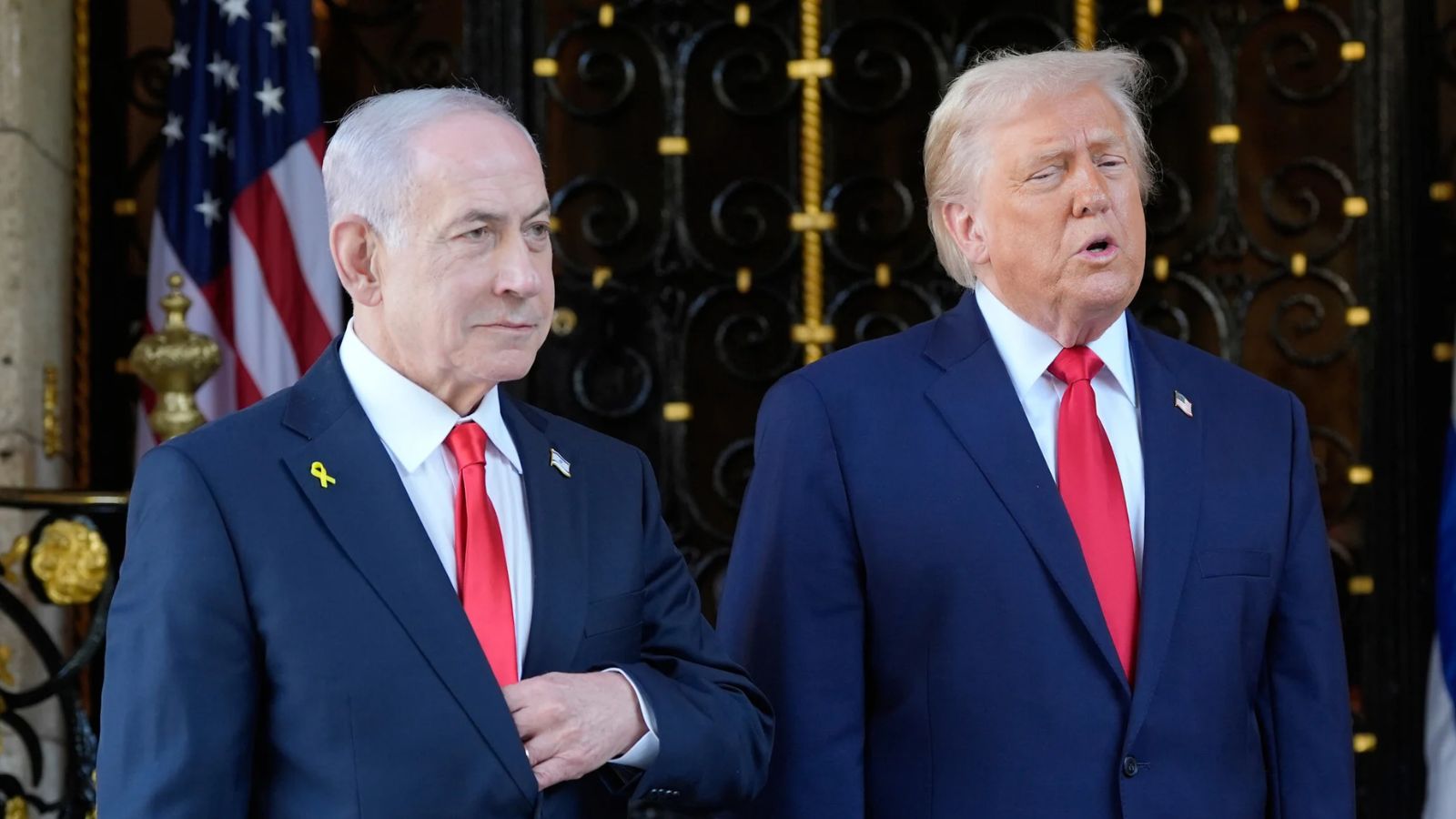
US President Donald Trump has asked Israeli Prime Minister Benjamin Netanyahu not to retaliate against Iran’s recent missile attack, according to Axios, citing a senior US official and an Israeli source familiar with the conversation.
Later, in a phone interview with the Financial Times, Trump said Netanyahu will have no option but to accept whatever agreement Washington reaches with Iran, stressing that the final decisions rest with him.
“He won’t have any choice,” Trump said in a phone interview with the Financial Times. Making his position even clearer, Trump added: “I call the shots. I call all the shots. He doesn’t call the shots.”
His remarks came shortly after Iran fired a barrage of ballistic missiles at Israel, marking the most serious violation yet of the ceasefire that was agreed upon in early April.
Trump urges Israel not to hit back
Despite the missile attack, Trump indicated that he does not want Israel to retaliate. Before speaking with Netanyahu, Trump told Axios that he planned to urge the Israeli leader not to respond militarily to Iran’s missile attack. Tehran had said the missile strike was carried out in response to an Israeli attack in Beirut earlier on Sunday.
A senior US official said the Trump administration had not given Israel a “green light” for the Beirut strike. According to the official, Trump used the call with Netanyahu to argue that now was not the time for further escalation.
“He told Netanyahu to hold off because ‘we are close to doing something good in terms of a deal,'” the official said. The administration believes there is still a chance to secure an agreement with Iran and wants to avoid any action that could derail those efforts.
The official said Netanyahu pushed back during the conversation. However, he ultimately “pseudo-agreed” to stand down and avoid immediate retaliation. The call was reportedly far less confrontational than an exchange between the two leaders last week, which had been described as tense.
The senior official noted that Trump did not raise his voice during Sunday’s discussion. “We think the president bought a little bit of time. He is pretty adamant that we are close to a deal with Iran. I don’t think anything is imminent in terms of an Israeli strike,” the official said.
Less confidence about a deal than before
Although Trump remains committed to negotiations, he sounded less certain that an agreement with Iran is close than he has in recent months. Since Vice President JD Vance led the first round of talks with Iran in early April, Trump had repeatedly projected optimism about the chances of a breakthrough.
This time, however, his tone was more cautious. “I think the deal is going on,” Trump told FT. “We’ll see what happens.” Even so, he insisted that Sunday’s missile attack would not affect his thinking. “The deal may make it on its own merit, or not, but this will not have any effect on it,” he said.
On the other hand, the Trump administration appeared convinced that negotiations with Iran have reached a critical stage. “We are in a moment in time, then why we jeopardise a potential deal when you are in the fourth quarter,” the US official told Axios. “The President thinks that we have been in this thing for three months, now is the time to end this thing,” the official added.
Trump raises possibility of military action
Trump was also asked what would happen if negotiations ultimately collapsed. His answer suggested that military options remain on the table. “It means one of two things,” he said.
“Number one, it would mean that possibly we would go in and take care of the rest of the place that we didn’t take care of militarily,” he told FT.
Trump then pointed to economic pressure as another possibility. “Or it would just mean that we would keep the blockade on Iran because the blockade has probably been more powerful than any attack that was ever made on that country,” he said.